
Now Reading: Sania Sunspheres: Finding the Light in Every Shade of Being
-
01
Sania Sunspheres: Finding the Light in Every Shade of Being

Article written by Katie Sears:
Exploring heartbreak, transformation and self-discovery through genre-fluid music, Austrian singer-songwriter Sania Sunspheres is creating songs that invite listeners to embrace the complexity of being human.
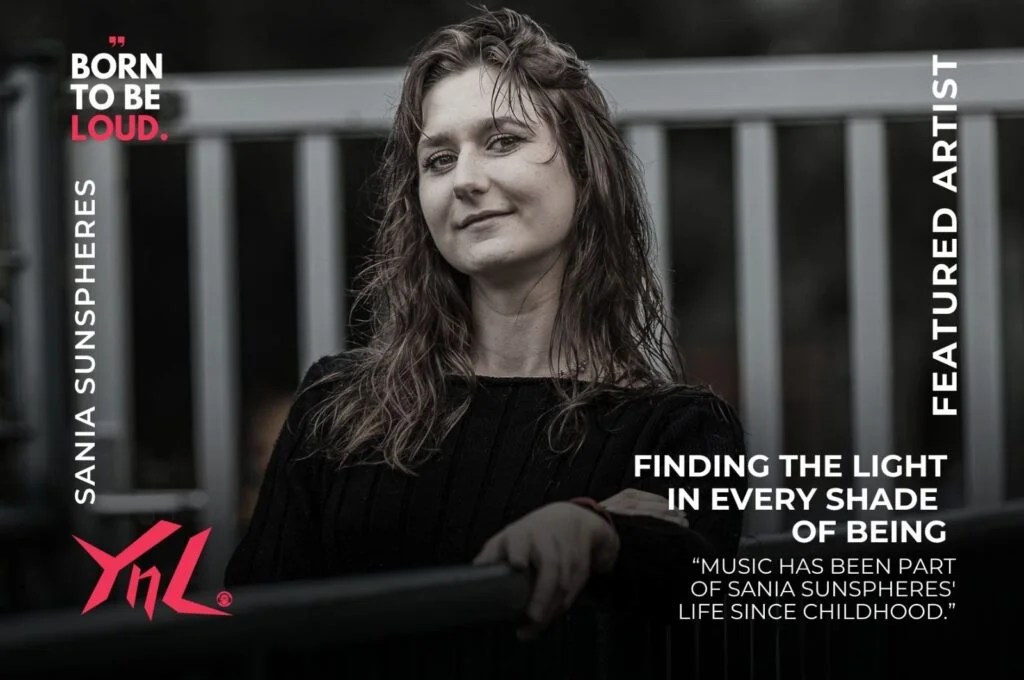
Music has been part of Sania Sunspheres’ life since childhood. Her earliest memories include sitting on her father’s lap listening to jazz, hearing her mother sing operettas, and joining her parents in singing Christmas songs. Those experiences helped establish a lifelong connection to music that would eventually lead her to songwriting and the creation of her debut album, (Not) With You.
Based in Vienna, Austria, Sania draws on a wide range of musical influences and personal experiences. Her music moves between alternative pop, R&B, hip-hop, electronic experimentation and piano-driven ballads. Rather than committing to one genre, she allows each song to reflect a different emotional stage of her journey.
Through her songwriting, she hopes to create a space where listeners feel understood, connected and encouraged to explore their own experiences.
A Childhood Shaped by Music
From family memories to discovering her voice.
Sania’s musical journey began long before she considered releasing original material.
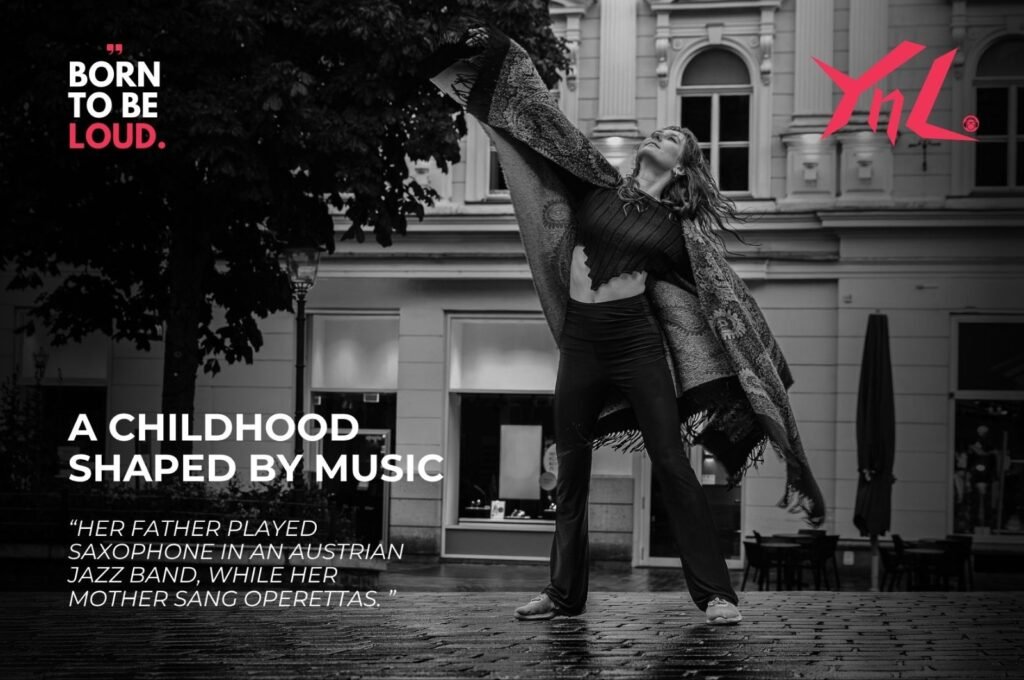
Her father played saxophone in an Austrian jazz band, while her mother sang operettas. Sania remembers sitting on her father’s lap listening to jazz and, in another cherished memory, singing and harmonizing with her parents while her father played guitar during Christmas.
Music was also present during more difficult moments in her childhood. She recalls sitting alone in a room with the music turned up while her parents argued nearby. These contrasting experiences contributed to her understanding of music as a companion through both joyful and challenging times.
As a child, she practised singing whenever she could, searching YouTube for instrumental tracks of songs such as Christina Aguilera’s “Hurt” and Beyoncé’s “Because of You.” She and her friends wrote songs for birthdays and organized their own neighbourhood singing contests.
Her interest developed into formal musical training. She learned piano, took vocal lessons, joined choirs and studied music theory in high school. She also participated in singing competitions, including My Name Is, where she impersonated Avril Lavigne, and The Voice of Austria, where she reached the semifinals.
While living in student accommodation in Vienna, Sania persuaded the directors of a nearby student residence to let her use their piano. Other students would gather around to hear her play and sing.
During her undergraduate studies in Ireland, she joined two bands: a jazz and blues band, and a rock and metal band whose sound she enjoyed bringing pop influences into. The groups rehearsed weekly and performed in pubs and at various events.
Although she had begun writing her own songs, Sania initially kept much of that material to herself. After returning to Austria six years later, she finally began writing her first album, marking the beginning of her current chapter as a singer-songwriter.
Austrian Roots and Hungarian Heritage
The cultural influences behind her musical perspective.
Sania grew up in Burgenland, Austria, near the Hungarian border, and now lives in Vienna.
When Sania was young, her grandmother sang traditional songs to her and her brother. Although her grandmother died when Sania was still quite young, she continues to remember many of the melodies and lyrics.
The songs explored themes including friendship, family, travel, greed and resilience. Sania also remembers the images and stories the melodies inspired in her imagination.
Vienna’s classical music tradition and her own education in music theory have also influenced her musical perspective. Meanwhile, her experiences in Ireland and Poland, where she undertook doctoral ethnographic research involving socially engaged art projects, have contributed to her interest in art, culture and human connection.
These influences form part of the background to an artistic approach that embraces different perspectives and explores the many ways music can communicate emotion and experience.
Sania Sunspheres: A Name With Meaning
The symbolism of the sun and the artist behind it.
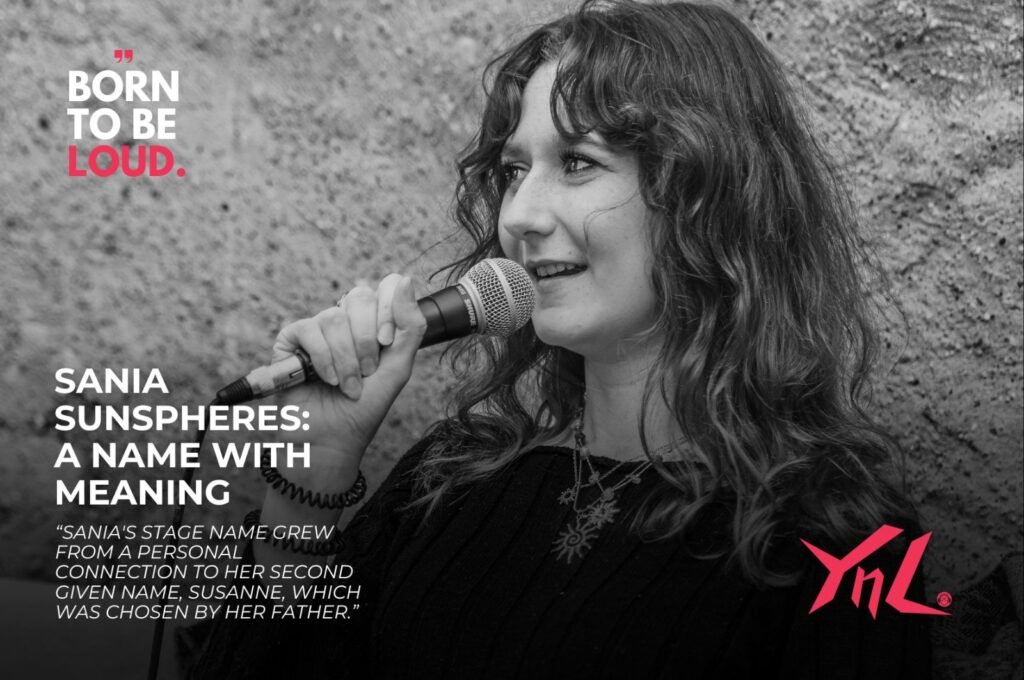
Sania’s stage name grew from a personal connection to her second given name, Susanne, which was chosen by her father.
She wanted an artist name connected to the sun, a symbol that held particular significance for her. The name Sania first came to her during an evening spent with close friends while she was exploring her intuition. She remembered it months later when she was searching for an appropriate name for her musical identity.
While speaking to her mother on the phone, she said the name aloud. Her mother immediately felt it was the right choice. Sania then looked up its meaning and found associations with “glimmerance,” “brilliance” and “radiance.”
She added Sunspheres to emphasize the symbolism of the sun and its different dimensions.
For Sania, the sun represents more than happiness, positivity or light. It can nurture life, but it can also burn. Its absence and its presence both have profound effects. It represents different stages of birth and death, as well as the relationship between warmth and coldness.
This symbolism reflects the emotional contrasts that run throughout her music. Rather than focusing exclusively on positive experiences, Sania explores the full range of human emotions, including those that can be difficult to acknowledge.
A Debut Album Without Genre Boundaries
Eight tracks exploring different stages of emotional transformation.
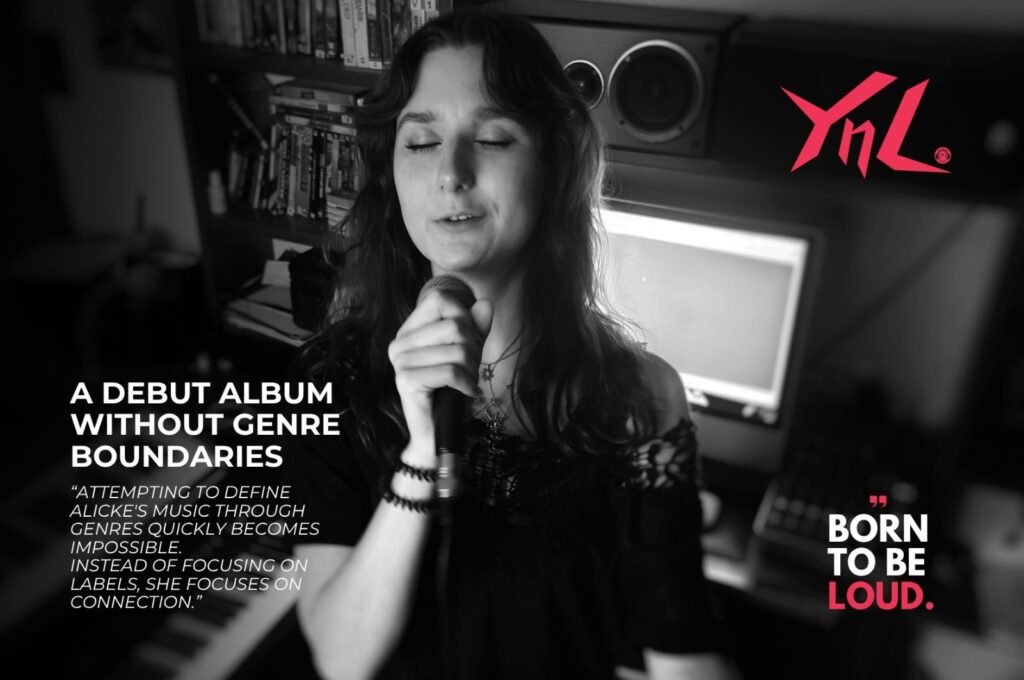
Sania describes her sound as “Altpop, Altrnb, Althiphop, and else.” Her debut album, (Not) With You, follows that open-ended approach, with each song reflecting a particular emotional stage in a larger story of metamorphosis.
The album’s opening track, “(Not) With You,” explores heartbreak and sadness through piano and strings. “Shivers” addresses confusion and despair, alternating melodic spoken-word passages with singing.
“You Wanted” channels anger through rap and hip-hop elements, while “Dream On” takes a dreamlike approach through psychedelic trance-pop.
“Might Hate Me” introduces a pop-oriented, bad-girl attitude to a push-and-pull relationship dynamic. “Warmer,” meanwhile, embraces empowering, Latin-inspired dance sounds, encouraging listeners to move and enjoy life.
The song represents a different direction for Sania, who has traditionally gravitated toward heavier ballads featuring piano and strings.
“Again Again” moves into chilled, vintage-inspired territory, reflecting insights gained through the album’s emotional journey. A bonus version of “Shivers” explores experimental electronic club sounds.
The result is a collection that moves between contrasting styles rather than following a single musical formula.
Finding Her Creative Flow
Working with producer Alex G and learning to trust the process.
Sania’s songwriting usually begins with an intense emotion, sometimes before she fully understands what she is feeling. She often starts by listening to beats on SoundCloud or exploring material from producers she knows, allowing melodies and lyrics to develop from there.
Her collaboration with producer Alex G has become an important part of her musical journey. They work together in the studio at his home, recording and producing music.
Sania describes their creative connection as natural and effortless, valuing both their shared musical outlook and their friendship.
One particularly meaningful recording session took place on her birthday. She spent the evening recording “Warmer,” a song she considers one of her favourite compositions to date.
Reflecting on the experience, she realized that working on her music was exactly how she wanted to spend her birthday. Before midnight, she took a shower as a symbolic way of leaving the past behind and entering a new life cycle.
When she returned, Alex had prepared cake, sparkling wine and gifts celebrating both her artist identity, Sania, and her other self, Kathi. The gifts included her first merchandise: a shirt featuring her artist name and face, along with a matching cup.
They listened to “Coole Sache,” another song awaiting release, before returning to finish recording “Warmer.”
The experience reinforced how much she values the opportunity to create music and collaborate with someone who shares her enthusiasm.
Her creative process has also evolved. She has become more comfortable recording songs in layers, revisiting vocal lines and experimenting with different melodies instead of rushing to finish a track.
Although she sometimes becomes frustrated when ideas do not develop as expected, she is learning to give herself more freedom and patience throughout the process.

Embracing the Difficult Emotions
Why vulnerability matters in her songwriting.
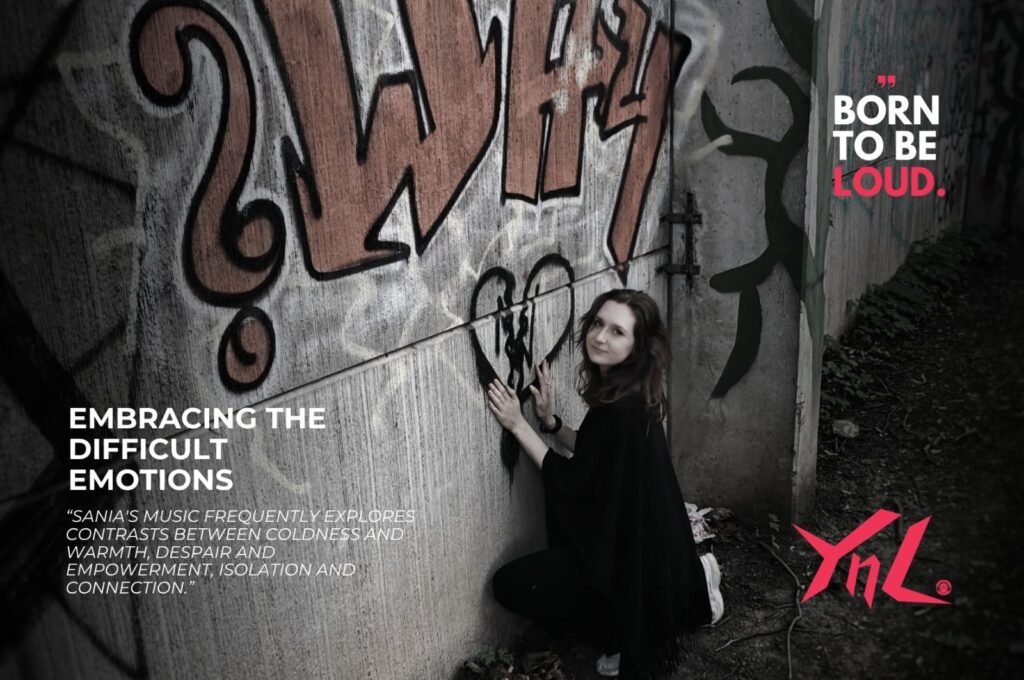
Sania’s music frequently explores contrasts between coldness and warmth, despair and empowerment, isolation and connection.
She has become increasingly comfortable expressing difficult emotions through her songs. In the past, she worried that showing sadness might bring other people down. Over time, she discovered how reassuring it could be to find a song that made her feel less alone.
That experience helped her appreciate the value of music that acknowledges pain rather than attempting to erase it.
Sania says some people perceive the emotions she expresses as exaggerated. Although those reactions can still make her question her own experiences, she is learning to embrace emotional intensity instead of immediately trying to move away from it.
Her music offers an opportunity to explore those experiences without dismissing them. She wants listeners to feel understood, taken seriously and connected, even when their emotions are complicated or difficult to communicate.
Influences Beyond Music
From avant-garde theatre to childhood performances.
Sania’s artistic influences extend beyond musical genres. She draws inspiration from avant-garde theatre, Billie Eilish and Rose Betts, alongside her experiences in Ireland and Poland.
One of her earliest performance spaces was her mother’s bathroom. As a child, she discovered that the room had excellent acoustics and would lock the door for hours to sing and perform in front of the mirror.
Today, she continues to find inspiration in people who make and share music, particularly those who have endured difficulties and transformed their experiences into something meaningful.
Exercise and breathing also help her manage the intensity of her creative life. Before recording or performing, she wears sun-shaped necklaces that remind her of the symbolism behind her artist name and the energy she wants to bring into the world.
She focuses on feeling her feet on the ground and uses breathing exercises to release nervousness and tension.
These rituals connect her musical practice with her broader interest in balance, awareness and personal growth.
Looking Beyond the Album
New releases, collaborative projects and plans for live performances.
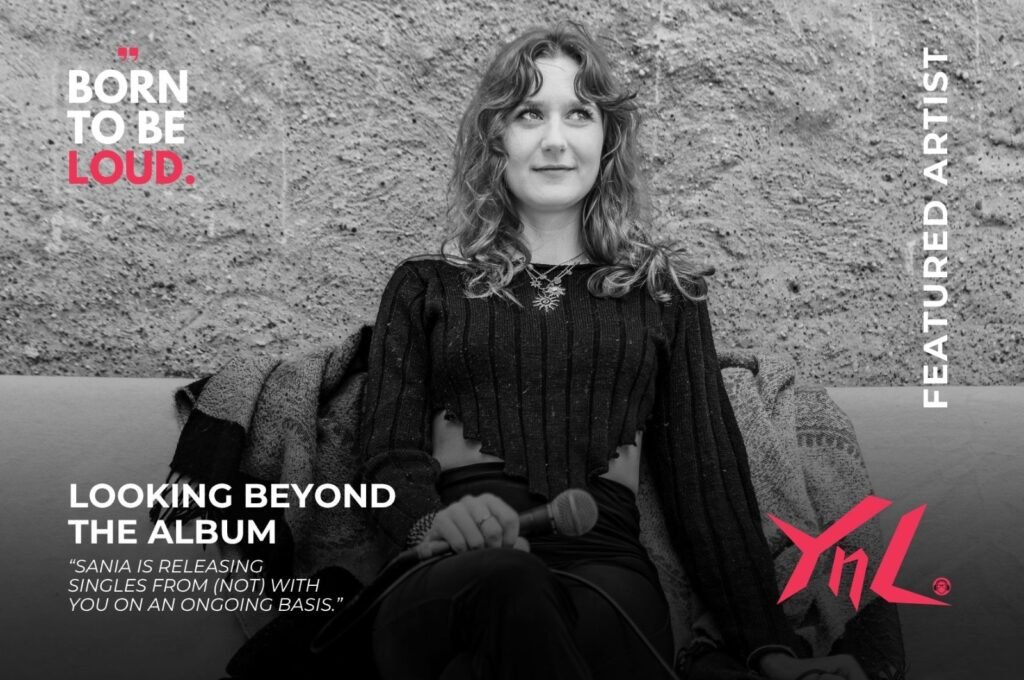
Sania is releasing singles from (Not) With You on an ongoing basis. According to her current plans, “You Wanted” is scheduled for October 2026, with five additional songs in the final recording and mixing stages.
She is also beginning to plan live performances around Vienna and Burgenland. Finding musicians for a live lineup is her next step, and she hopes to begin with intimate venues before moving toward larger performances.
Alongside her solo album, Sania is involved in Lake of Memories, a project based on poems by her friend Marlon David Oberst, also known as The Rainbowbutterfly. Many of the poems were written when he was a young teenager.
The project transforms those poems into songs with spiritual messages, spanning ballads, ethno-music and rock.
Sania also sings on Madame Sweet, an album written and composed by Alex G. The project explores themes including time, space, nature, collectivity and the shortcomings of capitalist imaginaries, incorporating alternative pop, electronic elements, funk and soul.
Outside the recording studio, Sania has recently developed an interest in videography and video editing. She shares music teasers, clips and updates through social media.
Collaboration remains an important part of her future ambitions. She is particularly interested in working with artists whose styles differ from her own, as well as musicians from different cultural and spiritual traditions.
One artist she would love to collaborate with is Emika, whose combination of electronic sounds and voice has inspired Sania to experiment with alternative song structures and complex messages.
Defining Success on Her Own Terms
Creating music that helps people feel understood.
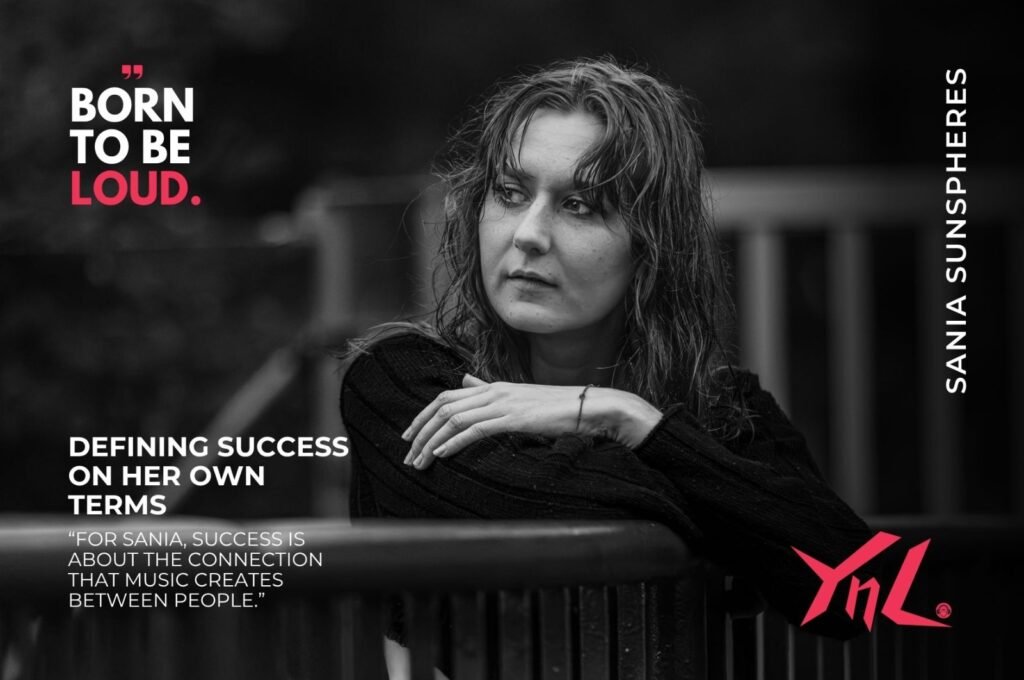
For Sania, success is about the connection that music creates between people.
She considers it meaningful when listeners approach her to share how a song helped them experience an emotion, feel understood or find inspiration. Those conversations remind her why she explores her own experiences through songwriting.
Her artistic vision also connects to the sun’s significance in many cultural traditions as a life-giving entity. She hopes to encourage a creative, mystical relationship with the natural world while contributing to greater awareness and tolerance of feelings and thoughts that are often socially neglected.
Looking ahead, she would like to introduce more gentleness into her music, experimenting with delicate sounds and expressions of vulnerability that allow listeners to experience emotion while also stepping back to consider a wider perspective.
Her song “Again Again” reflects her interest in pain as part of a journey toward wholeness and the importance of following one’s calling.
If she could send one song into space as a message from Earth, it would be “Again Again.” She hopes that another form of intelligent life might recognize its exploration of pain, growth and purpose.
For Sania Sunspheres, music is a way of exploring the many dimensions of existence, embracing contradictions and making room for experiences that deserve to be heard.
As she prepares to share more of her debut album and develop her live performances, she continues to pursue a sound that reflects the complexity of life itself.
As she puts it:
“Sounds of sunlight, igniting your radiance by shedding light on the mysterious depths of being.”