
Now Reading: Hollow Wake: Finding the Light in Everything That Hurts
-
01
Hollow Wake: Finding the Light in Everything That Hurts

Article by Young N’ Loud Magazine.
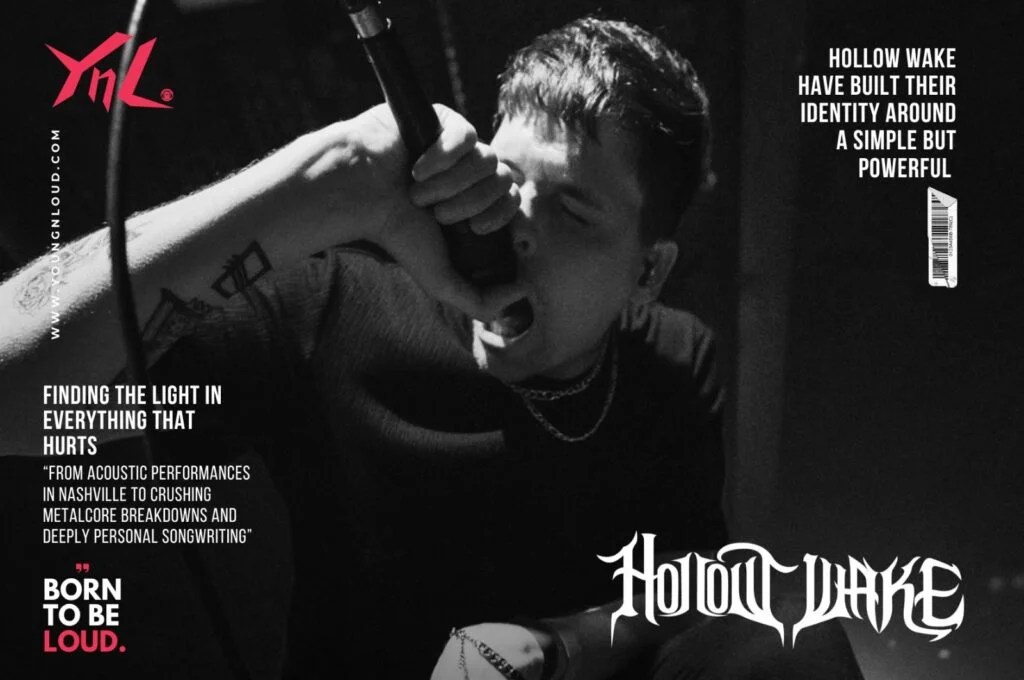
From acoustic performances in Nashville to crushing metalcore breakdowns and deeply personal songwriting, Hollow Wake have built their identity around a simple but powerful belief: music can give people somewhere to put the emotions they cannot explain. With their second album, Dying To Be Whole, the band takes that philosophy into its most vulnerable territory yet.
The Sound of Something Unfinished
There is an interesting contradiction at the heart of heavy music. The sounds can be aggressive, the arrangements overwhelming, and the performances physically intense. Yet beneath that intensity, some of the genre’s most meaningful compositions are built around emotions that are remarkably fragile.
Grief. Loneliness. Uncertainty. The complicated experience of trying to become whole again after something has changed us.
For Nashville’s Hollow Wake, those emotions are not simply subjects to explore. They are the foundation upon which the band has developed its identity.
Their music moves between cinematic atmospheres, melodic passages, electronic textures, and crushing breakdowns. But describing Hollow Wake through their instrumentation alone would overlook what makes the project meaningful to the musicians behind it.
The band is interested in what happens when people recognize themselves in someone else’s experiences.
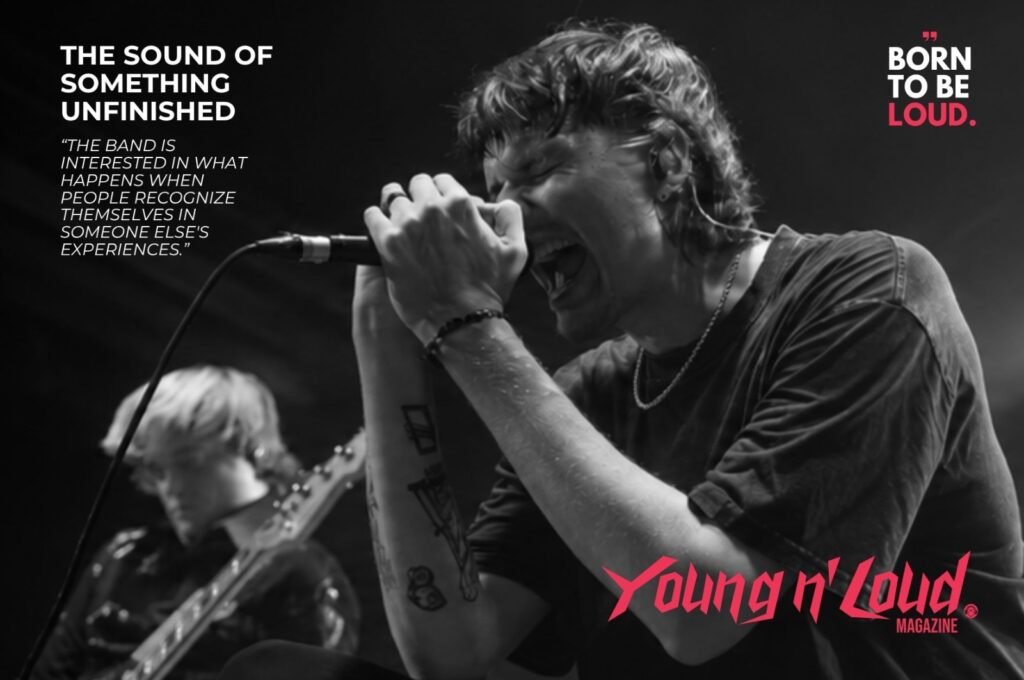
For vocalist and founding member Bobby Spencer, that connection has become the defining purpose of the music he creates alongside guitarist Josh Overton, bassist Jake Henderson, and drummer Matt Bowers.
“I want the listener to first and foremost feel seen through the lyrics,” Bobby explains.
It is a relatively simple ambition, but one that becomes increasingly significant when considering the stories behind their songs.
Hollow Wake are not attempting to convince listeners that pain is beautiful or that every difficult experience arrives with an immediate lesson. Their music acknowledges something more complicated: sometimes the only way to begin understanding what hurts is to confront it.
And sometimes, that confrontation needs to be loud.
Two Musicians, One Conversation, and an Unwritten Future
The story of Hollow Wake began at the end of 2019, not with an elaborate business plan or a carefully constructed musical identity, but with a conversation between two musicians who wanted to create something together.
Bobby Spencer and Josh Overton already knew each other from their involvement in pop punk and emo bands. Their shared musical history provided a foundation, but Bobby was interested in exploring a project that could develop beyond the expectations of their previous work. He approached Josh at a bar in Mt. Juliet, Tennessee, with an idea. They would start something new. They would write music that genuinely interested them. And perhaps most importantly, they would resist the temptation to place unnecessary pressure on the project before it had an opportunity to discover what it could become.
The intention was to build something lasting without losing the enjoyment that had brought them into music in the first place. That decision shaped their earliest experiences. Rather than immediately assembling a full band and pursuing larger stages, Bobby and Josh began performing acoustically around Nashville. They wrote songs, experimented with arrangements, and recorded material in Josh’s studio. For Bobby, those performances represented a particularly significant transition.
He had previously spent much of his musical life behind a drum kit, including his time in a synth pop influenced band before relocating from Northern Virginia to Nashville. His involvement in later pop punk projects introduced him to shared lead vocal duties and screaming while drumming.
Hollow Wake required him to approach performance differently. For the first time, he was stepping forward as a dedicated frontman. The change brought unfamiliar responsibilities, but it also helped him develop a confidence that would become increasingly important as the band’s ambitions grew.
Early compositions such as “Burnt Out,” “Upside Down,” and “What The Hell” reflected the musicians’ existing pop punk influences. They were important starting points, even as Bobby and Josh began recognizing that their creative interests were moving elsewhere.
The music gradually became heavier, more atmospheric, and more ambitious in its production. When bassist Jake Henderson joined the project, the musicians began developing their debut album, A Season To Bloom. The title would eventually acquire an appropriate significance. The band was not simply recording its first album. Its members were discovering what Hollow Wake could become.

Nashville, Heavy Music, and the Space Between Genres
Nashville occupies a distinctive position in American music culture. Its reputation is closely associated with country music and songwriting traditions, but the city’s musical community extends far beyond those familiar boundaries.
For Bobby, arriving in Nashville also meant observing opportunities within its alternative music scene. He encountered emo and hardcore bands whose performances emphasized heavy guitars and drums, but he felt there was room for something that combined that intensity with a different production philosophy.
His interests were unusually broad. On one side were artists such as CHVRCHES, St. Lucia, and The Killers, whose music demonstrated the possibilities of synthesizers, polished production, and memorable melodic structures.
On the other were bands such as Attack Attack!, I See Stars, and Asking Alexandria, whose heavier arrangements and emotional urgency had helped shape his understanding of modern alternative music.
Rather than treating these influences as separate creative worlds, Bobby began considering what could happen when they occupied the same composition. The result was an approach that valued contrast.
A song could contain a delicate electronic atmosphere without sacrificing the impact of a heavy breakdown. A memorable vocal melody could exist alongside screaming. Cinematic arrangements could contribute to the emotional character of a composition rather than functioning as decorative additions.
For Hollow Wake, those possibilities became central to their musical identity. Bobby describes their sound as emotional depth combined with cinematic overtones, allowing each composition the freedom to become whatever it needs to be. That philosophy helps explain why the band’s music can move between soft ballads and intensely heavy passages without necessarily feeling disconnected. The contrast is intentional.
Human emotions rarely remain consistent from one moment to another. A person can experience sadness and anger, hope and frustration, vulnerability and determination, sometimes within the same experience. Hollow Wake’s arrangements attempt to give those contradictions a musical form. Even the band’s name reflects that perspective.
According to Bobby, Hollow Wake represents “The emotional movements one feels in the emptiness.” It is an unusual definition, but an appropriate one for a project so interested in the emotional spaces people often struggle to describe.
Building Songs Without Building Creative Walls
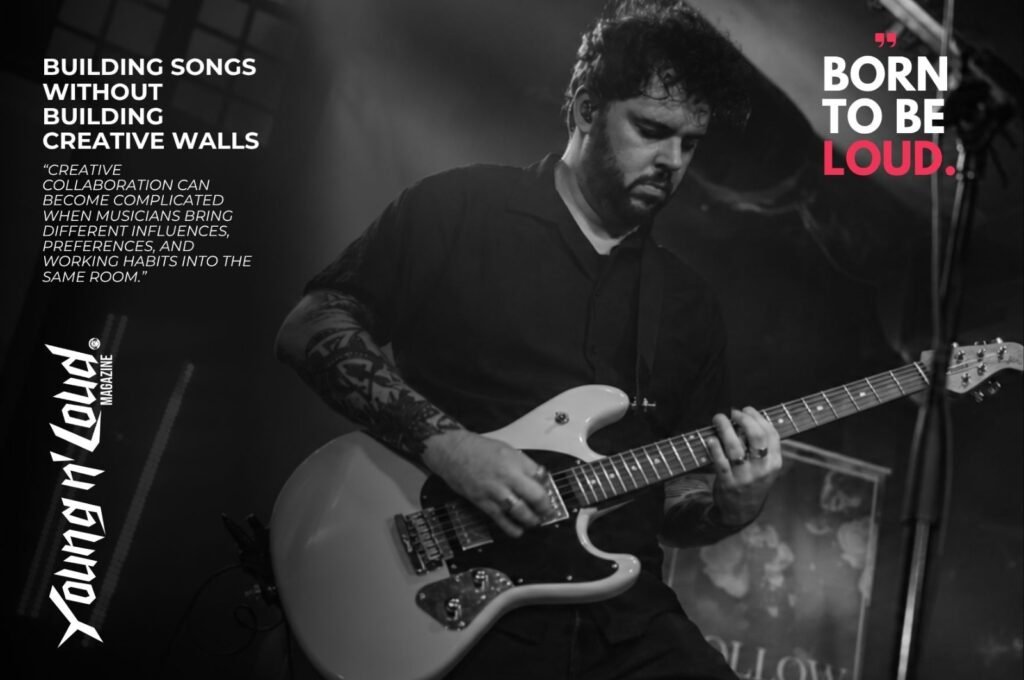
Creative collaboration can become complicated when musicians bring different influences, preferences, and working habits into the same room. Some bands rely on a single principal songwriter. Others develop compositions collectively through rehearsal and improvisation. Hollow Wake operate somewhere between those approaches.
Their songwriting frequently begins with either Bobby or Josh, depending on where the initial inspiration originates. Bobby may develop an entire rough production, establishing electronic elements, structural ideas, and an overall direction before sending it to Josh. Josh then contributes guitar arrangements and suggestions, sometimes identifying elements that require further development.
Other compositions begin with Josh recording a guitar idea and sending it to Bobby with considerable creative freedom. Bobby particularly enjoys those moments. Josh’s ability to establish a compelling musical foundation gives him something to explore, expand, and reshape through production.
Once the initial arrangement reaches a workable stage, the other members develop their individual parts, using the demo as a guide. The band then refines the composition through production sessions before recording the completed instrumentation. Although Hollow Wake handle much of their production themselves, a mixing engineer helps bring the recordings to their finished form.
The process is collaborative, but Bobby remains attentive to the band’s overall identity. He refers to that identity as a creative north star. The musicians can experiment with new sounds, unconventional arrangements, and unexpected influences, but the finished material must still communicate something recognizable about Hollow Wake.
Interestingly, some of the band’s most distinctive ideas emerge from sources that have little obvious connection to metalcore. Their song “Meadows,” for example, draws inspiration from The Lord of the Rings, incorporating a variation of a Shire theme to evoke the peaceful atmosphere of a meadow.
In “Face This,” Bobby transformed recordings of a penguin’s vocalizations into a synthesizer-like sound. Another composition from Dying To Be Whole features his cat Dwight’s meow incorporated into a Reflect in breakdown. These details reveal something important about the band’s creative philosophy.
Inspiration does not need to arrive in a conventional musical form. Bobby and Josh also share an appreciation for video games such as Kingdom Hearts, Final Fantasy, and The Legend of Zelda. Their cinematic soundtracks have influenced the atmospheric dimensions of Hollow Wake’s arrangements.
Books, films, dreams, everyday noises, and unexpected moments can all become musical material. The challenge is not necessarily finding unusual inspiration. It is understanding how to transform that inspiration into something emotionally convincing.
When Music Becomes a Place to Heal
Behind Hollow Wake’s cinematic production and heavy instrumentation lies a more personal motivation. The band frequently writes about experiences that are difficult to discuss openly.
The death of someone close. The end of a relationship. The feeling of being forgotten. The loneliness that can remain even when other people are physically present. For Bobby, these subjects are not abstract concepts selected because they suit the atmosphere of heavy music.
They are connected to experiences that have affected him and the people around him. “All of the setbacks and/or struggles I would say are written in the very fabric of our lyrics,” he explains.
The writing process provides an opportunity to confront those experiences, examine their emotional consequences, and gradually develop a different relationship with the memories behind them. Bobby also recognizes that the stories within Hollow Wake do not belong exclusively to him.
Each member has experienced personal challenges, and he approaches those experiences with an understanding that their perspectives deserve consideration. Although much of the lyrical material originates from his own life, he wants the band’s music to provide space for the others as well. Mental health has consequently become an important part of Hollow Wake’s identity.
The musicians are not presenting themselves as having solutions to every emotional difficulty. Their objective is more human and immediate. They want people to recognize that their experiences are not necessarily theirs to carry alone. “I want listeners to feel seen, as though someone is hearing their hurt, pain, and heart before they even have to put it into words,” Bobby says.
That intention also extends to the atmosphere the band hopes to create around its performances. A Hollow Wake concert should be a place where listeners feel comfortable expressing whatever the music brings to the surface. Some may connect through the physical intensity of the breakdowns. Others may find themselves moved by quieter passages. There is room for both reactions.
The band wants its audience to feel welcome without having to conceal the emotions that brought them there. That perspective offers a useful reminder about the relationship between artists and listeners. Music does not always need to change someone’s circumstances to make a difference. Sometimes its value comes from helping someone feel understood within those circumstances.
From Acoustic Rooms to Stages They Once Imagined
The distance between Hollow Wake’s earliest acoustic performances and their later live experiences is significant. But the band’s progression has not simply been a matter of performing in larger venues. For Bobby, it has also involved becoming comfortable with the responsibilities of being a frontman. He remembers a period when performing without a drum kit in front of him felt unfamiliar.
Over time, that uncertainty gradually gave way to a more confident stage presence. One particularly memorable experience occurred when Hollow Wake opened for The Word Alive at Eastside Bowl. The size of the stage and the significance of the opportunity brought back nerves he had not experienced in some time. Then the audience began responding. The crowd’s participation encouraged Bobby to abandon his hesitation and commit fully to the performance.
It became a defining moment in his understanding of what he could bring to the stage. The band has also shared bills with established acts including Attack Attack!, A Skylit Drive, Secrets, and The Word Alive. A sold-out performance alongside Alien Ant Farm carried particular meaning for Bobby, who could hardly have imagined such an opportunity during his teenage years. Their first hometown headline show represented another important milestone.
Rather than rushing toward it, Hollow Wake waited until the opportunity felt appropriate for the band’s development. There have also been smaller moments that reveal how their relationship with listeners has changed. Bobby recalls fans approaching the band after performances and asking them to sign shirts, hats, and other personal belongings. Some items had no connection to Hollow Wake merchandise. For the musicians, those interactions were unexpectedly meaningful.
They suggested that the relationship between band and audience had developed beyond the immediate experience of a performance. Listeners were not simply enjoying the songs. They were beginning to associate the music with their own lives.
Four Personalities, One Shared Direction
The chemistry within Hollow Wake is shaped by four musicians whose personalities and responsibilities extend beyond their instruments. Bobby describes bassist Jake Henderson as the group’s rebel.
Jake’s musical preferences are strongly connected to punk, including bands such as No Use For A Name, The Ramones, and Social Distortion. Josh, meanwhile, combines his responsibilities as guitarist with the role of band manager. He helps coordinate the practical requirements of keeping the project moving, ensuring the musicians remain organized both onstage and away from it.
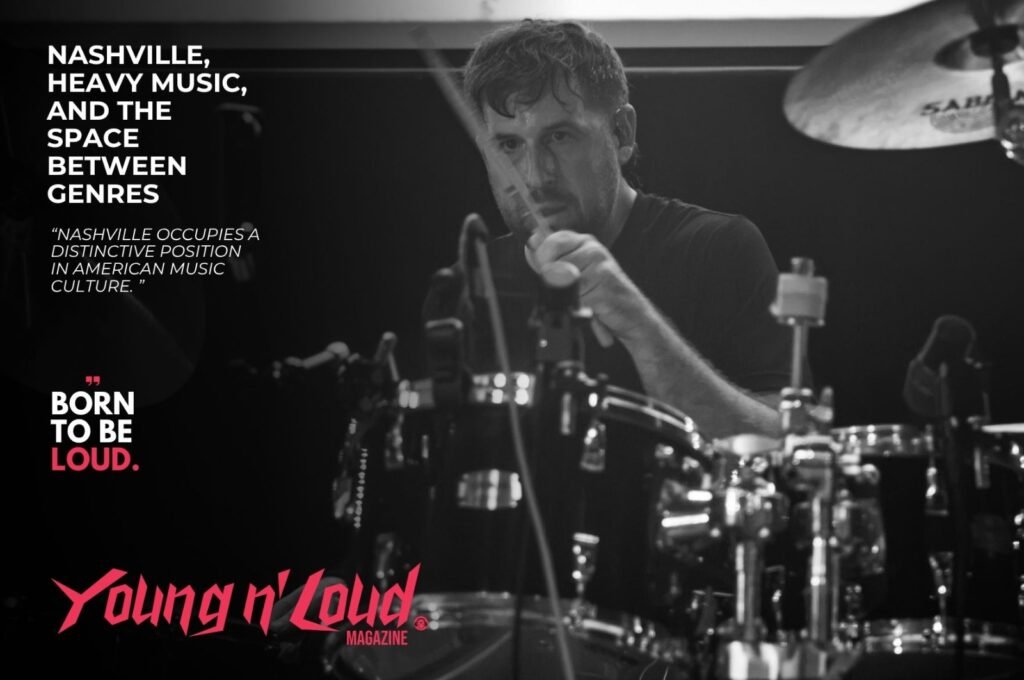
Bobby describes him as someone capable of maintaining that structure without losing his sense of humor. Drummer Matt contributes a calmer presence. Alongside his involvement with Hollow Wake, he works as a drum instructor and continues developing his own technical abilities. Bobby sees himself as the dreamer.
In addition to singing and writing, he oversees much of the band’s visual identity, including graphics, social media, music videos, branding, and merchandise. That involvement gives him a role in shaping not only how Hollow Wake sound, but also how the project presents itself to the world.
Yet the musicians recognize that maintaining a band requires more than continuous creative activity. Their lives outside music remain important. Bobby enjoys spending time with his wife, walking, cooking, watching films, and relaxing with his cats.
Josh balances the band with family life, exercise, pets, and gaming. Jake enjoys films and music, while Matt spends time with his dog, follows sports, and continues studying drumming. These ordinary routines may appear disconnected from the intensity of Hollow Wake’s music, but they play an important role in sustaining the project. For Bobby, rest is not an obstacle to productivity. It is part of what makes continued creativity possible.
Dying To Be Whole: The Courage to Confront What Remains
Hollow Wake’s second full-length album, Dying To Be Whole, represents an important development in the band’s musical and emotional direction. The 16-track project follows their debut, A Season To Bloom, and explores darker themes through a fuller sound and increasingly personal songwriting.
The Editorial Sheet identifies October 30 as the album’s release date, marking a new chapter in the band’s growing catalogue. For Bobby, creating the record required considerable reflection. He describes the material as the most vulnerable he has been, both musically and lyrically. That vulnerability is central to understanding the album’s title.
Dying To Be Whole suggests a complicated relationship between suffering and recovery. The desire to feel complete again can become especially intense when someone has experienced loss, emotional exhaustion, or a period of uncertainty.
But healing rarely follows a predictable sequence. It can involve revisiting experiences that would be easier to avoid, acknowledging emotions that have remained unresolved, and accepting that progress does not always feel comfortable.
The album’s title track addresses that process directly. When asked which Hollow Wake song he would send into space as a message from Earth, Bobby chose “Dying To Be Whole.” His reasoning was straightforward. The composition expresses the idea that people often experience significant hardship before they can begin to heal and recover a sense of wholeness.
It is an interesting choice for a hypothetical message to an unfamiliar listener. Rather than selecting a song simply because it demonstrates the band’s musical intensity, Bobby chose one that communicates something about the human experience. Pain is not exclusive to any particular generation, culture, or musical community. Neither is the desire to move beyond it.
The album also demonstrates how far Hollow Wake have progressed from the acoustic performances that defined their earliest days. Their arrangements have become more expansive, their production more confident, and their songwriting more willing to explore uncomfortable emotional territory.
Yet the underlying purpose remains recognizable. The musicians still want to create music that connects.

Success Beyond the Numbers
For independent musicians, success can be difficult to define. Streaming figures, social media engagement, ticket sales, and audience growth all provide measurable indicators of progress. But those numbers do not necessarily explain what an artist experiences when their music begins to matter to someone else. Hollow Wake have developed their own understanding of success.
Bobby appreciates the milestones the band has achieved, but he places particular value on the relationships that have developed through their work. Seeing someone wearing a Hollow Wake shirt in an unexpected place can be more meaningful than another numerical achievement. Hearing that someone in another state recognizes the band’s name provides a similar sense of satisfaction.
These experiences demonstrate that the music is traveling beyond the musicians’ immediate surroundings. More importantly, it is reaching people who are choosing to make it part of their lives. “To me, success is not about social media numbers. It is about the real connections we make,” Bobby explains. That philosophy does not mean the band lacks ambition.
Hollow Wake continue to imagine larger opportunities, new collaborations, and further musical development. Bobby mentions Landon Tewers of The Plot In You, Rory Rodriguez of Dayseeker, and Trenton Woodley, formerly of Hands Like Houses, as musicians he would be excited to collaborate with. He admires their vocal abilities and songwriting instincts, qualities that align with his own interest in emotionally compelling compositions.
The band also plans to continue releasing music videos and performing live, with the possibility of further touring.
But the musicians appear determined to approach those opportunities without losing sight of the relationships and experiences that motivated the project.
The Importance of Knowing When to Rest
One of the more revealing aspects of Hollow Wake’s philosophy emerges when Bobby discusses what keeps the band motivated. His answer is not about working harder, producing more content, or constantly pursuing the next opportunity. It is about balance.
Being part of a band requires significant effort, particularly when its members are involved in songwriting, recording, production, performances, promotion, and the practical responsibilities of maintaining an independent project. The workload can easily become overwhelming.
Bobby recognizes that enthusiasm alone cannot protect musicians from exhaustion. The members of Hollow Wake make an effort to maintain relationships, pursue interests outside the band, and rest when necessary. They understand that creativity becomes difficult to sustain when every available moment is treated as an obligation.
That perspective is especially relevant to emerging musicians, who often feel pressure to prove their dedication through constant activity. Hollow Wake offer a different example. Taking music seriously does not require sacrificing every other part of life.
In fact, protecting those other parts may be essential to maintaining a meaningful relationship with the music itself. For a band whose songs explore emotional well-being, the connection between their artistic message and their personal habits is particularly appropriate. They are learning to practice some of the same care they hope their music encourages in others.
The Beauty of Being Heard
If Hollow Wake’s music could be represented through a single visual image, Bobby imagines a deep, bruised purple fading into black and white. Its texture would resemble a weathered rose petal wrapped around something sharp. Soft and beautiful on the surface, but damaged and thorny underneath.
The flavor, he suggests, would be bittersweet with a smoky aftertaste. It is an unusually vivid description, but one that captures the contradictions running throughout the band’s work. Beauty and discomfort. Melody and aggression. Vulnerability and strength.
Hollow Wake have built their identity around the understanding that these qualities do not need to exist separately. Their music can be heavy without becoming emotionally distant. It can be personal without losing the energy of a live performance. It can explore darkness without suggesting that darkness is all there is.
From Bobby and Josh’s earliest conversations in Murfreesboro to the development of Dying To Be Whole, the band has continued pursuing an idea that remains remarkably consistent.
Write what matters. Make room for experimentation. Respect the people behind the music. And never underestimate the significance of making someone feel understood. Perhaps that is what makes Hollow Wake’s journey worth following. Their story is not simply about a band becoming more accomplished, confident, or musically ambitious.
It is about four musicians discovering how their own experiences can become meaningful to people they may never meet. Because sometimes the most powerful thing a song can communicate is not that everything will be fine. It is that someone else understands why it isn’t. And for a listener who has spent too long feeling alone, that can be the beginning of something important.
Young N’ Loud Magazine | Born to Be Loud.