

Now Reading: Orange Against the Noise: The Unfiltered Journey of Color of Noise
-
01
Orange Against the Noise: The Unfiltered Journey of Color of Noise


By Young N’ Loud Magazine
A Life Built on Rhythm, Reinvention, and Refusing the Box
In an era where artists are constantly encouraged to fit neatly into categories, Color of Noise exists as a reminder that some of the most compelling music emerges from creative freedom. The project is the vision of a musician whose career has crossed continents, genres, setbacks, triumphs, and personal reinventions. Behind the name stands an artist who has spent decades immersed in music, first as a drummer, then as a producer, engineer, songwriter, and ultimately as the sole architect of his own sonic universe.
Color of Noise is not simply another solo project. It is the culmination of years spent learning every corner of the craft. From underground punk scenes in South Africa to international stages and recording studios, the journey has been defined by persistence, curiosity, and an unwavering commitment to authenticity.
The result is music that refuses limitation. It draws inspiration from skate culture, post punk, alternative rock, metal, and countless influences that stretch beyond traditional genre labels. Yet perhaps the most remarkable aspect of the project is not the music itself. It is the story of the person creating it.
Raised by the Streets of Johannesburg
Long before Color of Noise became a reality, the foundations were being laid in Johannesburg, South Africa.
Growing up surrounded by skateboarding culture and the underground punk rock community, the artist developed an appreciation for music that felt raw, honest, and unapologetically real. Johannesburg is a city known for its energy and contrasts. It can be beautiful and chaotic, inspiring and unforgiving, often all at the same time.
That environment left a permanent mark.
The intensity of the city became embedded in his creative DNA. The rebellious spirit of skate culture encouraged experimentation, while the punk scene taught him that authenticity mattered far more than perfection.
Like many young musicians, his earliest experiences were not glamorous. There were no major stages, no expensive studios, and no grand career plans. Instead, there were friends, instruments, and a shared obsession with loud music.
Some of his most cherished memories come from those early years.
A group of friends would gather in his parents’ living room and play metal for hours. Nobody worried about commercial success. Nobody analyzed algorithms or streaming numbers. They simply played because it was fun.
There was freedom in not knowing what came next.
As his skills developed and formal music education entered the picture, music gradually transformed from a hobby into a profession. New opportunities arrived, but so did new pressures. The realities of making a living through art introduced responsibilities that inevitably changed the experience.
Yet the spirit of those living room sessions never truly disappeared.
It still echoes through the music he creates today.
The Meaning Behind Color of Noise
Names often reveal more than audiences realize.
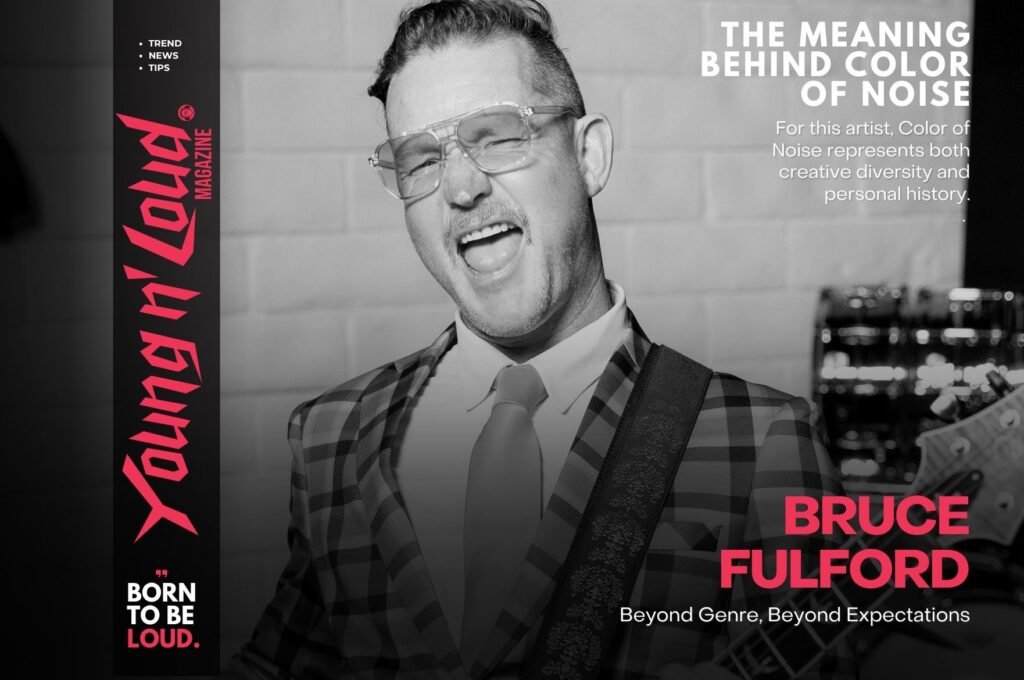
For this artist, Color of Noise represents both creative diversity and personal history.
The title reflects the broad spectrum of influences that shape his work. Rather than drawing from a single genre, he embraces an expansive palette of sounds and ideas. Every project becomes an opportunity to blend different musical colors into something entirely his own.
However, there is another layer beneath the surface.
The acronym C.O.N. carries deeply personal significance, referencing a chapter of his life involving a relationship with a con artist. Rather than allowing that experience to define him negatively, he transformed it into creative fuel.
That dual meaning perfectly captures the essence of the project itself. Beauty and struggle. Chaos and creativity. Pain and transformation. Color of Noise exists where those opposites collide.
Beyond Genre, Beyond Expectations
Ask many artists to describe their music and they will quickly reach for familiar labels.
Color of Noise takes a different approach.
While the music contains traces of skate rock, post punk, alternative rock, and metal, the goal has never been to operate within rigid boundaries. Instead, the project embraces movement between styles, allowing each song to become whatever it needs to be.
That freedom is one of the defining characteristics of the music.
Listeners may discover aggressive guitar driven moments on one track and atmospheric textures on the next. The connective tissue is not genre. It is emotion.
More specifically, it is release.
The artist consistently returns to one core objective. He wants listeners to experience a sense of freedom when they hear the music. For some, that release may come through nostalgia. For others, it may arrive as catharsis, reflection, or simple stress relief.
Music has always served as an escape from reality.
Color of Noise embraces that purpose without apology.
The One Man Orchestra
Creating music as a solo artist demands a unique level of discipline.
There are no bandmates to finish unfinished ideas. There is no committee to share responsibilities. Every decision falls on one person.
For Color of Noise, that means becoming everything at once.
Singer, Drummer, Bassist. Guitarist, Keyboard player, Producer, Mixer and Engineer.
Each role requires a different mindset, and moving between them can feel like shifting between entirely different personalities.
Yet it is precisely this process that makes the project unique.
The creative journey rarely begins with lyrics or structured songwriting sessions. Instead, it often starts with a beat, a groove, or a bass line. From there, ideas emerge organically through improvisation.
Rather than sitting down with a guitar and carefully constructing a song, he prefers to hit record and let instinct take over.
Only later does the meaning reveal itself.
Many artists spend weeks trying to force inspiration. Color of Noise trusts the moment and allows inspiration to lead.
That spontaneity gives the music an honesty that cannot be manufactured.
Lessons from Legends
Every artist carries the fingerprints of those who inspired them.
For Color of Noise, those influences are both diverse and revealing.
The experimental fearlessness of Faith No More helped shape his willingness to challenge expectations. The emotional depth and sonic innovation of Radiohead demonstrated the power of artistic evolution. Meanwhile, the improvisational brilliance of Miles Davis reinforced the importance of trusting instinct and embracing unpredictability.
Although these artists occupy very different musical spaces, they share a common thread.
None of them were interested in staying comfortable.
That philosophy continues to influence the direction of Color of Noise today.
A Career Defined by More Than a Hit Song
Throughout a lengthy career as a freelance musician, the artist accumulated countless experiences that shaped his perspective.
One particularly notable chapter involved performing with the band Lustra.
The group’s song “Scotty Doesn’t Know,” featured prominently in the film Eurotrip, became a global phenomenon and remains one of the most recognizable songs associated with the era.
Many musicians would gladly allow a success of that magnitude to define their legacy.
He does not.
In fact, he speaks about it with remarkable humility.
Hits often involve timing, circumstance, and luck. Commercial success does not necessarily reflect an artist’s most meaningful work. While the achievement remains an important part of his story, it represents only one chapter in a much larger narrative.
The focus has always remained on growth rather than nostalgia.
When Everything Changed
Every great artist encounters moments that test their resilience.
For Color of Noise, those moments arrived in devastating fashion.
A motorcycle accident resulted in a broken back.
Years later, a surfing accident led to a broken neck.
Both experiences forced him into periods of physical recovery and emotional uncertainty. They introduced challenges that extended far beyond music and pushed him into some of the darkest chapters of his life.
Many people would have stepped away from creative work entirely.
Instead, he adapted.
Unable to operate normally, he built a recording studio around his bed so he could continue creating music.
That decision reveals something fundamental about his relationship with art.
Music was never simply a career.
It was survival.
Even when circumstances stripped away mobility and routine, creativity remained intact.
The songs continued.
The work continued.
And eventually, so did the healing.

Finding Calm in the Chaos
For someone whose professional life revolves around noise, performance, and constant creation, balance is essential.
Fortunately, the artist has found grounding in simple places.
Friends and family provide perspective.
His dog offers companionship.
A mountain studio creates space for reflection.
The ocean serves as a personal sanctuary.
When life becomes overwhelming, the sea provides clarity. It is where he disconnects from distractions and reconnects with himself.
While many artists rely on elaborate pre show rituals or strict creative routines, Color of Noise operates differently.
Spontaneity remains central to everything.
When inspiration strikes, the response is immediate.
Press record.
See where it goes.
Trust the process.
The Color Orange and the Sound of Individuality
If music could be translated into color, Color of Noise already knows the answer.
Orange.
It is a choice that feels surprisingly appropriate.
Orange is bold without being predictable. It stands apart from more commonly celebrated colors while maintaining its own unmistakable identity.
The comparison mirrors his artistic philosophy perfectly.
Just as orange exists outside conventional favorites, Color of Noise exists outside conventional categories.
The goal has never been to fit in.
The goal has always been to create something authentic.
Music as Release
Many artists feel pressure to attach grand social messages to their work.
Color of Noise rejects that expectation.
He is not interested in presenting himself as a cultural savior or spokesperson for a movement. Instead, he embraces a simpler and arguably more honest mission.
Create music.
Turn it up.
Feel something.
Whether listeners scream along, reflect quietly, or process their own emotions through the songs is entirely up to them.
The music provides the space.
The audience completes the experience.
That perspective extends to his songwriting as well. Rather than forcing recurring themes, he allows lyrics to emerge naturally through improvisation. Often, the true meaning of a song becomes apparent only after it has already been recorded.
The result is a catalog that feels alive, unpredictable, and deeply human.

Looking Toward the Next Chapter
Momentum continues to build for Color of Noise.
The artist recently released a striking cover of The Cure’s classic “Pictures of You,” offering his own interpretation of one of alternative music’s most beloved songs.
At the same time, a brand new album is already complete.
The first single arrives on June 5, marking the beginning of another exciting chapter in the project’s evolution.
Looking further ahead, collaboration remains part of the vision. Having worked alongside numerous musicians throughout his career, he intends to continue exploring creative partnerships.
Among his dream collaborators are Dave Grohl, the members of Idles, and several artists currently pushing boundaries within the modern post punk movement.
For fans, that means the future remains wide open.
Measuring Success in Smiles
In an industry obsessed with numbers, streams, followers, and revenue, Color of Noise measures success differently.
For him, success is counted in smiles rather than dollars.
Of course, sustaining a project requires an audience. Every artist hopes to build a following large enough to continue creating meaningful work. Yet financial achievements remain secondary to enjoyment and personal fulfillment.
That philosophy has become increasingly valuable in today’s music landscape.
After years spent navigating the realities of the industry, he still approaches music with the enthusiasm of a kid discovering it for the first time.
The wisdom may have grown.
The excitement never left.
Still Young, Still Loud
When asked what keeps him Young N’ Loud, the answer arrives with characteristic honesty.
He may be older now.
He may be more experienced.
His songwriting may be more mature.
But life itself remains an adventure.
At heart, he is still the same kid who loves turning up the volume and losing himself in the music.
Perhaps no upcoming song captures that spirit better than “I’m a Gorilla,” his favorite track from the new album. The title alone hints at the playful energy and unstoppable creative drive that continue to fuel the project.
It is a reminder that passion does not expire with age.
If anything, it grows stronger.
And that may be the most important lesson in the entire Color of Noise story.
Not the hit records.
Not the injuries.
Not the accolades.
The lesson is persistence.
Through every challenge, every reinvention, and every unexpected turn, music remained constant.
Color of Noise stands today as the sound of an artist who refuses to be confined, refuses to be defeated, and refuses to stop creating.
Like a meal that is probably too spicy, as he puts it, the experience might leave a lasting impression long after it is over.
The only way to understand it fully is to press play.