
Now Reading: MORPHAE: BETWEEN THE DREAM AND THE NIGHTMARE
-
01
MORPHAE: BETWEEN THE DREAM AND THE NIGHTMARE


Article by Young N’ Loud Magazine
For Morphae, music is more than a sound. It is the place where memories, heartbreak, identity, dreams, and everything left unspoken can finally exist.
There is a particular kind of loneliness that comes from carrying an entire world inside your head and having nowhere to put it.
For Morphae, that world was there long before the music had a name.
Growing up in Lebanon, music became a refuge, but not because it offered an escape from reality. It gave reality somewhere to go. Before there was a guitar, there were lyrics written on paper, poems, imagined melodies, and rhythms created in the mind. Before there was an artist identity, there was a person trying to make sense of feelings that were often too complicated, painful, or unsafe to express aloud.
Today, that inner world is becoming Morphae, the solo artist whose sound exists somewhere between dream and nightmare, memory and reality, comfort and heartbreak.
The project is still taking shape, and in many ways, so is the artist behind it. After moving from Lebanon to Toronto, Morphae has begun giving music the focus it has demanded for years. The songs, sounds, visual ideas, and emotional landscapes that once remained trapped in unfinished drafts are finally finding their way into the world.
The name itself could hardly be more appropriate.
Morphae, pronounced “Morphée,” is inspired primarily by Morpheus, the Greek god of dreams, but the meaning reaches much further. Dreams have always fascinated Morphae, particularly recurring dreams, nightmares, lucid dreaming, symbols, and the strange relationship between the subconscious and waking life. Over time, the boundary between those worlds became increasingly important, first through filmmaking and eventually through music.
Now, Morphae is the sound of everything that continues to live beneath the surface.
BEFORE THE GUITAR, THERE WAS A PEN
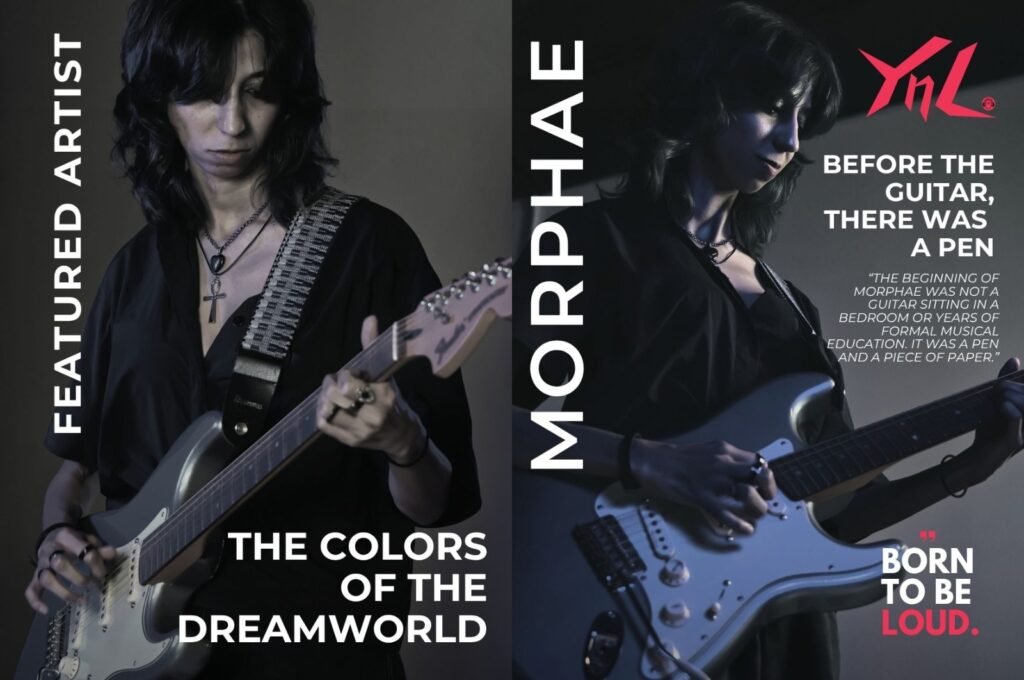
The beginning of Morphae was not a guitar sitting in a bedroom or years of formal musical education. It was a pen and a piece of paper.
Morphae grew up in a smaller, more conservative town in southern Lebanon after being born in Beirut, and music was not easily accessible during those early years. There was no instrument waiting at home and no opportunity to begin the kind of musical education that might have allowed a young musician to develop naturally alongside their peers.
There was, however, a conservatory nearby. Morphae remembers watching students walk past carrying guitars and wanting desperately to be one of them. At the time, that possibility did not feel available. Instead, songwriting became something that could happen privately, without an instrument or permission. Lyrics became poems, poems became imagined songs, and melodies existed entirely inside the mind.
It was the only musical language available. And it was enough to begin. At eighteen, Morphae finally had access to a guitar through a friend and began teaching themselves through tabs and online resources, learning the songs that had already become deeply connected to their identity.
By twenty three, professional electric guitar lessons finally became possible.
That changed everything.
Until then, music had largely existed as something imagined. Guitar transformed those internal melodies into something tangible. Suddenly, the sounds that had lived in Morphae’s head could be played, manipulated, layered, and developed into actual compositions.
It was not simply learning an instrument. It was gaining a new way to speak.
WHEN MUSIC BECAME A HOME
To understand Morphae’s music, it is impossible to separate the sound from the environment in which it developed.
Growing up queer in a conservative environment meant learning early that certain parts of identity could not always be expressed safely. Feeling misunderstood and isolated became part of adolescence, as did the experience of carrying heartbreak, anger, loneliness, and identity struggles without necessarily having somewhere to place them.
Then rock music arrived.
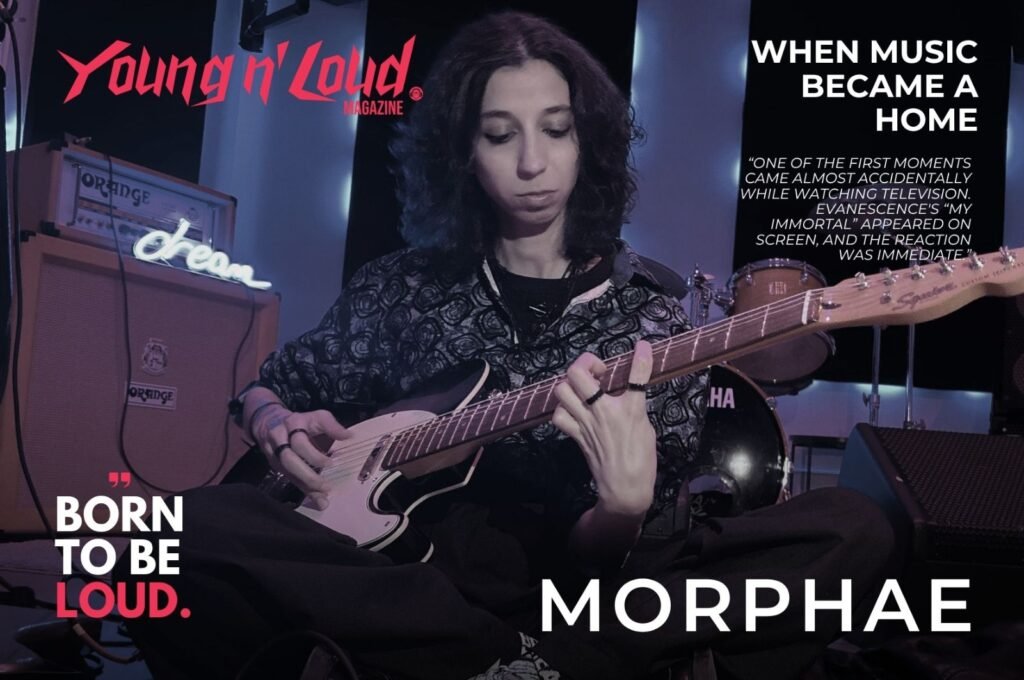
One of the first moments came almost accidentally while watching television. Evanescence’s “My Immortal” appeared on screen, and the reaction was immediate. Something about the song felt completely foreign and yet strangely familiar.
It was as if someone had taken emotions that had been impossible to articulate and given them a home.
Avril Lavigne and punk music followed, opening another door into a world that felt radically different from the Arabic pop music that surrounded Morphae growing up. Alternative rock and metal soon became part of that expanding musical universe, and the young musician began dressing differently, thinking differently, and finding comfort in the very things that made them feel like an outsider.
Music became the constant.
With headphones on, Morphae could disappear into the worlds created by other artists, listening to songs that somehow understood heartbreak, identity, anger, loneliness, and all the emotions that were difficult to discuss in real life.
The artists who offered that refuge eventually became the reason Morphae wanted to become an artist too.
There was a realization hiding inside that experience: if music could make one isolated person feel understood, perhaps one day Morphae could create that same feeling for someone else.
That idea remains at the heart of the project.
FROM LEBANON TO TORONTO
Moving to Beirut at eighteen marked another transformation.
Studying filmmaking and sound design introduced Morphae to people from different backgrounds and to a city that offered a freer environment for self expression. For the first time, there were people who felt familiar in ways that had previously seemed impossible. It became a period of gradually coming out, embracing identity, and discovering another side of Lebanon.
Beirut also left a lasting artistic imprint.
Its darkness, complexity, contradictions, and energy became part of the creative language that Morphae carried forward.
But Lebanon also meant living through war, both as a child and as an adult. The experience of witnessing those horrors left an immeasurable mark and intensified the desire to create music that reflected the perspective of a queer artist from the Arab world.
The darkness was no longer simply an aesthetic.
It was an experience.
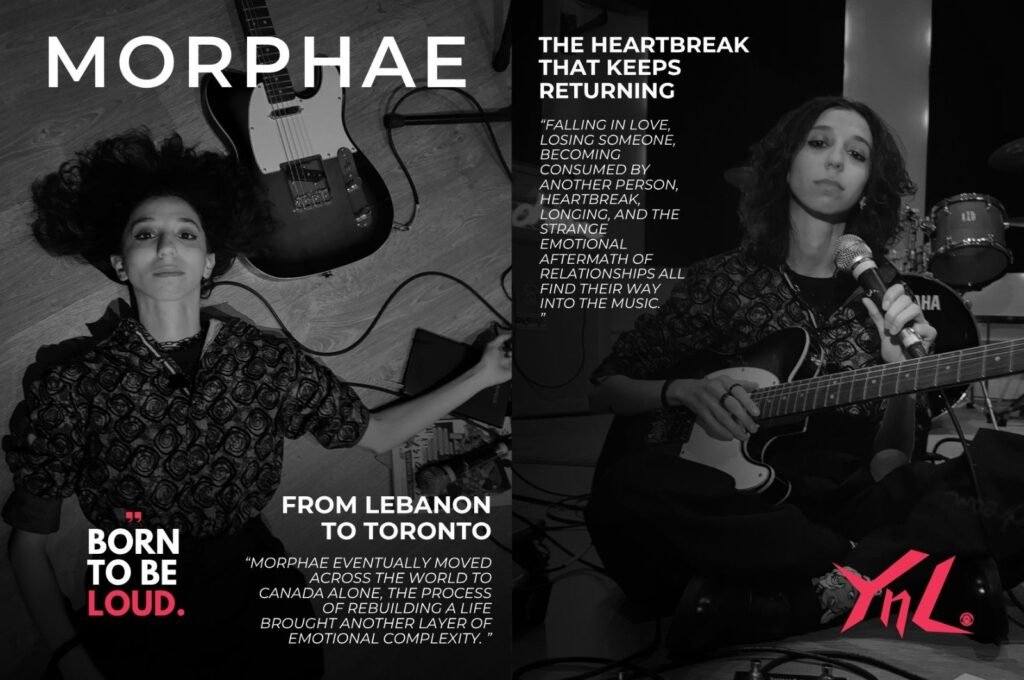
And when Morphae eventually moved across the world to Canada alone, the process of rebuilding a life brought another layer of emotional complexity. Leaving one environment behind did not mean leaving its memories behind. If anything, distance made some of those memories louder.
That became another reason to create.
The music could hold what the past could not.
FINDING THE DREAM IN THE DARK
For years, Morphae experimented with different sounds without knowing exactly where they were going.
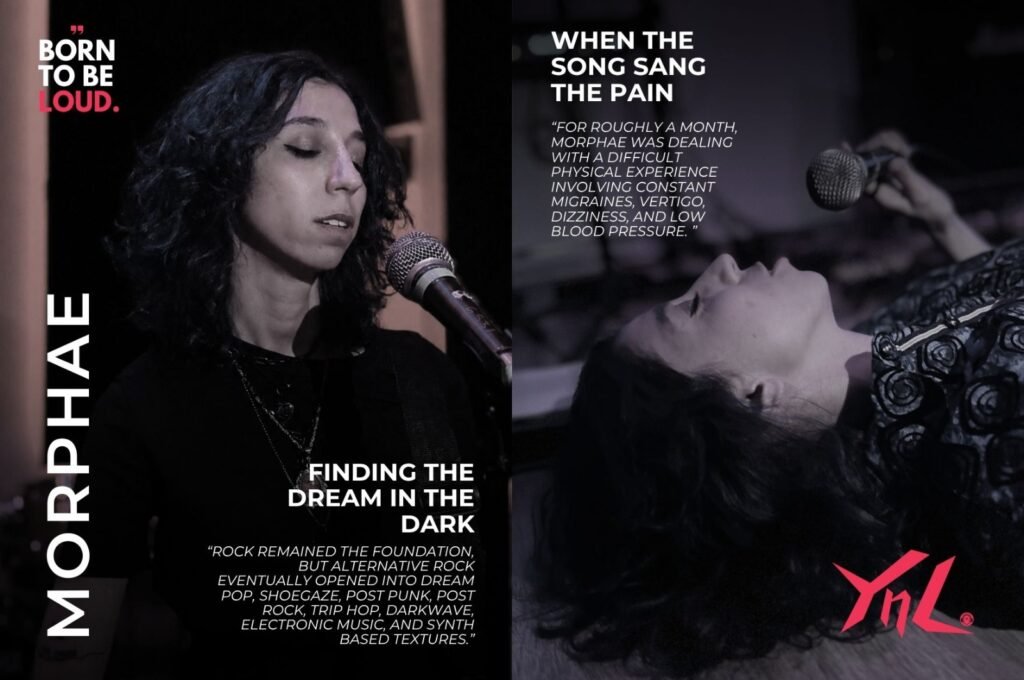
Rock remained the foundation, but alternative rock eventually opened into dream pop, shoegaze, post punk, post rock, trip hop, darkwave, electronic music, and synth based textures. The discovery of dream pop and shoegaze was particularly important because it provided a musical language capable of combining the darkness Morphae already loved with something softer, more atmospheric, and more dreamlike.
The question became almost obsessive: how do you make music sound dreamy?
A guitar teacher helped unlock part of that answer by introducing major seventh chords and explaining how harmony can create a particular atmosphere. From there, Morphae began experimenting with pedals, reverb, chorus, delay, layers, textures, and effects.
Eventually, the music began to sound less like a collection of influences and more like a personal world.
That world is difficult to place inside a single genre label because its emotional identity matters more than its category.
It is dreamy, dark, bittersweet, nostalgic, haunting, hypnotic, raw, and filled with longing. It can feel like drifting through a beautiful dream only to suddenly realize the dream has become a nightmare. That contrast is not accidental. It is the signature.
Morphae describes an internal duality in which dreamy and dark emotions can exist simultaneously, sometimes changing without warning. A melody might begin softly and beautifully before suddenly becoming heavy and unsettling, like a dream changing shape while you are still inside it.
The opposite can happen too. Something dark can suddenly become soothing. That tension between beauty and darkness is where Morphae feels most at home.
THE WORLD INSIDE THE SONG
The creative process usually begins with emotion.
Sometimes it is an experience. Sometimes it is a dream, particularly a recurring dream. Sometimes it is a lyric that arrives unexpectedly or a melody that appears while Morphae is playing guitar.
The important thing is that the feeling comes first.
Once the initial idea exists, the song begins developing its own atmosphere. Morphae spends time with the instrument, exploring the melody and allowing the direction to emerge rather than forcing it into a predetermined structure.
Then the layers begin.
Guitar.
Voice.
Synth.
Effects.
More guitar.
More atmosphere.
Pedals play an especially important role. For Morphae, discovering a new effects pedal can itself become an inspiration for songwriting because exploring a new sound can reveal a melody or texture that would never have appeared otherwise. The goal is immersion.
The song needs to become a world. That approach also explains why literature, cinema, art, and fantasy have such a strong presence in Morphae’s creative life. A new book, a film, a new artist, an intense conversation, or even falling in love can create an emotional current that eventually becomes music.
Small talk does not tend to provide that kind of fuel. Deep conversations do. Morphae is drawn to discussions about music, art, emotions, relationships, and the strange experience of being alive. Those conversations can create a rush of ideas and feelings that demand an outlet. Sometimes that outlet becomes a song.
DREAMS, SANDMAN, AND MORPHAE
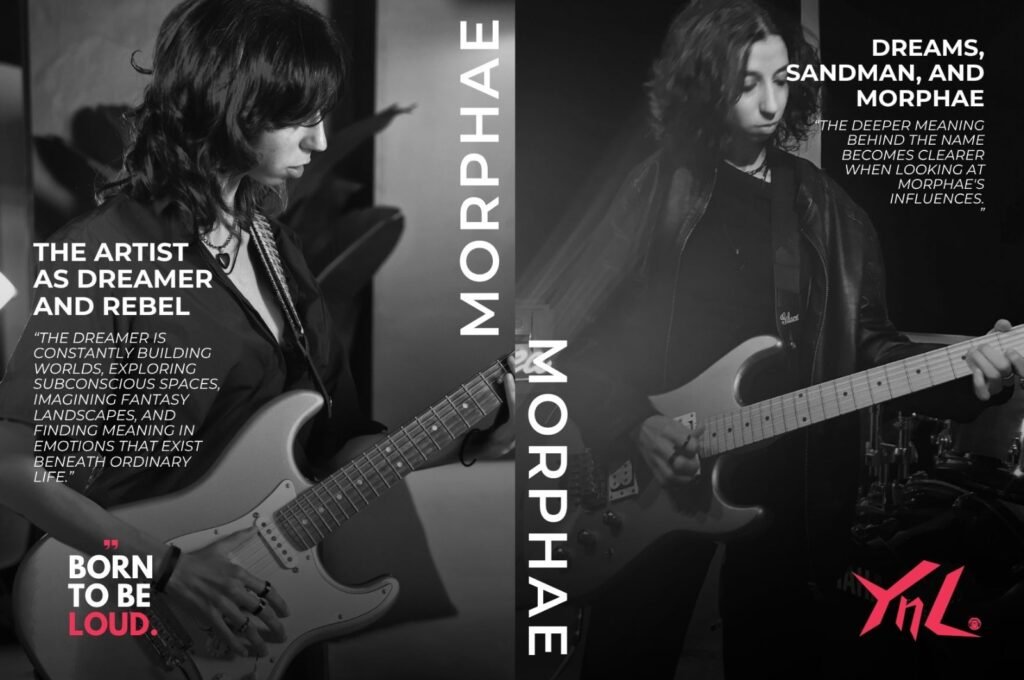
The deeper meaning behind the name becomes clearer when looking at Morphae’s influences. One of the biggest is Neil Gaiman’s The Sandman, particularly the character Morpheus, also known as Dream of the Endless.
The connection began through another musical influence: Nightwish and the album Imaginaerum. While researching the work and inspirations of Nightwish songwriter and keyboardist Tuomas Holopainen, Morphae discovered Gaiman and eventually The Sandman.
The character of Dream changed the way Morphae thought about the subconscious.
Dreams stopped being simply strange experiences that happened during sleep. They became a space where memories, emotions, fears, desires, and unresolved experiences could continue existing.
That idea eventually became central to the artist’s identity.
Morphae sees the dreamworld as a place where emotions that have been repressed or ignored can exist without restrictions. It is personal and different for everyone, a private landscape where dreams and nightmares can coexist.
The music aims to enter that space.
It is not necessarily designed to make people happy.
Instead, it gives difficult emotions permission to exist.
SOFT SOUND, DARK STORIES
One of the biggest misconceptions about Morphae’s music is that dreamy music must be happy music.
It is not.
The atmosphere may be soft, floating, ethereal, and beautiful, but the stories underneath can be deeply painful.
Heartbreak.
Loss.
Identity.
Longing.
Memory.
Transformation.
Queerness.
The emotional weight comes from the experiences behind the atmosphere.
For Morphae, the dreamy quality is not an escape from reality. It is a way of moving deeper into it.
The dream becomes the environment in which reality can finally be confronted.
That distinction is essential.
The music does not ask listeners to forget their pain. It invites them to sit with it, explore it, and perhaps discover something beautiful inside it.
WHEN THE SONG SANG THE PAIN
One recording session made that idea more literal than ever.
For roughly a month, Morphae was dealing with a difficult physical experience involving constant migraines, vertigo, dizziness, and low blood pressure. Medical tests did not provide an explanation, and the sensitivity to sound eventually became so intense that playing guitar was almost impossible.
Then one day, frustration took over.
Morphae picked up the guitar anyway.
The camera went on.
And instead of trying to write a song, Morphae simply began playing and singing.
The physical pain, frustration, and emotional exhaustion poured into the performance.
Within roughly half an hour, a song about “the feeling in my head” had emerged.
There was no carefully planned writing session.
There was simply an overwhelming feeling looking for somewhere to go.
The melody arrived.
The lyrics arrived.
The song almost seemed to write itself.
What happened afterward made the experience even more meaningful. Morphae gradually began feeling better, although the underlying cause of the physical symptoms was never identified.
The recording remained.
It became a reminder that music can sometimes do something that explanation cannot.
It can give pain a voice.
THE HEARTBREAK THAT KEEPS RETURNING
If there is one subject Morphae repeatedly finds themselves returning to, it is love.
More specifically, what happens when love becomes overwhelming.
Falling in love, losing someone, becoming consumed by another person, heartbreak, longing, and the strange emotional aftermath of relationships all find their way into the music.
Heartbreak has often affected Morphae deeply, sometimes disrupting motivation and everyday life. Yet every time something falls apart, music remains.
People leave.
Relationships end.
Places change.
Circumstances collapse.
Music stays.
That realization became one of the most important truths behind the project.
Music is not simply something Morphae enjoys doing. It has become the home base, the constant, and the place to return when everything else feels uncertain.
That is also why the recurring dream imagery makes sense.
Unprocessed emotions do not necessarily disappear.
They return in dreams.
They return in memories.
They return in symbols and patterns.
They return in songs.
Morphae writes about what happens when a feeling is never fully spoken, when someone tries to move forward while a part of them remains behind, and when the subconscious refuses to let something disappear simply because waking life has moved on.
A SAFE SPACE FOR PEOPLE WHO FEEL TOO MUCH
The purpose of Morphae’s music ultimately reaches beyond personal expression.
The goal is to create a safe emotional space.
A place where listeners can experience feelings they have been taught to suppress or perhaps never learned how to articulate.
Morphae wants people to feel seen, heard, held, and less alone.
That is particularly important because representation was something missing during their own upbringing.
Growing up queer in Lebanon, Morphae did not have many queer artists from the region to look toward and think, someone like me exists.
That absence matters.
Representation does not always require an explicit anthem or a political statement. Sometimes the simple act of existing openly can create a door for someone else.
Morphae does not describe the goal as becoming a major queer icon or writing obvious queer anthems. The music is more personal than that.
But the hope is powerful.
Perhaps somewhere there is a sixteen year old in a small Lebanese town, or anywhere else in the world, feeling isolated, unsafe, or unable to express who they are. Perhaps that person eventually discovers Morphae and realizes they are not completely alone.
That possibility is enough.
THE COLORS OF THE DREAMWORLD
Every artist has a visual language, and Morphae’s might already be hiding in the details.
It is black, naturally.
Then there is a particular metallic ice blue, inspired by the exact color of Morphae’s guitar. It has even earned its own unofficial name: “Morpheus Blue.”
Soft light pink enters the picture too, creating another side of the dream pop atmosphere through neon signs and lighting.
And then there is vanilla coffee.
That may be the flavor of Morphae’s music.
The description sounds almost playful compared with the emotional depth of the songs, but that contrast fits. Morphae’s world is not simply darkness. It is darkness illuminated by soft colors, nostalgia, warmth, fantasy, and beauty.
The same philosophy appears in the artist’s creative ritual.
Before making music, Morphae creates an environment where the outside world can disappear for a while. Music plays loudly. Coffee is made. A candle is lit. Neon signs come on. The pedalboard and recording equipment are prepared. A notebook is nearby.
Sometimes there is a little reading.
Sometimes an oracle or tarot deck appears.
And somewhere nearby, a cat is helping with the creative process by doing what cats do best: existing exactly where they want to be.
Afternoons have become particularly sacred.
When all of those elements come together, the transition happens.
The outside world becomes quieter.
The dreamworld opens.
And music starts to arrive.
THE ARTIST AS DREAMER AND REBEL
As a solo artist, Morphae identifies as both dreamer and rebel.
Those two identities may seem contradictory, but they describe the project surprisingly well.
The dreamer is constantly building worlds, exploring subconscious spaces, imagining fantasy landscapes, and finding meaning in emotions that exist beneath ordinary life.
The rebel refuses to stay inside conventional boundaries.
That combination is also visible in the music itself.
The songs move between genres rather than settling comfortably into one. Rock remains part of the foundation, but dream pop, shoegaze, post punk, post rock, darkwave, trip hop, electronic sounds, and synth textures all contribute to the final atmosphere.
The goal is not to prove that the music belongs somewhere.
The goal is to make it feel like Morphae.
DREAM OF YOU
That world is now becoming a full album.
Dream of You, Morphae’s debut project, explores the relationship between dreams and waking life, particularly the way heartbreak, memories, recurring dreams, and longing can continue affecting us long after the people or experiences connected to them have disappeared.
The album is expected to move through dreamy atmospheres and darker undertones, with raw lyrics and a combination of influences centered around dark dream pop, shoegaze, post punk, and post rock.
It is the natural evolution of everything that came before it.
The childhood years spent writing lyrics without a guitar.
The discovery of rock music.
The hours spent learning guitar.
The obsession with pedals and atmospheric textures.
The Heartbreak.
The dreams.
They move across continents.
The fear of releasing music.
The decision to finally stop keeping everything in drafts.
In 2024, Morphae began posting guitar covers, unfinished writings, melodies, concepts, and songs on TikTok. The response was encouraging, and that feedback helped break through years of perfectionism and fear.
For the first time, the music had somewhere to exist outside the artist’s own head.
That act of sharing became its own milestone.
It created confidence.
It reduced the distance between imagination and reality.
Most importantly, it made connection possible.
A WORLD STILL BEING BUILT
There are already dreams beyond the debut album.
Morphae wants to create animated videos connected to the music and eventually make music for film, an ambition that feels particularly natural for someone who studied filmmaking and sound design.
A collaboration with Neil Gaiman would be the ultimate dream, given how deeply The Sandman influenced the artist’s understanding of dreams and the subconscious.
Other dream collaborators include Warpaint, Men I Trust, IAMX, Nightwish, and Slowdive, artists whose music has helped shape the sonic language Morphae is now developing.
But perhaps the most important collaborations are the ones still waiting to happen.
After moving to Toronto, Morphae finally feels that the world has opened up creatively. There are new musicians to meet, people to learn from, and potential collaborators who might understand the same musical language.
For years, so many ideas existed only as unfinished drafts.
Now there is a possibility that those ideas can become songs.
And those songs can become an album.
THE RIGHT PERSON AT THE RIGHT MOMENT
Morphae’s definition of success has very little to do with numbers.
If the music reaches the right person at the right moment and makes them feel less alone, that is success.
If someone hears a song and finally finds words for something they have been carrying, that is success.
If someone feels represented, understood, comforted, or simply given permission to experience an emotion without judging themselves for it, that is success.
The ambition is not necessarily to make everyone happy.
It is to make people feel.
To create a place where painful emotions can exist without shame.
To offer relief through allowing those emotions to breathe.
In that sense, Morphae’s music continues the same role music played during childhood.
It becomes a home for feelings that have nowhere else to go.
DRIFTING BETWEEN TWO WORLDS
There is a reason Morphae’s music feels suspended between two places.
The artist has spent much of life doing the same thing.
Between Lebanon and Canada.
Between reality and dreams.
Between softness and darkness.
Between the practical demands of life and the emotional world inside the imagination.
Between the person the world expects you to be and the person you discover when you finally stop hiding.
Morphae does not seem interested in choosing one side.
The contradiction is the point.
That is why the simplest description of the project may also be the most accurate:
Morphae is the sound of drifting back and forth between a beautiful dream and a nightmare, never quite knowing which one you are in.
And perhaps that is what makes the music resonate.
Because most people know that feeling.
The feeling of remembering something at three in the morning.
The feeling of missing someone who is no longer part of your life.
The feeling of waking from a dream and carrying its emotions into the morning.
The feeling of being caught between who you were and who you are becoming.
The feeling of loving someone so intensely that you lose yourself inside it.
The feeling of discovering a part of yourself that had been waiting for permission to exist.
Morphae is building a musical world for all of it.
A world where darkness does not have to mean hopelessness, where dreamy does not have to mean happiness, and where feeling too much is not something that needs to be fixed.
It can simply be felt.
Maybe that is why music has remained constant.
It does not demand that the pain disappear.
It gives the pain a melody.
And somewhere between the dream and the nightmare, Morphae is finally letting the music out.