
Now Reading: HALLE BURNETT IS A BONFIRE IN THE MIDDLE OF THE OCEAN
-
01
HALLE BURNETT IS A BONFIRE IN THE MIDDLE OF THE OCEAN


Article by Young N’ Loud Magazine
From a Jewish summer camp talent show to New York City stages, Halle Burnett is building a world where confidence, character, chaos, and dance music collide.
There is something fitting about the fact that Halle Burnett’s journey as an artist began with a lie.
Not a serious one. Not the kind that gets you into trouble. More like the kind of impulsive, slightly ridiculous promise a kid makes when they desperately want their cabin mates to think they are cool.
Growing up in Toronto, Burnett spent her summers at a Jewish summer camp, a place she remembers with a particular kind of affection and awkwardness. She had already been singing since she was seven, but music had not yet become the all-consuming force it would eventually become.
Then came the talent show.
In an attempt to stand out, Burnett announced that she would write and perform an original song.
There was only one problem.
She had never written a song before.
So, she went home and wrote one.
That first song was called “Damage.” It had three chords, but it did something far more important than demonstrating musical complexity. It opened a door.
From that moment, Burnett became hooked on the feeling of writing something that had not existed before and then bringing it to life in front of other people.
The talent show was never really the point. It was the beginning.
Years later, that same instinct to create, perform, exaggerate, experiment, and occasionally throw herself into the deep end has become central to the artist she is today.
And if Burnett’s upcoming EP, HRB, is any indication, she is only getting started.
THE CITY THAT TAUGHT HER HOW TO TELL A STORY
Burnett was born and raised in Toronto, a city that continues to sit underneath much of her creative identity even as she builds her life in New York City.
For Burnett, creativity is naturally cumulative. Artists absorb the places they have lived, the people they have met, the things they have watched, the music they have heard, and the moments that stayed with them. Eventually, all of those fragments get filtered through an individual perspective.
Toronto gave her plenty to filter.
Her parents introduced her to Canadian artists such as Joni Mitchell and The Tragically Hip, exposing her early to songwriting that valued storytelling and identity beyond the dominant American music conversation.
Those artists helped Burnett understand that music could be more than sound. It could be a way of telling people who you are.
That lesson stayed with her.
More recently, returning to Toronto each summer has introduced her to another side of the city. Its underground rap, electronic, and hyperpop scenes have influenced the direction of her sound while also giving her a creative environment that feels different from New York.
She jokes that Toronto has warmed her up to distortion.
But the influence goes deeper than production choices.
The artists she has met there have reminded her that creativity can be generous. In a city like New York, where the music industry can sometimes feel intensely competitive, Toronto has offered Burnett another kind of energy: collaborative, curious, passionate, and kind.
That contrast between Toronto and New York has become part of her creative vocabulary.
One city grounds her.
The other pushes her.
And somewhere between the two, Halle Burnett is finding her sound.
“BE AS LOUD AS YOU WANT”
Burnett began taking music seriously around 2020 and 2021.
Like many artists during that period, she found herself spending enormous amounts of time creating. She was writing every day and posting on TikTok, slowly putting her work into the world.
Then she began connecting with producers and writers in Toronto.
Suddenly, the dream started to feel real.
The early co-writing sessions were exciting, but they were also intimidating. Burnett remembers working on “Expiration Date” and realizing that she was unusually quiet.
Then one of the writers pulled her aside.
“Don’t be scared, man. We’re here for you. Be as loud as you want.”
It sounds like a small comment.
For Burnett, it became something much bigger.
Her confidence did not come from wanting to dominate a room or demand attention. It came from understanding that her ideas were worth contributing. If she believed in the songs she was helping create, then she had a responsibility to put those ideas forward.
That realization changed the way she approached music.
She became louder.
More confident.
More willing to take up space.
But she never lost the nervousness, excitement, or wonder that defined those early sessions.
That might be one of the most important things about Burnett as an artist. She has grown more confident without becoming less curious.
The kid who wrote a three-chord song to impress her cabin mates is still somewhere inside the performer stepping onto a stage today.
She just knows how to use the microphone now.
MEET HRB
Halle Burnett does not have a mysterious stage name.
She uses her real name.
But HRB, the title of her upcoming EP, has a story of its own.
Growing up, Burnett’s father called her HB, using her initials. Eventually, the nickname became part of the language shared by the people closest to her.
Then she went to NYU.
Her roommates began calling her “HRB Trademark,” a phrase they would throw out whenever she did something particularly cool or impressive.
Over time, HRB became something more than a nickname.
It became an alter ego.
The version of Burnett who is hyper confident, fearless, glamorous, outrageous, and completely comfortable taking up space.
The version of herself she sometimes needed permission to become.
Naming the EP HRB feels like an acknowledgment of that transformation.
It is not simply an album title. It is a character, a personality, and a creative world built from the different versions of Burnett that already exist inside her.
That idea sits at the center of the project.
And it explains why Burnett’s music often feels larger than a collection of songs.
She is not simply writing tracks.
She is creating characters.

MUSIC FOR THE GIRL IN THE MIRROR
Trying to describe Burnett’s music without using genre labels is almost impossible, partly because she describes it better herself.
Her music feels like being eight years old, walking into your mother’s closet, putting on her heels for the first time, and attempting to become someone you desperately want to be.
Then, inevitably, tripping over yourself.
That tension is everywhere in Burnett’s creative world.
Confidence and insecurity.
Fantasy and reality.
Performance and vulnerability.
The desire to become someone bigger while still figuring out who you are.
For Burnett, music is a place where those contradictions can exist at the same time.
She wants listeners to feel powerful.
Not politely powerful.
She wants them to feel hot.
The kind of hot that makes you want to put-on six-inch Pleasers, walk down Bowery, and head toward plans you may or may not have fully figured out yet.
The upcoming EP was made for movement.
A walk.
A pregame.
A night with your best friends.
Anywhere there is enough space to dance, strut, move, and become a slightly more confident version of yourself.
That physicality is intentional.
Burnett is not interested in music that simply sits still.
EVERY SONG STARTS WITH A WORLD
The most fascinating part of Burnett’s creative process may be that her songs often begin before the music does.
They begin with characters.
For HRB, she imagined different personas and alter egos, each representing a different part of herself. Before writing certain songs, she would think about who that character was, what they wanted, what they feared, and what part of Burnett they represented.
“Show Me the Money,” the first single from the project, emerged from that approach.
Burnett drew inspiration from Andrew Neiman in Whiplash and Sally Bowles in Cabaret, two characters who embody different forms of obsession with performance.
She connected with the part of herself that is almost addicted to the game of performing, including its highs, lows, ambition, pressure, and adrenaline.
The song went through transformation after transformation.
Working with her friend Axel, Burnett built somewhere between five and ten different arrangements, each exploring a completely different direction.
The earliest version leaned more heavily toward hyperpop.
Eventually, the track evolved into something more intense and electronic, landing somewhere within electronic pop while retaining the theatrical quality of its original concept.
Even the color was already there.
Burnett always imagined “Show Me the Money” as green. She pictured its protagonist speaking from a stage, almost as if the lyrics were an internal monologue unfolding in real time.
This is how Burnett builds.
She sees the world first.
Then she finds the sound.
Then she finds the words.
And finally, she figures out how to make all three exist together.
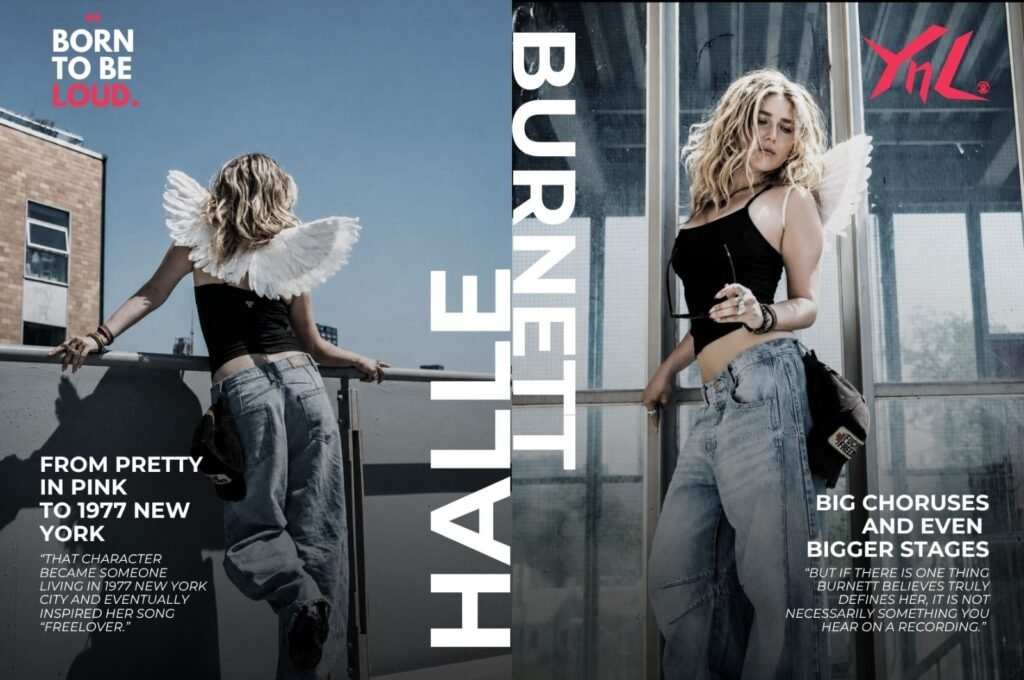
FROM PRETTY IN PINK TO 1977 NEW YORK
Burnett’s creative references rarely stay inside music.
For HRB, she has pulled inspiration from Pretty in Pink, Whiplash, Cabaret, Studio 54, different eras of New York, and the people around her.
Sometimes inspiration comes from somewhere even less expected.
One of the strangest examples began with a phrase used by a friend’s mother when Burnett was a teenager. The expression described someone who enjoyed causing trouble and messing around.
Burnett found the phrase funny.
But she did not stop there.
She turned it into a character.
That character became someone living in 1977 New York City and eventually inspired her song “FREELOVER.”
That story says a lot about how Burnett sees creativity.
A phrase can become a character.
A character can become a song.
A song can become a world.
And a world can eventually become an entire project.
Her influences are not simply references she places on a mood board. They become raw material.
Films, people, places, memories, colors, eras, personalities, random conversations.
Everything is potentially useful.
BIG CHORUSES AND EVEN BIGGER STAGES
Burnett has a few musical fingerprints that consistently find their way into her work.
Her lyrics are direct.
Sometimes graphic.
Her choruses are huge.
And she enjoys writing songs that challenge her vocally, including the intervallic leaps that give her melodies their distinctive character.
But if there is one thing Burnett believes truly defines her, it is not necessarily something you hear on a recording.
It is something you see.
Her stage presence.
The dancing.
The big blonde hair.
The physical closeness with the audience.
The feeling that there is no invisible wall separating performer and crowd.
Burnett does not want audiences to feel as though they are watching her from a distance.
She wants them to feel like they are all best friends for the night.
That philosophy makes sense when you understand where her music comes from.
These songs are built around characters, movement, confidence, and physical energy.
They were never meant to be experienced passively.
THE NIGHT SHE REALIZED THIS WAS HER LIFE
There are moments in an artist’s career when the ambition stops feeling hypothetical.
For Burnett, one of those moments happened at Canada’s Walk of Fame.
She was performing in honor of Avril Lavigne, one of her favorite artists, in front of nearly 1,000 people.
Then she got to meet Lavigne afterward.
For someone who grew up listening to the artist and eventually found herself standing in a room performing her music, the experience carried a particular kind of surrealism.
It was the kind of moment that makes you stop and look around.
This is actually my life.
For Burnett, that realization was not about fame.
It was about gratitude.
Getting to write music.
Getting to perform it.
Getting to connect with people through it.
Those things had once existed as a dream.
Now they were happening in real life.
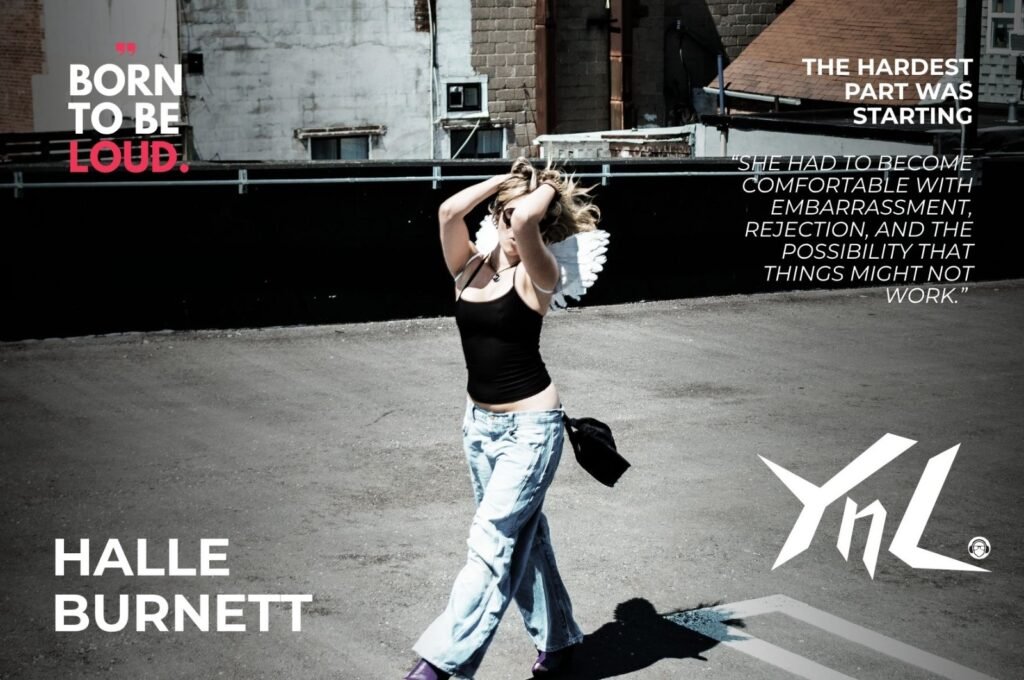
THE HARDEST PART WAS STARTING
The biggest obstacle Burnett faced was not rejection.
It was the possibility of rejection.
There is a strange safety in keeping a dream imaginary.
As long as you never fully try, you can never truly fail.
The dream remains perfect because reality has never had the opportunity to challenge it.
Burnett eventually realized that staying inside that safety was more frightening than failure itself.
She had to become comfortable with embarrassment, rejection, and the possibility that things might not work.
Then something changed.
She decided that she would rather try and fail than never try at all.
More importantly, she realized that she had to believe in herself before she could expect other people to do it for her.
That became a defining shift in her career.
Confidence did not mean believing she would always win.
It meant being willing to play the game without knowing the outcome.
That philosophy continues to shape her definition of success.
For Burnett, success means remaining uncomfortable.
When she feels challenged, scared, or uncertain, she knows she is probably moving forward.
Comfort can be a warning sign.
Discomfort can be evidence that something interesting is happening.
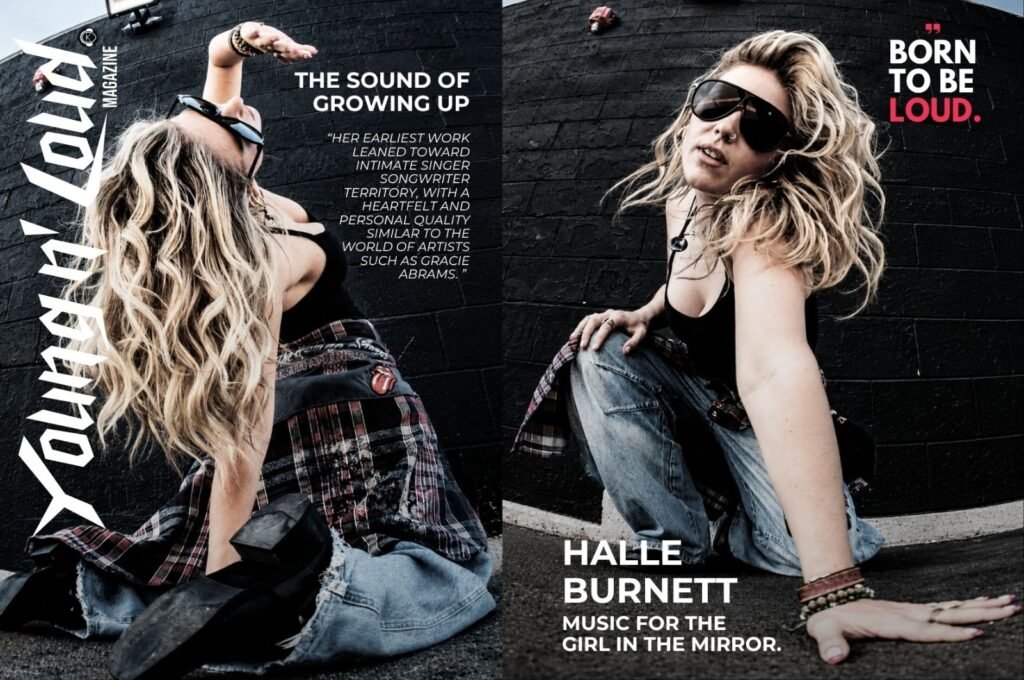
THE SOUND OF GROWING UP
Burnett’s music has changed dramatically since those early days at the piano.
Her earliest work leaned toward intimate singer songwriter territory, with a heartfelt and personal quality similar to the world of artists such as Gracie Abrams.
Then she spent time in Berlin.
Her perspective changed.
She became increasingly interested in production, vocal effects, vocal shifters, electronic textures, and the possibilities of building sound rather than simply performing over it.
The music became bigger.
More electronic.
More danceable.
More energetic.
But the emotional honesty never disappeared.
That part stayed.
The difference is that Burnett now wants those emotions to move.
Her earlier songs might have made someone sit quietly with their feelings.
Her newer work might make that same person dance while doing it.
That evolution is important.
It is not a rejection of who she was.
It is an expansion of who she can be.

THE SONG THAT WASN’T A CHARACTER
Among the different personas and alter egos inhabiting HRB, one song stands apart.
“Friend of a Friend” is the only track on the EP written entirely from Burnett’s own perspective.
The song came together almost accidentally.
After shooting promotional material for “Over&Over” with Ryan Case, Burnett spent her final day in New York hanging out with him in the studio.
They talked about Toronto.
About going back and forth between New York and home.
About old friends from high school.
And about the strange experience of watching people you once knew closely from the other side of a phone screen.
Social media creates a peculiar illusion of intimacy.
You know where someone went.
You know what they ate.
You know what they are doing.
You can watch their lives unfold.
But somehow, you may not know them anymore.
That feeling became the song.
Burnett remembers Ryan recognizing the potential almost immediately, particularly when she started putting the names of her hometown friends into the first verse.
The song became a reflection on growing up and growing apart.
On relationships that once felt permanent becoming distant.
On knowing someone’s life digitally while realizing you no longer know them personally.
And perhaps most importantly, on discovering that there are stories inside you that you did not realize you needed to tell.
That is why the song still gives Burnett chills.
It found something real.
DON’T CONFUSE THE CHARACTER WITH THE PERSON
Burnett’s willingness to write openly about sex, desire, relationships, and power has led to an understandable assumption.
People may listen to her newer music and decide they know exactly what kind of person she is.
Burnett would like to clarify something.
She is not a nymphomaniac.
The songs are not necessarily autobiographical.
Sometimes she simply enjoys taking an idea and making it bigger, stranger, funnier, or more dramatic.
That distinction is important to understanding HRB.
The characters may be exaggerated.
The situations may be theatrical.
The emotions may be amplified.
But the questions underneath them are real.
What makes us feel powerful?
What are we afraid to say?
Which parts of ourselves do we hide?
Which parts do we exaggerate?
And who do we become when we finally stop worrying about how other people see us?
POWER, WITHOUT APOLOGY
Those questions eventually lead to one of the strongest themes running through Burnett’s work: power.
Sex as power.
Acceptance as power.
Observation as power.
The upcoming music represents a period of intense self-examination for Burnett.
She began questioning what genuinely resonated with her and what she may have simply convinced herself she cared about.
Instead of presenting one definitive version of herself, she began breaking herself apart creatively.
Different perspectives.
Different personalities.
Different desires.
Different fears.
The goal was not to find one perfect identity.
It was to concentrate the different parts of herself into something honest.
That includes reclaiming subjects she may once have been uncomfortable discussing, embracing insecurities, and stepping away from the idea of being a victim.
Her music is personal.
But personal stories do not exist in isolation.
Burnett understands that the things she experiences are also connected to broader human experiences. The specific details may belong to her, but the emotions can belong to anyone.
That is where her personal expression gains a larger cultural voice.
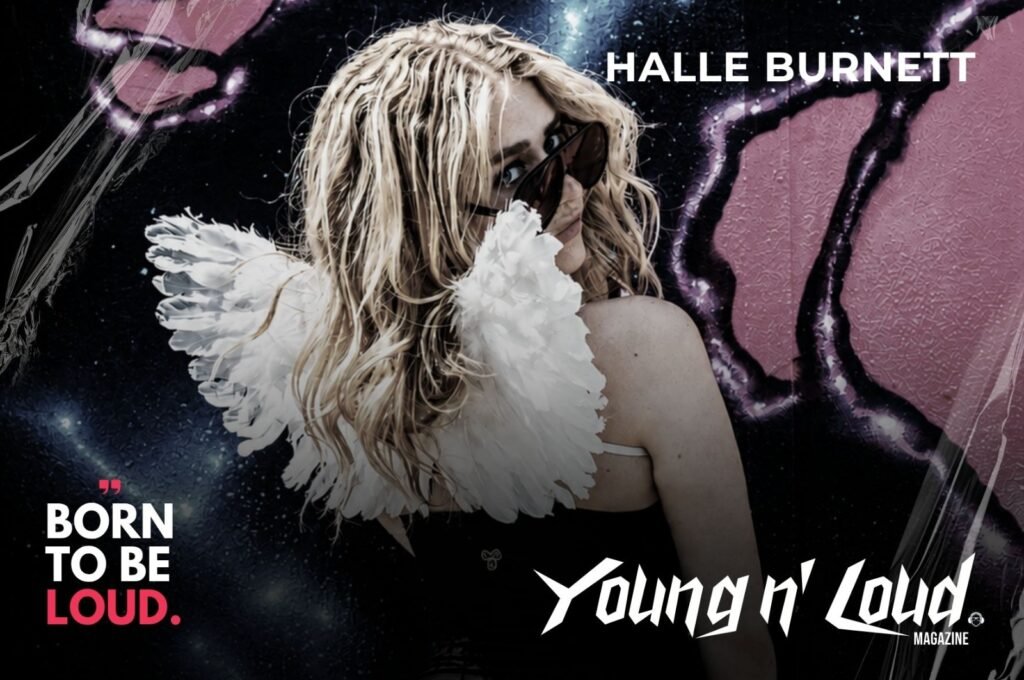
SOUR CHERRY BLASTERS AND BIG BLONDE HAIR
If Burnett’s music were a flavor, she already knows exactly what it would taste like.
Sour Cherry Blasters.
Sweet, but with a little snap.
The comparison sounds playful, but it captures something essential about her music.
There is sweetness.
There is theatricality.
There is vulnerability.
Then suddenly, there is something sharp.
The same combination appears in the person behind the music.
She can joke about her influences, laugh at herself, talk openly about sexuality, and describe herself in exaggerated cinematic terms.
But underneath all of it is someone deeply serious about the craft.
Family helps keep that seriousness grounded.
When Burnett returns to Toronto, she spends time with her sister Kenzie and her puppies, Gigi and Peaches.
Away from New York’s constant movement, those moments bring her back to the people and things that existed before music became a career.
Before the next release.
Before the next show.
Before the next opportunity.
Sometimes the most grounding thing an artist can have is a place where nobody cares about the numbers.
THE MIRROR BEFORE THE STAGE
There is one ritual Burnett keeps before stepping onto a stage.
She goes to the bathroom alone.
Then she looks at herself in the mirror and gives herself a pep talk.
Not a quiet, meditative one.
Something closer to:
You’re hot. You’re sexy. You’re fly. You’re going to kill this.
It is funny.
It is unapologetic.
And it is completely Halle Burnett.
But there is also something revealing about it.
Performance requires belief.
Before thousands of people can believe in the person standing under the lights, the person standing there has to believe in herself.
Sometimes that starts in a bathroom mirror.
THE NEXT VERSION OF HALLE
If HRB represents one side of Burnett, she is already thinking about what comes next.
And it sounds different.
More rock.
More guitars.
More live instrumentation.
More voices.
She wants to bring other vocalists into her world and discover what happens when new personalities collide with the universe she has built.
The next chapter is not about repeating what worked.
It is about going somewhere she has not been before.
That is consistent with how Burnett defines success.
Stay interested.
Stay challenged.
Stay slightly uncomfortable.
Never become stagnant.
There are also visuals coming.
A lot of them.
Burnett plans to bring the characters and stories behind her music to life beyond the songs themselves. She is currently looking toward a period of creative activity in New York between September and November, with dancing apparently very much involved.
She is also looking toward collaborations with artists who have inspired her, including City Builders and Kathy. Burnett is keeping the details close for now.
For an artist who builds entire songs from characters and worlds, the mystery is probably part of the fun.
YOUNG, LOUD, AND STILL HUNGRY
What keeps Halle Burnett Young N’ Loud?
Laughing.
Dancing.
Talking to new people.
New York keeps her hungry.
Toronto keeps her grounded.
And music keeps her alive.
There is an interesting contradiction in Burnett’s story. She is building increasingly elaborate characters while simultaneously trying to understand herself more honestly. She is becoming louder while remaining connected to the shy kid who once needed someone in a writing session to tell her it was okay to speak.
She is making music that feels larger, faster, louder, and more physical.
But at the center of it is still the same impulse that started everything.
The desire to create something and share it with somebody else.
Maybe that is why her description of herself feels so appropriate.
“I am a bonfire in the middle of the ocean, making music for the center of the club.”
It is dramatic.
It is visual.
It is impossible to ignore.
And it sounds exactly like someone who has finally stopped being afraid to be loud.
Halle Burnett is not interested in standing still.
She wants to dance.
She wants you to dance.
And if HRB is the sound of her stepping fully into the character she once had to imagine herself becoming, then the most exciting part may be what happens when she decides to become someone completely new.