
Now Reading: Where Philosophy Meets the Open Road: The Introspective Country World of Dee Oliver
-
01
Where Philosophy Meets the Open Road: The Introspective Country World of Dee Oliver
Where Philosophy Meets the Open Road: The Introspective Country World of Dee Oliver


By Young N’ Loud Magazine
In a global music landscape dominated by algorithms, trends, and fast consumption, Dee Oliver moves at a different rhythm. He writes slowly. He reflects deeply. He builds songs that feel less like products and more like questions set to melody. Born and raised in Rio de Janeiro, Brazil, Dee Oliver stands as a rare figure in contemporary independent music: a Latin American singer songwriter devoted to country and folk traditions, yet driven by philosophical inquiry rather than commercial formulas.
At first glance, the contrast seems unlikely. However, once you enter his world, the fusion feels not only natural but necessary. Dee does not treat country music as a costume. Instead, he approaches it as a vessel for reflection, self knowledge, and existential honesty.
This is not merely a story about genre. It is a story about identity, persistence, and the quiet courage required to follow an unconventional artistic path.
Roots Beneath the Surface
Music entered Dee’s life long before he understood its weight. His father, a musician, producer, and songwriter, belonged to the well known Brazilian band The Fevers during the 1980s. Consequently, melody and studio sessions formed part of his childhood atmosphere. Instruments were not distant objects of admiration. They were everyday presences.
He picked up the guitar at a very young age. By fifteen, he had formed his first rock band. At seventeen, he released an album with a group called Reverbera, collaborating with close friends who shared his early hunger. Soon after, life intervened. When the band’s drummer moved to the United States, that chapter quietly closed.
Nevertheless, Dee did not retreat. At eighteen, he began performing professionally in pubs and bars across Rio. Those nights shaped his discipline. They also sharpened his awareness of audience expectation, an awareness that would later become both a lesson and a struggle.
Over a year ago, he stepped fully into his solo career under the name Dee Oliver. Since then, he has released three singles and prepared additional material, gradually refining a sound that resists easy categorization.
A Brazilian Voice Singing in a Different Language
Rio de Janeiro carries strong musical traditions. Samba, funk, and pagode dominate the cultural landscape. Although Dee respects and admires those genres, they never defined his headphones.
Instead, his father introduced him to Dionne Warwick, Rod Stewart, Burt Bacharach, Pink Floyd, The Rolling Stones, and The Beatles. One song in particular left a permanent imprint: Achy Breaky Heart by Billy Ray Cyrus. That early exposure sparked a fascination with country music that refused to fade.
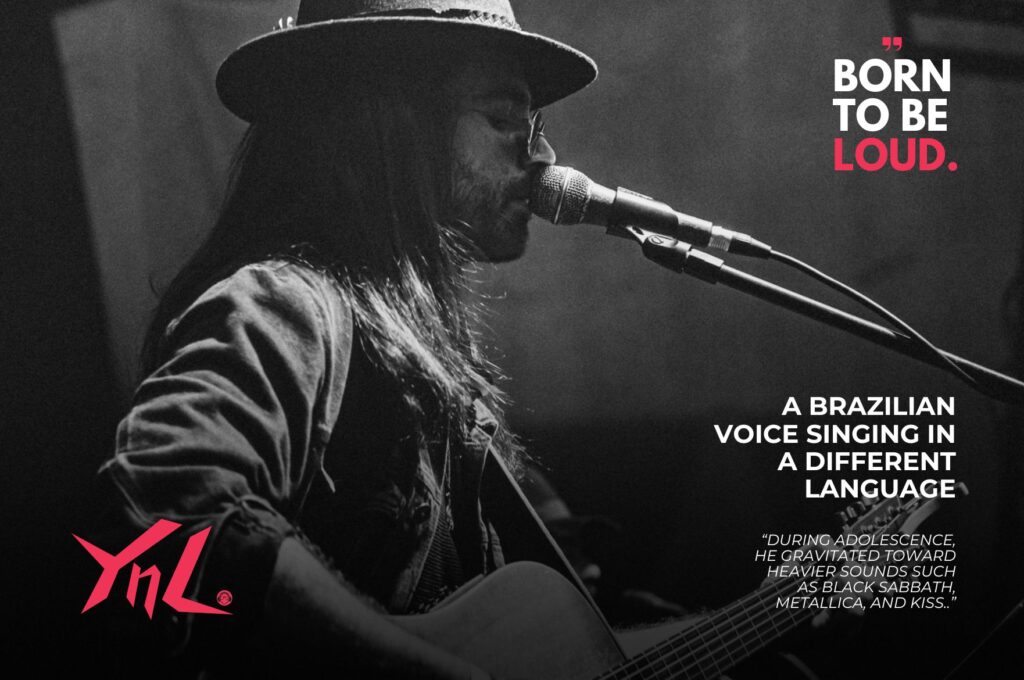
During adolescence, he gravitated toward heavier sounds such as Black Sabbath, Metallica, and Kiss. Yet he often felt musically isolated. Few peers shared his taste. That solitude, however, strengthened his internal compass.
In his early twenties, he returned decisively to country and folk influences. Artists such as Brad Paisley, Merle Haggard, Alan Jackson, Old Crow Medicine Show, Roger Miller, and Bob Dylan shaped his musical direction. Still, he did not replicate them. Instead, he internalized their storytelling traditions and filtered them through his own philosophical lens.
The Birth of Dee Oliver
The stage name Dee Oliver carries both practicality and lineage. His real name, Diogo, shortens naturally to Di, which sounds like Dee. Meanwhile, Oliver references Oliveira, his father’s middle name. When Dee worked on a European cruise ship in early 2025, he recognized the need for an internationally accessible identity. The name emerged organically.
Although simple, it preserves family heritage while signaling a broader artistic ambition. In that sense, the name reflects his entire career: grounded locally, reaching globally.
Erudite Country and the Architecture of Thought
Dee often jokes about calling his style erudite country. Behind the humor lies accuracy. He creates country music in spirit, yet he avoids clichés about trucks, boots, and barroom bravado. Instead, he writes about impermanence, attachment, ego, and the nature of self.
His song The Becoming translates the philosophy of Heraclitus into modern country language. Few artists attempt such synthesis. Even fewer execute it with sincerity.
Rather than offering answers, Dee poses questions. What is the self? Why do we cling to what inevitably changes? How do desire and anger shape perception? These themes surface repeatedly in his songwriting.
Musically, he maintains accessibility. Melodies often carry sweetness. Guitar solos frequently echo the vocal line, reinforcing emotional continuity. Beneath that melodic warmth, however, his lyrics invite reflection. The result feels bittersweet and crisp, as he describes it, a slow burn rather than an explosive hook.
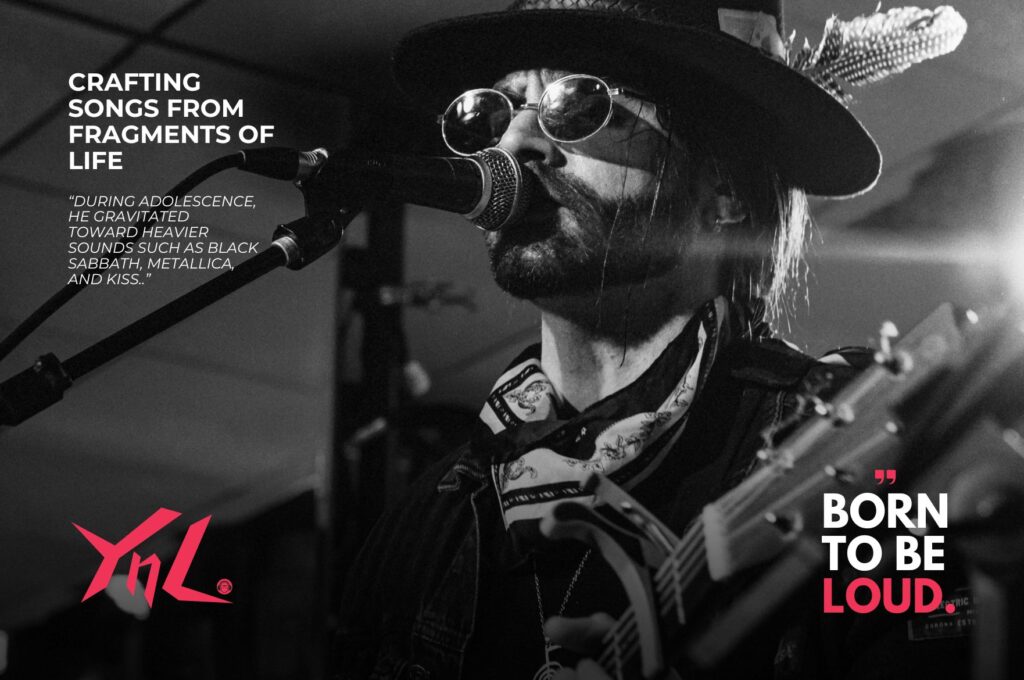
Crafting Songs from Fragments of Life
In practical terms, his creative process begins unpredictably. A melody may appear while driving or exercising. When inspiration strikes, he records rough ideas on his phone. Later, he shapes harmonies on guitar.
Lyrics usually follow during moments of clarity. He writes freely at first, sometimes starting with blunt sentences such as I miss my mother today. Only afterward does he refine language and structure.
Crucially, he steps away from new songs before finalizing them. Distance allows objectivity. Sometimes he returns to find beauty. Other times he confronts disappointment. Nevertheless, he accepts both outcomes as part of artistic growth.
Because he serves as both songwriter and producer, a consistent identity emerges naturally. He cannot fully articulate that signature quality. Yet listeners often sense it immediately.
The Weight of Expectation and the Freedom of Release
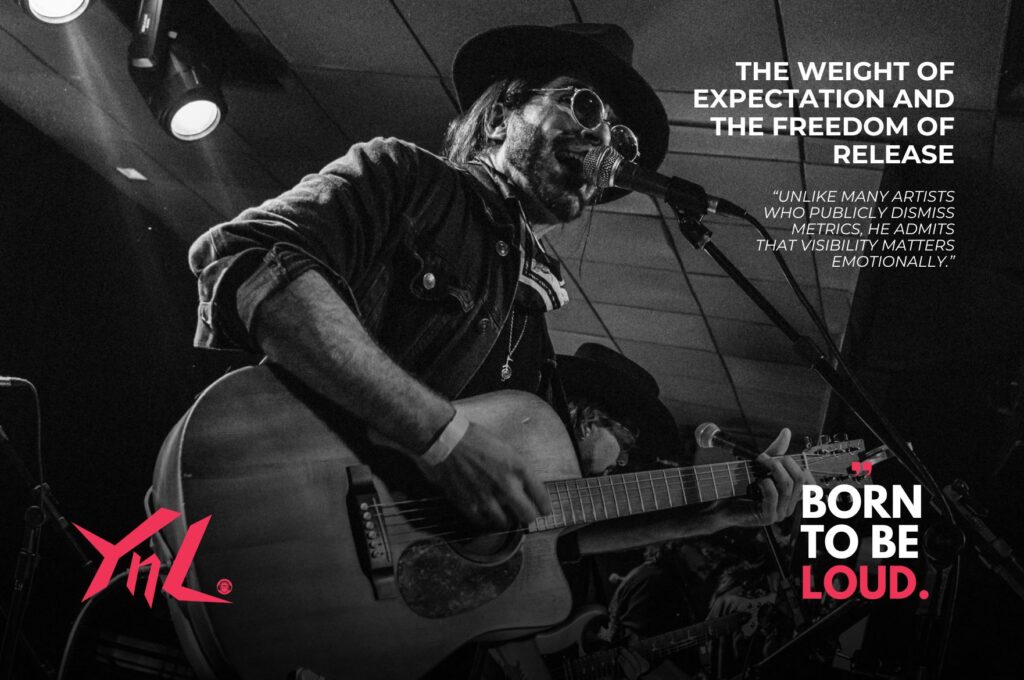
Dee speaks candidly about struggle. He acknowledges frustration with numbers, streams, and recognition. Unlike many artists who publicly dismiss metrics, he admits that visibility matters emotionally. That honesty shapes his narrative.
There were periods when he walked away from music entirely. Legal disputes, band breakups, and personal comparisons deepened his doubts. At times, he promised never to touch a guitar again.
Eventually, however, he recognized a difficult truth. One cannot unbe what one is. For him, creation does not function as a hobby. It resembles a calling, even when painful.
This realization changed his relationship with success. Instead of chasing validation relentlessly, he returned to the work itself. Ironically, that surrender strengthened his authenticity.
Spinoza’s philosophy, which suggests that reality unfolds exactly as it must, influences this outlook. Dee does not claim mastery of that perspective. Still, he moves closer to it each day.
From Pleasing the Crowd to Speaking the Self
Earlier in his career, Dee focused heavily on audience reaction. He selected familiar songs. He adjusted stage behavior to meet expectations. Over time, he recognized that such strategies risked turning him into a performer without a voice.
Consequently, he shifted his approach. He began offering his internal world rather than chasing applause. Although that decision may limit mass appeal, it fosters deeper connection with listeners who resonate genuinely.
His songs do not aim for dance floors. They belong on highways, in solitary bedrooms, or during late night reflections. They create space rather than noise.
Studio Memories and Full Circle Moments
Among his most meaningful experiences stands a childhood friend who once recorded demos with him in a modest home studio. Years later, that same friend won a Grammy as a mixing engineer for a Beyoncé album. Today, he runs a studio in Los Angeles and mixes Dee’s music.
Such full circle moments remind Dee that artistic journeys unfold unpredictably. They also reinforce the importance of long term commitment.
Meditation, Love, and Impermanence
Offstage, meditation and philosophical reading ground him. Thinkers such as Buddha, Parmenides, and Spinoza influence his internal landscape. However, he does not confine himself to abstraction. He also writes love songs for his girlfriend.
At first glance, themes of detachment may seem incompatible with romantic devotion. Yet Dee embraces the tension. For him, understanding impermanence intensifies presence. Awareness of endings encourages fuller engagement in the moment.
That duality, stoic reflection alongside emotional vulnerability, defines much of his lyrical world.
Defining Success in an Uncertain Industry
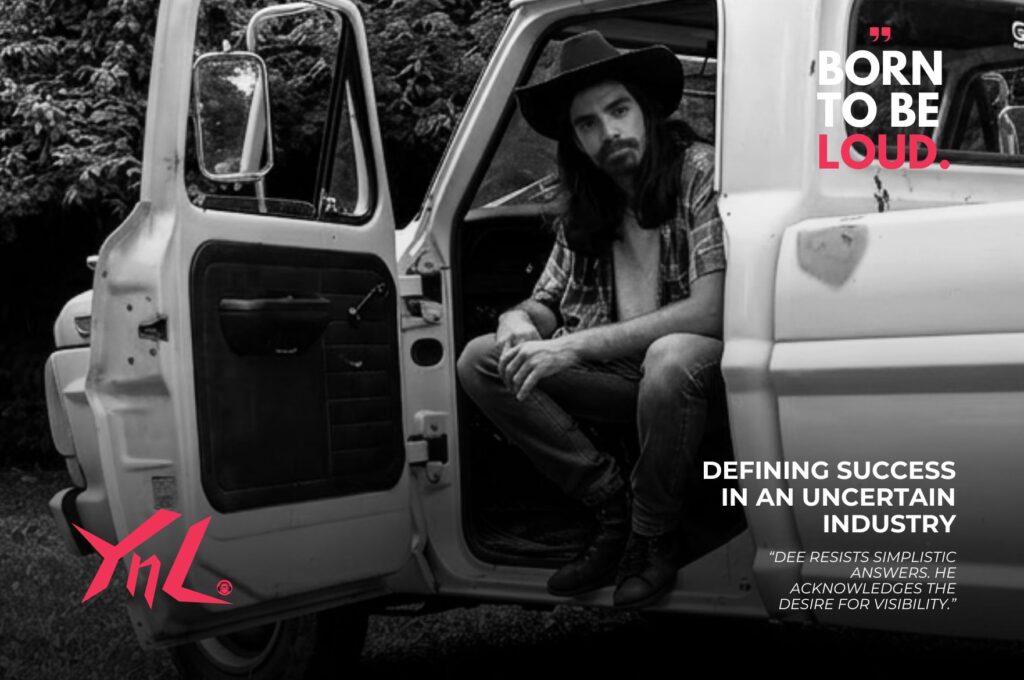
When asked to define success, Dee resists simplistic answers. He acknowledges the desire for visibility. At the same time, he rejects purely commercial motivations. He inhabits the space between artistic integrity and practical ambition.
Currently, he saves resources to record a full album. While singles continue to appear, he views an album as a deeper statement. It represents cohesion, patience, and commitment.
Dream collaborations include Brad Paisley for musical chemistry, although many of his lyrical heroes belong to past generations. Nevertheless, he continues building his own chapter rather than longing for unreachable ones.
A Message Sent into the Cosmos
If given the chance to send one of his songs into space, he would choose The Becoming. The selection reflects his core belief in change as the defining principle of existence.
In one sentence, he describes his work as the place where philosophy, folk, and country music meet. That phrase captures both his ambition and his identity.
Ultimately, Dee Oliver does not promise stadium anthems or viral hooks. Instead, he offers something quieter and perhaps more enduring: songs that accompany reflection, confront ego, and gently remind listeners that control remains an illusion.
In a world obsessed with certainty, his music invites curiosity. In an industry driven by immediacy, he practices patience. And in a genre often bound by tradition, he carves space for metaphysics on the open road.
For those willing to listen closely, Dee Oliver provides not only country music, but also a soundtrack for becoming.