
Now Reading: Anna KiaRa: The Apparition and the Courage to Become Someone New
-
01
Anna KiaRa: The Apparition and the Courage to Become Someone New

Article by Young N’ Loud Magazine
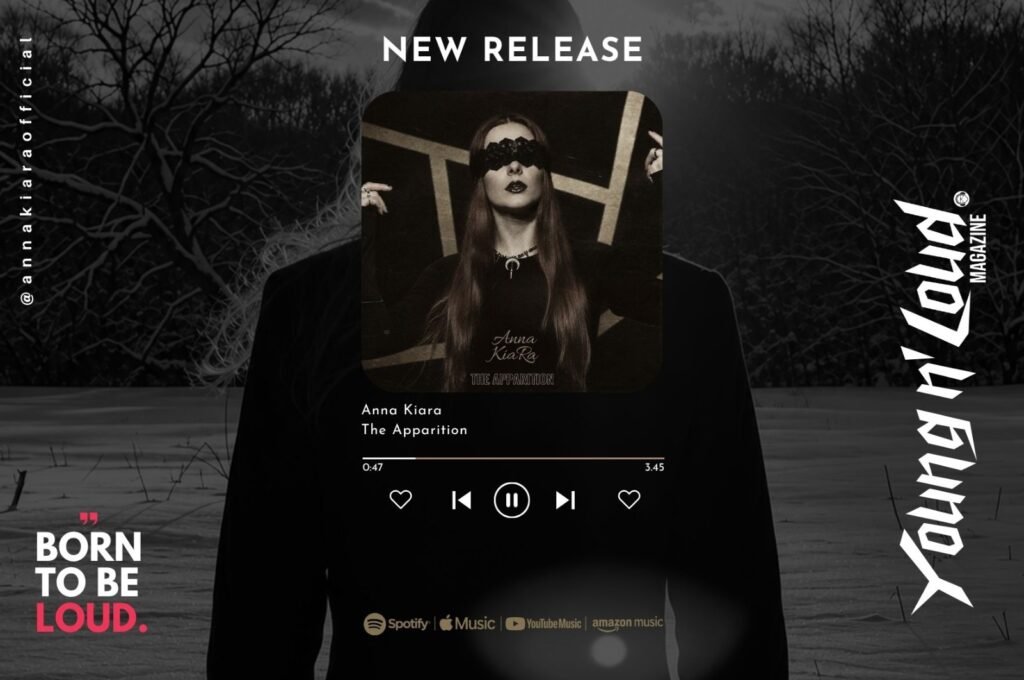
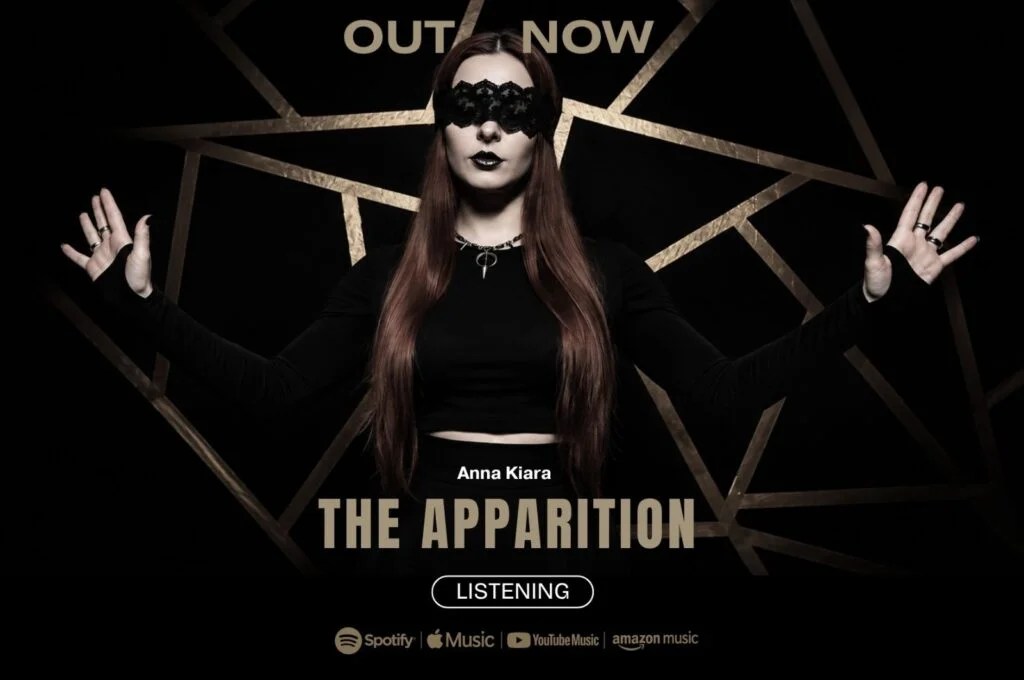
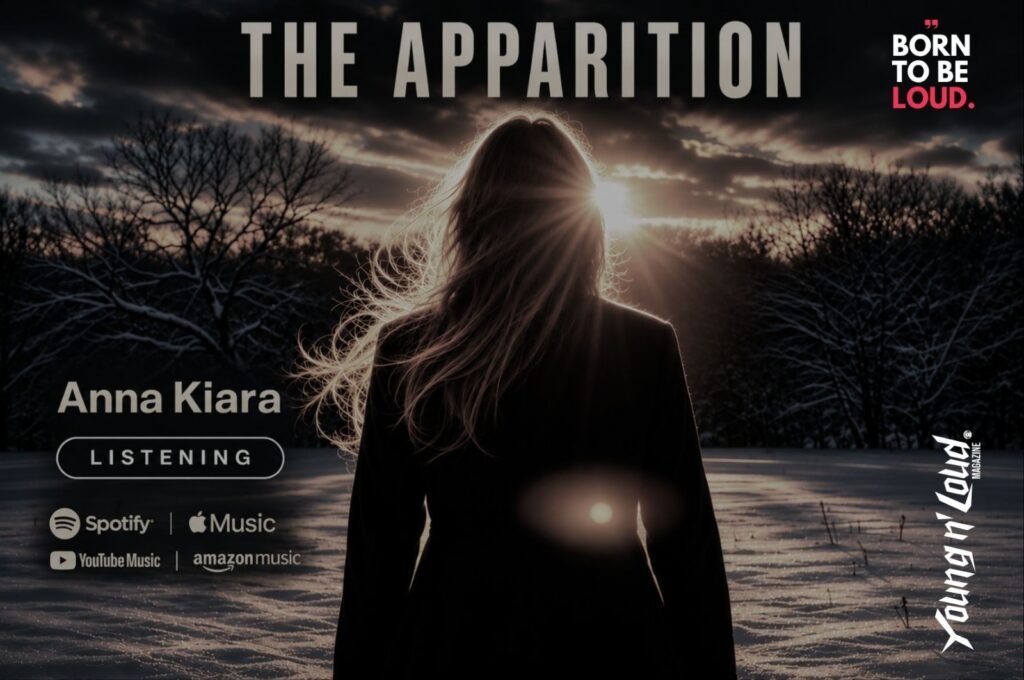
Some songs capture a moment in an artist’s life. Others reveal that the artist is no longer the same person who began the journey. With her interpretation of Sleep Token’s The Apparition, Anna KiaRa explores the uncomfortable beauty of transformation, the freedom of musical experimentation, and the importance of finding a voice that truly sounds like her own.
There is a peculiar kind of courage involved in changing something that already works. For musicians, familiarity can become both a source of comfort and an invisible limitation. Audiences develop expectations, artists establish recognizable sounds, and the creative freedom that once defined their journey can gradually become surrounded by rules they never intended to follow.
For Anna KiaRa, those boundaries have become increasingly difficult to ignore.
Known for her connection to symphonic and power metal, Anna has spent years developing a musical identity shaped by powerful vocals, elaborate compositions, and an unmistakable passion for expressive storytelling. Yet her latest release, The Apparition, suggests that artistic identity is not something permanently established. It is something that evolves alongside the person creating the music.
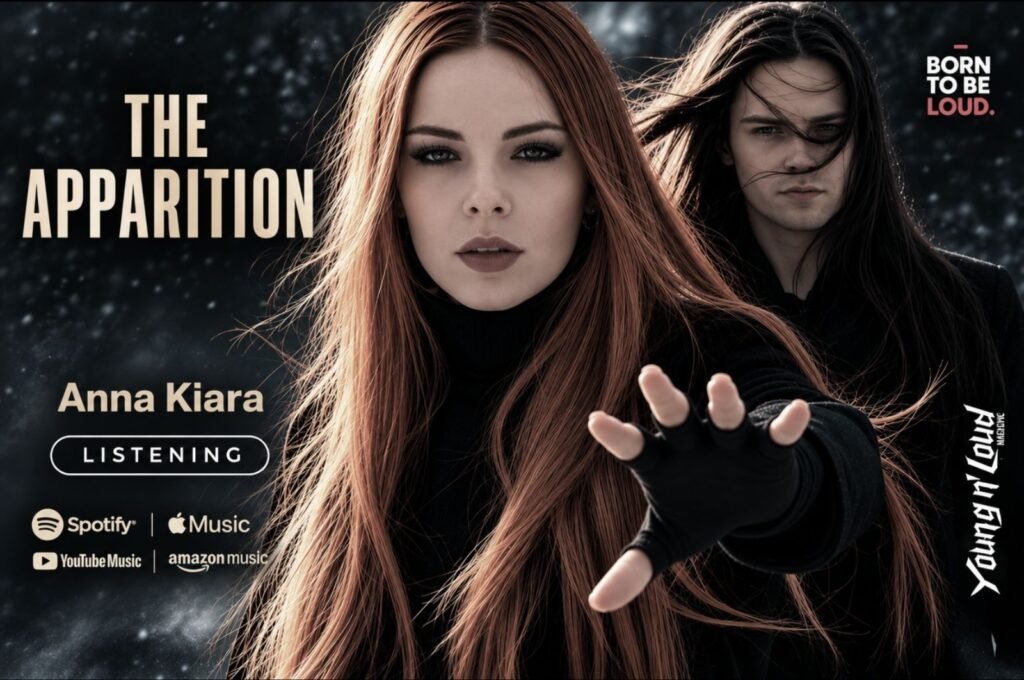
Originally performed by Sleep Token, the song explores the haunting experience of a love that exists somewhere between dreams and reality. In Anna’s hands, it becomes something equally personal: an opportunity to challenge her musical instincts, reconsider her creative boundaries, and introduce listeners to a different dimension of her artistry.
But perhaps the most significant change is not immediately obvious in the arrangement or the production. It is in the way Anna has finally been able to hear herself.
When Inspiration Arrives Unexpectedly
Musical influences do not always arrive from familiar places. Sometimes the most interesting discoveries come from artists who operate outside our usual listening habits, challenging our understanding of what a particular genre should sound like.
For Anna, Sleep Token became precisely that kind of discovery.
“I think Sleep Token is quite a surprising influence already,” she explains. “They became the discovery of the last year for me. I liked their variability and style.”
The band’s willingness to move between contrasting musical textures caught her attention. Although the opening beats of The Apparition were not immediately aligned with her personal preferences, the composition as a whole made a powerful impression.
“When I first heard the original song by Sleep Token, I fell in love with it!” Anna recalls.
Rather than dismissing the unfamiliar elements, she saw them as an opportunity to experiment. The decision to record her own version came quickly, motivated by curiosity and a desire to explore something different.
There was, however, a moment of uncertainty.
Anna understood that the song’s rhythmic approach might surprise listeners accustomed to her previous work. Introducing new influences can be challenging when an audience has developed a strong attachment to a particular artistic identity.
She wondered whether her fans would embrace the experiment.
Their response offered reassurance. Some listeners needed time to connect with the unfamiliar sound, but repeated listening gradually changed their impressions.
For Anna, that reaction was meaningful. It suggested that an audience could grow alongside an artist, even when the music moved beyond familiar territory.
Reimagining a Song Without Losing Its Soul
Recording a cover presents a creative challenge unlike writing an original composition.
The foundation already exists. The melody, lyrics, and emotional direction belong to another artist’s work. The challenge is to introduce a distinct musical perspective while preserving the qualities that made the original compelling.
For The Apparition, Anna approached the arrangement with her husband and musical collaborator, Paul.
Their creative partnership follows an established process. When working on her original compositions, Anna develops the music herself before passing it to Paul, who contributes arrangements for guitar, bass, and drums.
This time, the starting point was different.
Because the song was already written, the focus shifted toward its instrumentation and overall sonic character. Anna developed the synthesizer parts before Paul worked on the remaining arrangements.
“We changed the guitar and synths sound, and made the whole sound a bit different as well,” she explains.
The result represents an exercise in interpretation rather than reinvention for its own sake.
Anna was not attempting to erase the identity of Sleep Token’s composition. Instead, she wanted to explore how the song could exist within her own musical world.
That distinction matters. A meaningful cover is not necessarily defined by how dramatically it departs from the original, but by whether the artist brings something recognizable and sincere to the performance.
For Anna, that sincerity became particularly important during the recording process.
The Voice She Had Been Searching For
A singer’s voice is often described as their most personal instrument. Unlike a guitar or piano, it cannot be separated from the person performing. It carries physical characteristics, emotional habits, and subtle qualities that make every vocalist different.
Yet capturing those characteristics in a recording studio is not always straightforward.
For years, Anna experienced a frustrating difference between the voice she heard during live performances and the one reproduced in her recordings.
Onstage, her vocals carried a depth and richness that previous studio sessions had struggled to preserve.
The problem was not simply one of performance. It involved the recording environment, microphone selection, acoustic characteristics, and the interpretation of the engineers responsible for capturing her sound.
“You know, until quite recently I couldn’t find a studio that fits my voice,” she explains.
That search eventually led her to a recording environment where the equipment and engineering approach finally complemented her vocal characteristics.
For Anna, the difference was immediately significant.
“Many people noticed that I sound differently on The Apparition, but the truth is that I finally sound like myself!”
It is a revealing statement.
Artists are often encouraged to develop a distinctive voice, but Anna’s experience demonstrates that possessing one and successfully capturing it are not always the same thing.
She points out that certain recording approaches can emphasize higher frequencies while failing to reproduce the full range of a singer’s tonal character. The acoustic environment, microphone, engineer’s preferences, and communication between the vocalist and production team all contribute to the final result.
Finding the right combination allowed her to reveal qualities that had always been present in her live performances.
The achievement was not about becoming a different singer.
It was about finally allowing the recorded music to reflect the singer she already was.
Beyond the Boundaries of Symphonic Metal
Genres offer musicians a shared language. They connect artists with audiences, establish musical traditions, and create communities around recognizable sounds.
But they can also become restrictive when artists feel obligated to remain within them.
Anna’s relationship with symphonic and power metal remains an important part of her identity. Those influences have shaped her approach to composition, performance, and musical storytelling.
Yet she has reached a point where repeating familiar formulas no longer feels creatively satisfying.
“The Apparition sounds a bit different from what I did before,” she acknowledges.
That difference does not necessarily indicate a complete departure from her musical roots. Anna is careful to explain that the modern direction explored in this cover should not be interpreted as a definitive blueprint for everything she plans to release.
Instead, it represents a willingness to move beyond established expectations.
“I definitely want to go a bit outside of pure symphonic and power metal, because I realized that I found it boring to stay in one frame for all the time.”
Her reasoning reflects a broader truth about creative development.
Musicians do not remain the same people throughout their careers. Their experiences change, their interests expand, and the emotions they want to express become more complex.
The music that once represented them perfectly may eventually become only one part of a much larger identity.
“In real lives we change, and as my music is a reflection of me, it is obvious that I can’t continue to compose the same songs and write the same lyrics I did when I was 20.”
For Anna, experimentation is not a rejection of her previous work. It is an acknowledgment that the person behind that music has continued to grow.
And growth, particularly when it becomes visible to an audience, requires a certain willingness to be misunderstood.

A Ghostly Love and the Emotions We Cannot Hold
At the emotional center of The Apparition is an experience that feels simultaneously intimate and unreachable.
Anna describes the song as a story about ghostly love, the kind that sometimes appears in dreams but never fully becomes reality.
It is a compelling subject because it exists in the space between longing and imagination.
Dreams can produce emotions that feel entirely authentic, even when the experiences behind them disappear upon waking. Love, loss, and desire can become intertwined with memories of things that never happened.
The idea of an apparition captures that contradiction.
Something appears close enough to feel real, yet remains impossible to hold.
For a vocalist, interpreting that emotional tension requires more than technical ability. It demands an understanding of vulnerability, restraint, and the complicated relationship between what a song describes and what a performer brings to it.
Anna admits that performing the song live would expose a particularly vulnerable side of her artistry.
Although she does not currently expect to include the cover in her live performances, she recognizes the emotional weight such a performance would carry.
That vulnerability gives the release another layer of meaning.
The song may have originated with another artist, but the act of interpreting it becomes part of Anna’s own creative experience.
Through the arrangement, vocal performance, and emotional connection to the material, The Apparition becomes a reflection of where she finds herself today.
Music That Asks the Listener to Pay Attention
In an era when songs compete for attention within increasingly crowded digital platforms, the relationship between artists and listeners continues to change.
Music can be discovered, consumed, and forgotten within minutes. Algorithms influence what audiences encounter, while new technologies raise questions about the future of composition and artistic expression.
Anna has strong feelings about this environment.
She hopes The Apparition will encourage listeners to explore music that demands more than an immediate reaction.
“I hope they will be surprised and a bit shocked in a good way!” she says.
Some early responses confirmed that the song was not necessarily an instant favorite for everyone. Listeners who initially struggled with its unfamiliar elements sometimes developed an appreciation after hearing it several times.
For Anna, that process is valuable.
Not every meaningful musical experience needs to reveal itself within the first few seconds.
Some compositions reward patience. Others challenge expectations through unexpected rhythms, contrasting textures, or arrangements that become more interesting with repeated listening.
Anna also sees an important distinction between music shaped by human creativity and material designed primarily to satisfy algorithmic patterns.
Her concern reflects a desire to protect the complexity and individuality that musicians bring to their work, particularly as artificial intelligence becomes more prominent in the creative landscape.
Rather than treating accessibility as the only measure of success, she wants listeners to remain curious.
To explore unfamiliar sounds.
To recognize the decisions behind an arrangement.
And to appreciate music that may require a little more attention before revealing its character.
The Next Chapter Is Already Taking Shape
Although The Apparition marks an important creative moment, Anna is not approaching it as the conclusion of a particular era.
In many ways, it is an introduction to what comes next.
She has already begun composing new material, with plans to release several singles before eventually bringing them together into an album.
The strategy allows each composition to develop its own identity while giving listeners an opportunity to follow her artistic progression as it unfolds.
“Different sound, different music, new Anna KiaRa,” she says, describing how she hopes audiences will respond to her future releases.
It is an ambitious direction, but one rooted in the creative restlessness that motivated The Apparition in the first place.
The single already has an accompanying music video available on YouTube, providing another way for audiences to experience her interpretation.
Beyond the recording studio, Anna is also preparing to reconnect with listeners through live performances.
Her November plans include an unplugged tour through Ireland and Europe, where she will perform her songs with piano and vocals.
The stripped back format offers an interesting contrast to the layered arrangements often associated with symphonic metal.
Without the full weight of elaborate instrumentation, the focus shifts toward the relationship between the voice, the composition, and the audience.
It is another opportunity to explore musical expression from a different perspective.
And perhaps, after finally discovering a recording environment that captures the depth of her vocals, there is something especially appropriate about returning to the simplicity of a voice and a piano.
The Beauty and Difficulty of Transformation
There is a tendency to describe artistic change as an exciting process, filled with discoveries and opportunities.
But transformation is rarely that simple.
It can involve uncertainty, difficult decisions, and the uncomfortable realization that something familiar no longer represents who we are becoming.
Anna does not pretend otherwise.
When reflecting on what she hopes listeners will take from The Apparition, she returns to the idea that personal growth is not always comfortable.
“We all go through transformations in our lives, and sometimes it hurts for the better future.”
The statement carries particular significance because Anna sees this release as connected to changes taking place beyond her musical career.
She describes The Apparition as the beginning of a new stage in both her personal and artistic life.
Those changes bring optimism, but they also demand courage.
“This is one of the changes that is coming to my life, both personal and artistic,” she explains, acknowledging that the transition is not easy.
That honesty gives the release its strongest connection to the artist behind it.
A song about something intangible, something that appears but cannot quite become real, has arrived at a moment when Anna herself is navigating the distance between what has been familiar and what has yet to take shape.
The future she imagines is still unfolding.
Her next compositions may introduce unfamiliar influences. Her performances may reveal new dimensions of her voice. Her creative direction may continue to surprise those who have followed her journey from the beginning.
And that is precisely the point.
Artistic identity does not have to remain fixed to remain authentic.
Sometimes authenticity means recognizing that the music which once defined us can no longer express everything we have become.
With The Apparition, Anna KiaRa is not asking listeners to forget the artist they already know.
She is inviting them to discover the person she is becoming.
And perhaps the most important part of that invitation is the understanding that transformation, however uncertain, is not the loss of identity.
Sometimes it is the beginning of finding it.
Discover Anna KiaRa
Instagram: https://www.instagram.com/annakiaraofficial/
YouTube: https://www.youtube.com/@AnnaKiaRa
Facebook: https://www.facebook.com/annakiaraofficial/
TikTok: https://www.tiktok.com/@annakiaraofficial
Young N’ Loud Magazine | Born to Be Loud.