
Now Reading: 44 Great 2025 Albums by Indie / Alternative legends
-
01
44 Great 2025 Albums by Indie / Alternative legends


Rock and roll and pop may be a young person’s game, but there’s also something to be said for “age ain’t nothing but a number.” There are plenty of artists who got their start in the ’70s, ’80s or ’90s who are still producing essential new music today and this list is proof of that in 2025.
We kept it to artists who are generally considered within the indie/alternative world who have been releasing records since the ’90s, and range from a few Britpop legends, garage rock groups, post-punk icons, OG shoegazers, post-rock pioneers, electronic innovators, Sassy Magazine cover stars, and more. A few of them also made our Best Albums of 2025 list and the Indie Basement year-end list.
This list is not defninitive and we probably forgot a few. Let us know what we missed! If we’d moved the cutoff to the 2000s, there’d definitely be more. Check out our list, which is in alphabetical order, below.
Adrian Sherwood – The Collapse of Everything (On-U Sound)
Producer Adrian Sherwood helped shape the sound of the original UK post-punk movement, adding equal parts paranoia and echo to records by The Pop Group, Einstürzende Neubauten, The Fall, Medium Medium, Maximum Joy, and more—not to mention reggae legends like Lee “Scratch” Perry, Bim Sherman, Creation Rebel, and Sly & Robbie. He’s also led his own projects, including Tackhead and New Age Steppers. Sherwood remains an in-demand producer and remixer, having recently sprinkled his pixie dust on records by Spoon and Panda Bear & Sonic Boom. The Collapse of Everything is his first album credited solely to him in 13 years, featuring many longtime collaborators including Doug Wimbish, Keith Le Blanc, Cyrus Richards, and percussionist Horseman. Brian Eno even turns up on “The Well is Poisoned.” It’s an instrumental tour de force of vibe, atmosphere, and musicianship from a consummate master of his craft. The album feels equally at home in Japanese record bars, forward-thinking dance clubs, or even chic cocktail lounges and hotel lobbies. (It’s also a perfect back-to-mine post-clubbing record.) Dedicated to friends Mark Stewart and Keith LeBlanc, who both passed away in recent years, The Collapse of Everything carries an eerie chill of loss that makes it all the more poignant and compelling.
—

Alan Sparhawk – With Trampled by Turtles (Sub Pop)
The Low co-founder and these bluegrass/folk vets makes for an inspired, only-in-Duluth combination
Minneapolis bluegrass/folk group Trampled by Turtles backing Low’s Alan Sparhawk is an inspired, only-in-Minnesota combination that works much better than it might seem on paper. Sparhawk has known TBT since their days as a bar band in Duluth, when he and the late Mimi Parker served as early mentors for them. The band invited Alan to come in during some extra time they had at a recording session, which then turned into this album. Alan brought not only new songs but also a few from his archives that never quite worked for Low. The songs here are wonderful and a real showcase for Sparhawk’s soaring voice. If his vocoder-heavy 2024 solo album White Roses, My God was a little too out there (and not in a HEY WHAT kind of way), these nine songs really scratch that Low itch. Here, Trampled by Turtles are used more like a chamber ensemble—albeit one with a banjo—to put Sparhawk’s songs, which can still cut you to the bone, in a beautiful, moving new light.
—

Andy Bell (Ride) – pinball wanderer (Sonic Cathedral)
Some artists make solo records that are indistinguishable from from the bands they’re in. Then there are musicians like Ride’s Andy Bell, whose albums under his own name are chances for him to play in other sandboxes. pinball wanderer is Bell’s third solo album (not counting his electronic alter ego GLOK) and is his furthest-reaching record yet and there’s nothing on here that sounds like Ride (or Hurricane #1 or Oasis or Beady Eye). Where to start? How about his cover of The Passions’ 1981 single “I’m in Love With a German Filmstar” which predicted the shoegaze/dreampop scene that would emerge just a few years later. Bell puts his own spin on it and got former One Dove singer Dot Allison to sing on it and Neu!’s Michael Rother to play guitar on it. Speaking of kruatrock, instrumental “Music Concrete” has Can’s grooves in its DNA, with just a dash of Madchester… which leads to “green apple ufo” that tips more than a Reni-brand bucket hat to The Stone Roses’ shufflebeat classic “Fools Gold.” There’s also “Madder Lake Deep” which Andy accurately describes as a “Cocteau Twins-ish watercolour portrait of a dream,” and the folky groover that is the album’s sunny title track. Bell blisses out for the album’s final two songs: “The Notes You Never Hear,” and “Space Station Mantra” which both show off his formidable vocal harmony abilities. pinball wanderer plays like a guided tour through Bell’s record collection and if it doesn’t hang together the way 2022’s Flicker did, all of its individual parts are a whole lot of fun.
—
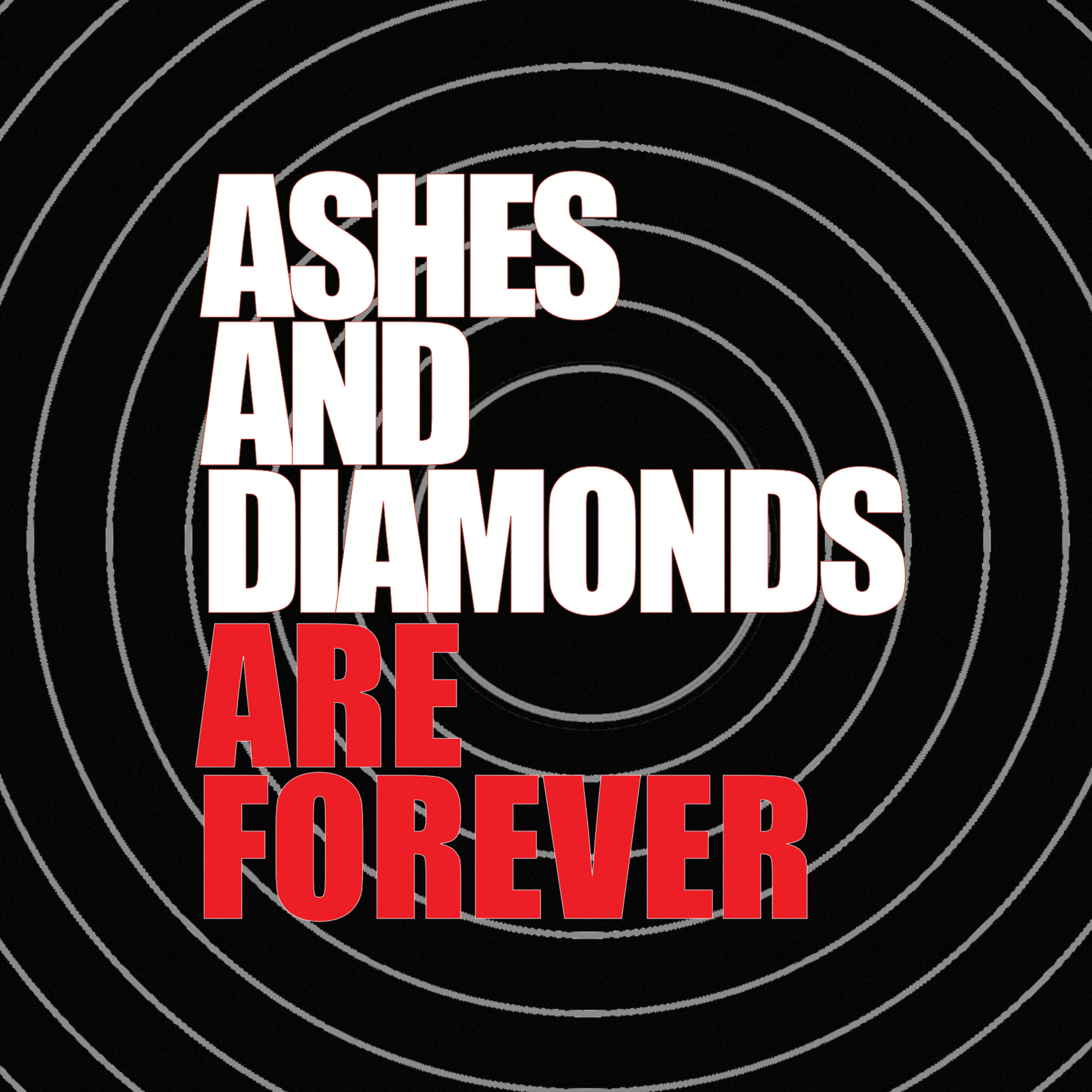
Ashes and Diamonds – Ashes and Diamonds Are Forever (Cleopatra)
Ashes and Diamonds — the trio of Daniel Ash (Bauhaus / Love & Rockets), Bruce Smith (PiL, The Pop Group), and Paul Spencer Denman (Sade) — have been together for nearly a decade but have only just released their debut album. It also marks the first new original music from Ash, who’s pushing 70, and he’s in fine form here, as are his bandmates. The group’s debut, Ashes and Diamonds Are Forever, is the best thing Ash has done since Love and Rockets’ forgotten final album and arguably ranks in the Top 5 of his post-Bauhaus work. Like most of Ash’s music, these songs are pared down to the essentials, with lots of repetition — especially lyrically — and an enveloping sense of atmosphere. For fans of his guitar work, that inventive mix of noise, shimmer, and texture, this is a tour de force, showcasing his mastery of the E-bow and his signature fusion of electronics and acoustics. His voice also remains in great shape, and his distinctive blend of baritone croon and upper-register wail will be instantly familiar to anyone who’s loved Love & Rockets or Tones on Tail. In addition to a strong batch of songs, the interplay between Ash, Smith, and Denman really elevates Ashes and Diamonds Are Forever, which is also the best-sounding record Ash has made in decades. Ash has made a handful of solo albums over the years, but it’s clear he works best when he has a band to spark against. Let’s hope Ashes and Diamonds are indeed forever — or at least around for another album or two.
—

The Bats – Corner Coming Up (Flying Nun)
Robert Scott, Kaye Woodward, Paul Kean, and Malcolm Grant have been The Bats since forming in 1982 in Christchurch, NZ. Like the lineup, their style hasn’t changed much either: jangly guitar pop built around Scott’s steady strum and tenor vocals, Woodward’s melodic leads and harmonies, and a rock-solid rhythm section from Grant and Kean. It’s a resilient, winning formula that still works beautifully on Corner Coming Up, the Kiwi legends’ 11th album and first in five years. They’ve mellowed some over 40+ years, but all the familiar elements are here — especially that hint of minor-chord melancholy woven through their catchiest songs, of which there are many here. Long may they fly.
—

Bob Mould – Here We Go Crazy (Granary Music)
After more than 40 years making punky power-pop with Husker Du, Sugar and as a solo artist, Bob Mould has a style that is instantly recognizable. Not just his voice, but the melodies — it’s a truly signature style that’s there whether his guitars are merely loud or deafening. It’s not just what you expect from him, it’s what you want. Here We Go Crazy is Mould’s 15th solo album, and his sonic painter’s palette on this one is Sheets of Rain Black and Beaster Blue, a darker, heavier, more ripping record than he’s delivered in a while. “I’m refining my primary sound and style through simplicity, brevity, and clarity,” Bob says. “Under the hood, there’s a number of contrasting themes. Control and chaos, hypervigilance and helplessness, uncertainty and unconditional love.” It’s angrier, too, with a title that feels very much of the times with lyrics like “Take another drag off a cigarette / Itching for a fight near the swing set” and “Standing on the edge of collapse / Memories are fading fast,” but Bob never forgets to leave you humming.
—
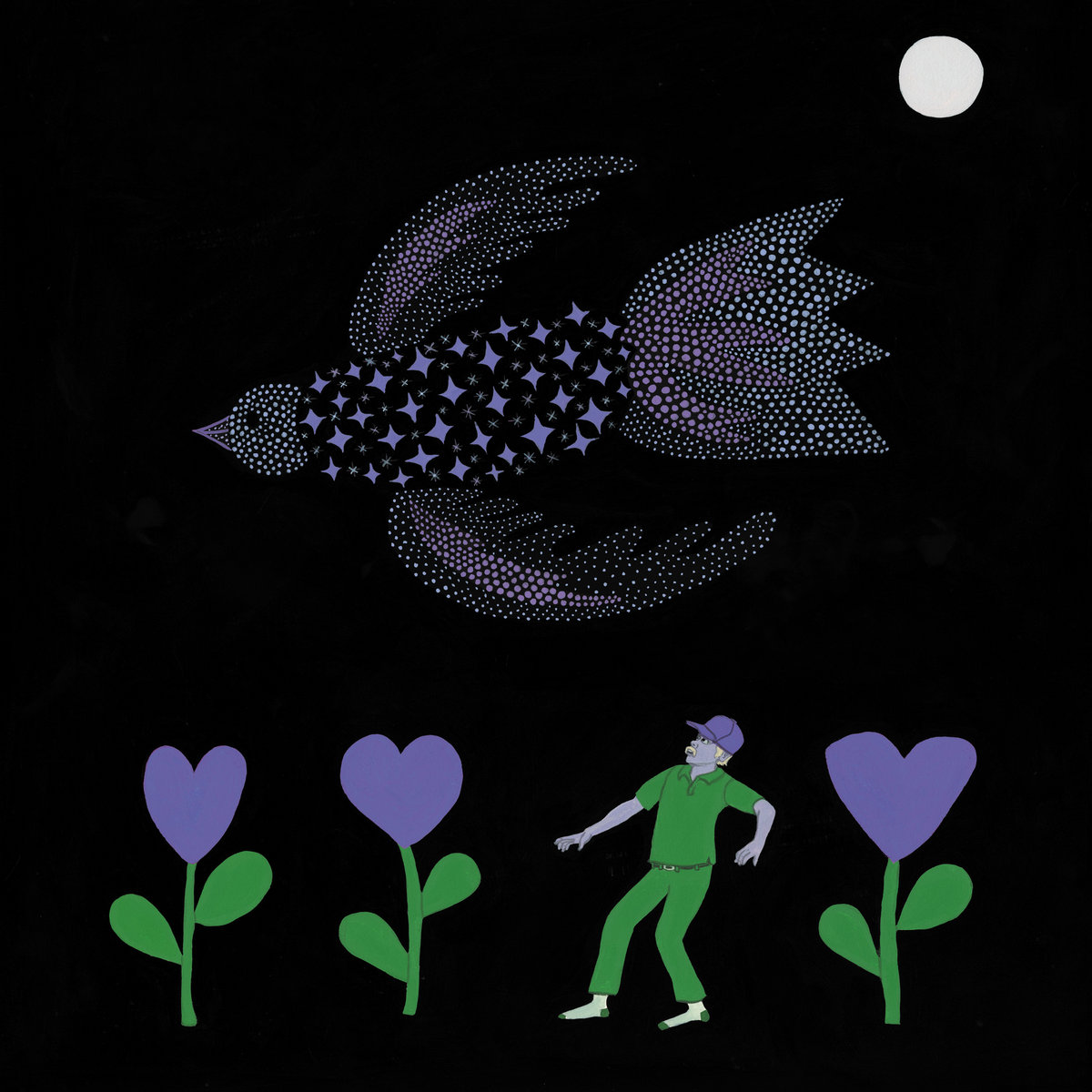
Bonnie ‘Prince’ Billy – The Purple Bird (No Quarter)
The current indie-country boom wouldn’t be happening without the influence of Will Oldham and his Bonnie ‘Prince’ Billy project, so the timing couldn’t be better for him to release his most overtly country album in years. He made it with producer David Ferguson, whose credits include Johnny Cash and John Prine (the former of whom recorded a version of the title track of Bonnie ‘Prince’ Billy’s 1999 alt-country masterpiece I See A Darkness, with Will himself on backing vocals), and they made it in Nashville with a group of esteemed session musicians and co-writers, including John Prine’s son Tommy and the legendary John Anderson, who co-wrote two songs and sang on one of them (“Downstream”). They made it the way those big Nashville albums are made, fleshed out by mandolin, fiddle, accordion, banjo, horns, and multiple backing vocalists, but this is still Will Oldham we’re talking about, so it’s not like it’s all slicked up or anything. It’s raw and rustic like all of Will’s best records (and much older country records) are, and it still sounds like a record that only he could’ve made. Its indie-friendly twang fits right in with the rising tide of artists like MJ Lenderman, Waxahatchee, and Big Thief–all of whom either have or probably would cite Oldham as an influence–but The Purple Bird isn’t just a success because of its timely stylistic direction. These are some of Will Oldham’s most satisfying songs in recent memory. [Andrew Sacher]
—

The Chameleons – Arctic Moon (Metropolis Records)
Post-punk greats The Chameleons never seemed to catch a break. They signed to major label Epic in the early ’80s and looked like real contenders to be the next U2, only to get dropped after their first single. Soon after, Big Country and Echo & The Bunnymen eclipsed them. After two great albums on tiny indie Statik, they signed to Geffen for their fantastic third record, 1986’s Strange Times, only to break up the next year following their manager’s death. The original lineup reformed in 2000, released the pretty good Why Call It Anything in 2001, and did some incredible tours (anybody catch them at Knitting Factory?), but old wounds never healed and they split again in 2003. Frontman/bassist Mark Burgess carried on as ChameleonsVOX, sometimes with powerhouse original drummer John Lever, who sadly died in 2017. Burgess put together a new Chameleons lineup in 2021 with original guitarist Reg Smithies (a rift remains with other guitarist Dave Fielding), plus Stephen Rice on guitar and Todd Demma on drums. An album has been promised ever since, and here it is: Arctic Moon, their first in 24 years. Burgess says it signals a departure from the sound of earlier albums, and represents “a new chapter.” It’s not that much of a departure, though without Fielding distinctive, sharp rhythm guitar we don’t quite get that classic Chameleons sound. I appreciate that they didn’t just get someone to imitate his style, which they easily could have done. The arrangements lean more “rock” this time, including an arm-swaying piano ballad (“Free of It”) complete with a traditional soaring guitar solo. Still, the melodies are distinctly Burgess’, as are his full-throated vocals. There are a few new classics for the canon: ripping opener “Where Are You?,” the ascending “Lady Strange” with its very Chameleons chorus and ringing guitars, and closer “Savoirs Are a Dangerous Thing,” which proves Burgess’ lyrical skills remain sharp. And like their other albums, Arctic Moon comes wrapped in Smithies’ distinctive, surreal cover art. It’s a worthy addition to The Chameleons’ legacy.
—
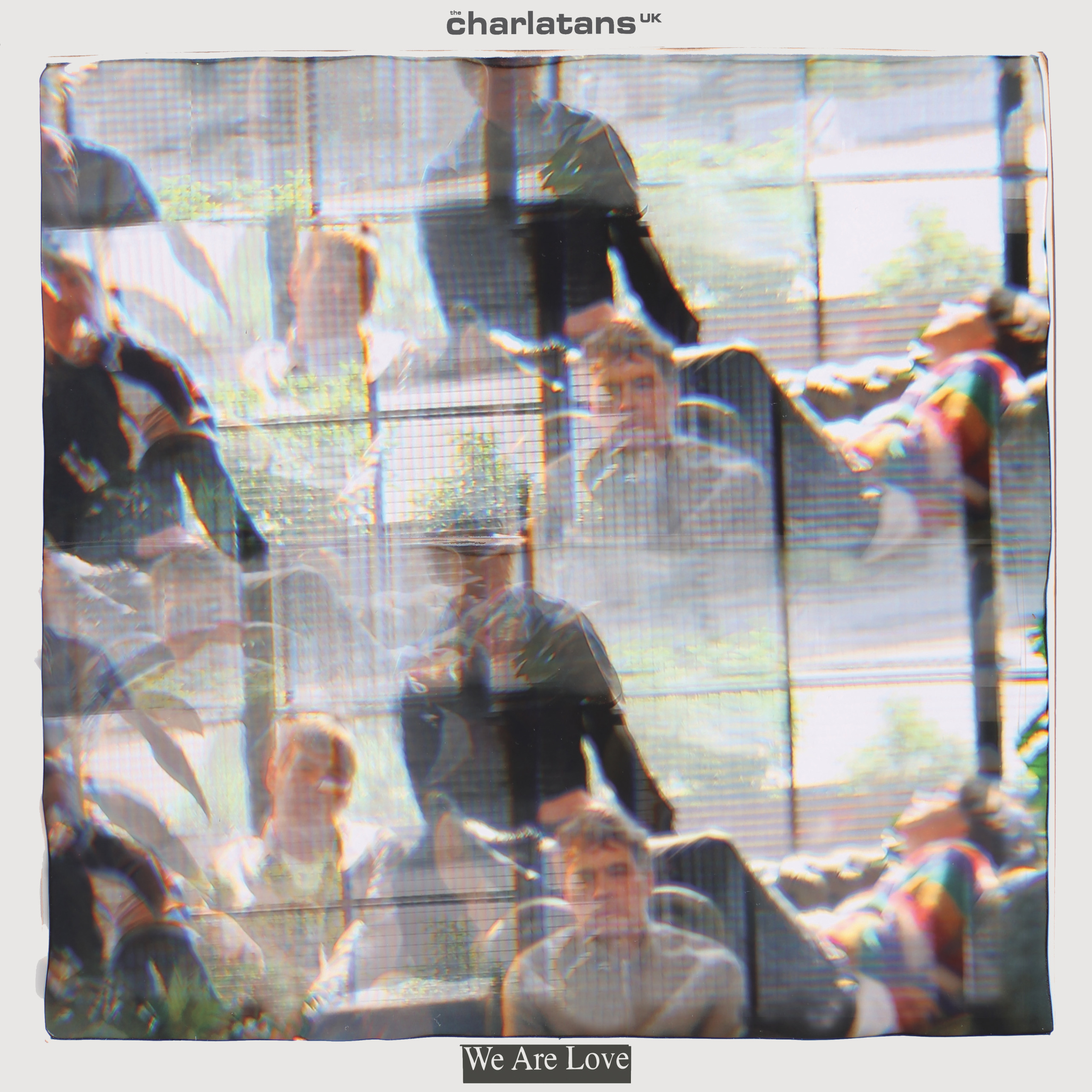
The Charlatans – We Are Love (BMG)
We Are Love finds The Charlatans band returning to Welsh farmhouse studio Rockfield for the first time since Tellin’ Stories (keyboardist Rob Collins died on a road on the studio property during its making), and frontman Tim Burgess says the concept of hauntology crept into the album’s songs, like on opener “Kingdom of Ours,” where he sings, “This world couldn’t hold you / It just reached out and it took you.” They brought in Blood Orange’s Dev Hynes and his collaborator Fred McPherson to produce most of the record, and even for a band that’s morphed countless times, We Are Love is a fresh direction. The first single and title track doesn’t sound like anything they’ve done before — breezy, summery, and tailor-made for Burgess’ reedy, wistful voice. He describes it as “like an open-top car ride in the credits of your favorite movie, driving along the coast to somewhere amazing.” It’s also The Charlatans’ best single in ages. “Out on Our Own” is another surprise, starting in Spacemen 3 territory before transforming into a krautrock jam that rolls on a motorik drum pattern and kaleidoscopic synth riff. There’s no verse-chorus-verse structure, just a hypnotic, cyclical groove that feels both new and unmistakably Charlatans. Other highlights include the wistful travelogue “Glad You Grabbed,” featuring sax from Arthur Russell collaborator Peter Gordon, and the pulsing, melancholic “Appetite.” There are still classic organ-powered Charlatans moments, too: “You Can’t Push the River” and “Deeper and Deeper,” both produced by Stephen Street (The Smiths, Blur). On the latter, Burgess sings, “This climb might defeat me yet / No safety net / It seems to be a long way down.” The Charlatans are survivors because they understand that moving forward is the only way through — and with We Are Love, they continue to do so with style and grace.
—

The Chills – Spring Board: The Early Unrecorded Songs (Fire Records)
In the years before his untimely death in July, The Chills frontman Martin Phillipps talked of how he was going back through his archive of dozens (hundreds?) of early unrecorded songs and finally putting them to tape for a new album. This years-in-the-making passion project was finished with the current band, who gave their blessing, as did Phillipps’ family and management. “The album seemed like an easy option,” Martin said, though also noting it wasn’t as easy as it first seemed. “All of the songs needed varying degrees of rewriting; a 60-year old man couldn’t just stick to the lyrics of those formative years. And some of the songs were just vague recollections, incomplete, only blossoming during recording.” The result is a wonderful double album that pulls off a neat trick: you get the melodies a great songwriter in the middle of a prolific and creative peak filtered through the same person, now older with more life experience. He also got some extra help from friends and fans like Crowded House‘s Neil Finn and Elroy Finn, and Tiny Ruins’ Hollie Fullbrook. Songs that may have not seemed good enough at the time were clearly rough gems that just needed a little extra care (and better than a lot of successful musicians’ best work), and Phillips and the band give them just the right touch in the studio, neither keeping the sound in the past, nor modernizing things too much. There are heavenly pop hits, angular rockers and the kind of yearning, mystical ballads that Phillips would become known for in the ’90s. Martin’s death was a shock, but Spring Board is a terrific sendoff to him and The Chills, and a perfect full-circle moment, too.
—

Comet Gain – Letters to Ordinary Outsiders (Tapete)
Some artists earn cult status after years of trying to make it in the mainstream. Others, like Comet Gain’s David Feck, seem to seek it out. Formed in 1992 and backed by a deep, rotating lineup that has rivaled The Fall’s over the years, Comet Gain are a celebration of DIY indie culture born out of Northern Soul, Television Personalities, C-86, the Sarah Records scene, and other cardigan-friendly genres. They’ve released so much amazing material over the years—on albums, EPs, cassettes, and non-LP 7″ singles—and seem perfectly content operating on the periphery of pop culture. Their first album in six years, Letters to Ordinary Outsiders, might be the most Comet Gain title ever. It features songs originally released on Bandcamp, now spiffed up alongside a few new ones. The album was conceived as a series of postcards to those “ordinary outsiders,” and this batch of open-hearted janglepop anthems—dressed up perfectly with gang choruses, brass, vintage organs, and references to like-minded fellow cult heroes like Julian Cope and Robyn Hitchcock—doesn’t require membership in a secret club to enjoy. Adding to the charm are interstitial spoken word missives—almost like reading postcards—between Feck and his bandmates. “Do you know what the fifth Golden Rule of Underground Rock is?” asks producer Sean Read. “Never stop.” Thank goodness Comet Gain have been following this one all along.
—
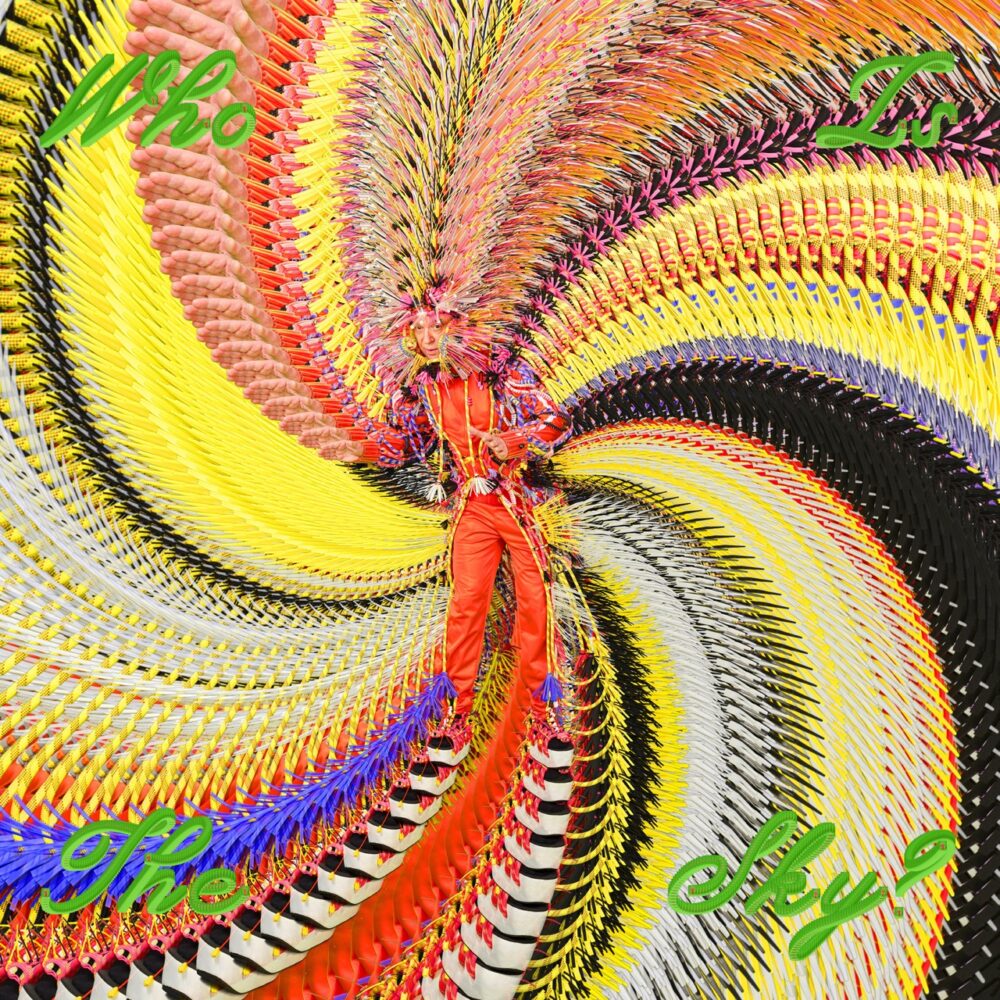
David Byrne – Who Is the Sky? (Matador)
There’s a song on the new David Byrne album called “The Avant Garde” where he describes the avant-garde as a place that’s “deceptively weighty” and “profoundly absurd” and that “doesn’t mean shit” before crooning, “I wanna go there!” Musically speaking, it’s a whimsical, acid-trip pop song that matches perfectly with Who Is the Sky?‘s kaleidoscopic album artwork, and the song as a whole taps into the dichotomy that has defined David Byrne for most of the former Talking Heads singer’s career. His very existence basically asks: why should “weird music” and “pop music” be two different things? That question at least implicitly informs the majority of Who Is the Sky?, an album powered by love, joy, and blissful pop music, all filtered through one of the most deeply strange minds of the last half-century of popular music. He made the album with New York chamber ensemble Ghost Train Orchestra, modern mainstream pop producer Kid Harpoon (Miley Cyrus, Harry Styles), and the percussionists from two different Thom Yorke bands: Tom Skinner (of The Smile) and Mauro Refosco (of Atoms For Peace, as well as David Byrne’s last album American Utopia). He also brought in guest vocals from his now-longtime collaborator St. Vincent and his more recent collaborator Hayley Williams of Paramore. It’s a wonderfully weird crew that makes perfect sense for a David Byrne album, and the results sound like no other artist in the world. Afro-Caribbean polyrhythms, orchestral string arrangements, oddball lyrical sentiments, and David’s unmistakable voice all come together for a collection of songs that very often scratches the same itch as Remain In Light and Speaking In Tongues. We’re almost 50 years removed from those albums, and David Byrne still audibly has the same artistic hunger he had back then. Despite noticeably inspiring hundreds if not thousands of other well-known musicians, still nobody sounds like David Byrne, and his formula is still so timeless that he can perform one of his classics with one of Gen Z’s biggest pop stars to her fanbase and it works. When the aforementioned Paramore released a cover of that same song last year, they breathed new life into it without changing it up much at all. All of these things speak to how relevant David Byrne is to modern pop culture, and it shouldn’t be taken for granted that his own new music fits right in with this whole phenomenon. [Andrew Sacher]
—
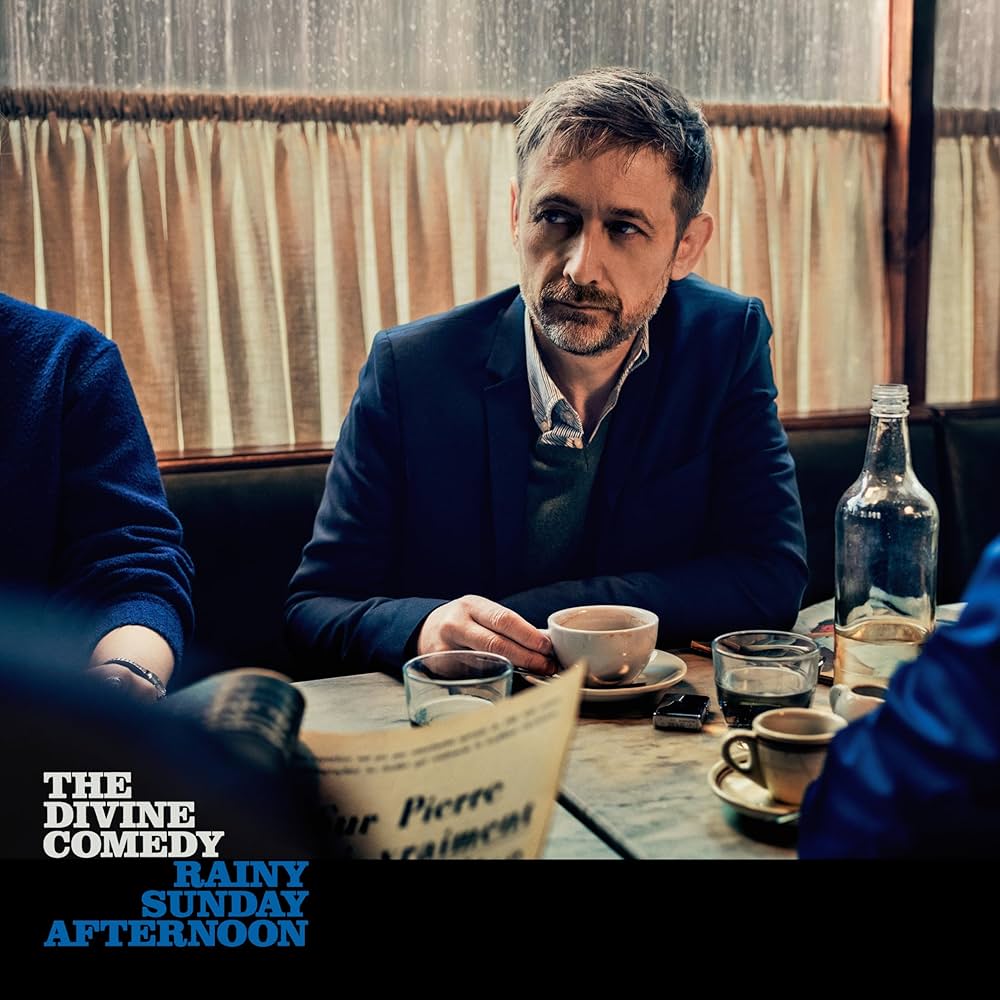
The Divine Comedy – Rainy Sunday Afternoon (Divine Comedy Records)
Neil Hannon has been making erudite baroque pop as The Divine Comedy since the early ’90s, with a sound that falls somewhere between Burt Bacharach and Scott Walker. He’s flirted with mainstream success, though mostly via film and TV: “Songs of Love” from Casanova became the theme to beloved British sitcom Father Ted, and more recently his playful, theatrical side was showcased in the score and songs for hit film Wonka. Those gigs likely allow him the freedom to make an album like Rainy Sunday Afternoon, a lushly orchestrated record made at Abbey Road Studios. This is his darkest album since 1998’s Fin de Siècle. He’s not quite wallowing the way he did then, but melancholy runs through this his 13th Divine Comedy album. Themes of aging and death surface in “The Last Time I Saw the Old Man,” “The Heart is a Lonely Hunter,” and “The Man Who Turned into a Chair,” while “Down the Rabbit Hole” captures the endless spiral of doomscrolling. Hannon’s wit keeps things afloat, though: “Mar a Lago By the Sea” imagines an imprisoned old man wistfully dreaming of his former palatial home (you can probably guess who it’s about). Elsewhere, “All the Pretty Lights” feels tailor-made for your holiday playlist. Rainy Sunday Afternoon also knows its season, arriving at the start of autumn with winter very much on its mind.
—

Étienne de Crécy – Warm Up (PIXADELIC)
Part of the original ’90s French Touch scene that also gave us Daft Punk, Cassius, and Sébastien Tellier, Étienne de Crécy is a house music master who has given us such suave dancefloor classics as “You,” “Prix Choc,” and “Am I Wrong.” He is also a master collaborator, having made records with Jarvis Cocker, Baxter Dury, Air, and many many more. For his latest album, Warm Up, he’s put his contact list to work with one of the most impressive guest-lists of his career, including Damon Albarn, Hot Chip‘s Alexis Taylor, Kero Kero Bonito, Caroline Rose, and current UK indie stars Sports, plus a name I haven’t heard in a while, Olivia Merilahti of ’00s-era finnish duo The Dø. He created all the backing tracks first, and then gave them to his vocalists, encouraging them to take the songs to new places. Warm Up‘s a little different than his other records, as the songs were designed not for the club but as something a little more chill you could listen to during the day at home. Étienne’s fingerprints are still all over this but songs like “World Away” (ft Alexis Taylor), “Small Screen” (ft Kero Kero Bonito), and “Karma” (ft Olivia Merilahti) let you dance while doing the dishes without things ever getting too crazy. Warm Up is just a different kind of house music.
–f

Dean Wareham – That’s the Price of Loving Me (Carpark)
You know what to expect from a Dean Wareham record at this point, 40 years into his career, through Galaxie 500, Luna, Dean & Britta, collabs with Sonic Boom and more: tranquil guitar rock that’s lazy, soft and slow with subtle guitar fireworks and his wry sense of humor present in the lyrics. It’s a sound that is indebted to the Velvets and Jonathan Richman but at this point is just his own. One thing you might not expect is for Dean to reteam with Kramer who he hasn’t worked with since Kramer produced all three of Galaxie 500’s albums. They’d remained friendly over the years but the pandemic brought them closer and they decided to see what would happen in the studio. It turns out not much has changed in 35 years, the magic was still there and Kramer continues to work quick. “Kramer believes two takes yield more treasure than 20,” says Dean. Recorded in just six days, That’s the Price of Loving Me is Wareham’s finest solo record to date and the best thing he’s done since Dean & Britta’s 2003 album, L’Avventura. The atmosphere is relaxed but confident, and while the fidelity is decidedly higher than those Galaxie 500 records — and Dean is using more chords these days — there are definitely moments that flash back to the late ’80s. “New World Julie” feels like a cousin to “Pictures” from Galaxie 500’s debut, Today, and covering Mayo Thompson’s “Dear Betty Baby” feels like a nod to G500’s take on The Red Krayola’s “Victory Garden.” This is a cozy, comfy record with nice touches like the strings on “You Were the Ones I Had to Betray” and “That’s the Price of Loving Me,” the vibraphone on his cover of Nico’s “Reich der Träume.” (Britta Phillips’ backing vocals are always welcome too.) It’s the guitar touches, dipped lightly in reverb, that really get you, though. “Yesterday’s Hero,” which is in a tie with the title track for best song on the album, blooms with dueling leads panned to opposite sides for the stereo field. They run out the last minute of the song and it’s so satisfying, so pretty, that I wish it would go on three times as long. Here’s to old friends, may they continue to make more records like this together.
—

Destroyer – Dan’s Boogie (Merge / Bella Union)
It took 30 years but Dan Bejar finally embraced his inner lounge singer. It comes after three albums of flirting with dance music, and the red velvet curtains you can feel behind him on Dan’s Boogie are the perfect backdrop. Of course, Engelbert Humperdinck would’ve never made a record like this, and that’s thanks to the otherworldly sound design of producer and collaborator John Collins. Dan makes a grand entrance with “The Same Thing and Nothing At All” which sounds like Las Vegas on Pluto as strings and grand piano float out of the orchestra in low gravity. There’s a noir vibe here too, but Collins shoots the album in widescreen technicolor as Dan’s signature word salad style makes your head spin. The rumpled tux suits him.
—

Doves – Constellations for the Lonely (EMI North)
For a band whose last four albums have all gone Top 5 in the UK, Doves feel underappreciated in 2025. They no doubt remain at the top of their game, still kings of anthemic, widescreen rock that incorporates classic R&B, psych, hip hop, trip hop and dance music. Constellations for the Lonely is another stunner, gorgeously produced, and packed with the kind of soaring, string-filled choruses that makes your skin tingle. It’s 10 songs are all highs, each full of magic little moments that layer together to form something even greater. Jimi Goodwin’s world-weary voice is always a pleasure, but Jez Williams lead’s the album’s best song, orchestral masterpiece “Cold Dreamin,” which is somewhere between David Axelrod and Minnie Ripperton. Across 25 years, Doves have yet to disappoint.
—

Edwyn Collins – Nation Shall Speak Unto Nation (AED)
“Hard to let my old self go,” Edwyn Collins sings on “Knowledge,” the opening track on his 10th album, but if you ask me, he did it long ago. Having been battered by the music biz with his band Orange Juice and an unsuccessful early solo career in the ’80s, Collins peppered his ’90s solo albums with bitter sarcasm, cynicism and rapier wit. Even on his 1995 hit “A Girl Like You,” which is a perfect pop single, he threw in the line “Too many protest singers, not enough protest songs” into the otherwise lusty romantic number. But in the 20 years and five albums since the two major strokes that nearly killed him and left the right half of his body weakened, Collins has favored simple, direct lyrics that reflect hope and his appreciation of life. This all while still delivering the kind of tuneful melodies, jangly guitars, clever production and signature warbly singing style he was known for back when he was the “Sound of Young Scotland.” Nation Shall Speak Unto Nation, his 10th solo album, is a wonderful record, and benefits greatly from friends and ace Pretenders sidemen James Walbourne and Carwyn Ellis, not to mention his son William on bass. Edwyn is mostly in gentle mode here which suits his croon that can still charmingly swoop from falsetto to baritone within a phrase, as he moves between country/folk (“Knowledge,” “The Mountains Are My Home”) and his signature brand of wall-of-sound soul (“The Heart is a Foolish Little Thing,” “Strange Old World”). The best song on the album, the sweet “A Little Sign,” falls somewhere in-between and makes the most of its two-chord melody with excellent echo-chamber dub production. It’s subtle, it’s subdued, and it all shows that, at 66, he’s still got the touch.
—

Gina Birch – Trouble (Third Man)
It took Raincoats co-founder Gina Birch 45 years to make her first solo album, but only two to make her second. It’s clear she’s caught the music and performing bug again—Trouble is playful, angry, and a more cohesive album than I Play My Bass Loud. “The record title refers to all the mini revolutions that have occurred in my life,” Birch says. “Not following the usual paths, falling down holes, making the same mistakes over and over—trouble of being a young woman at a time our options were generally secretary, mother, or sex worker. Trouble I’ve caused and trouble I’m in.” She’s once again worked with Killing Joke’s Youth as producer and this time incorporated her live band (Jenny Green and Marie Merlet) into the mix. Trouble leans into dub and electronics, a natural evolution of the Raincoats’ style, and benefits from its sonic focus. She’s also experimenting more with modern production, which suits her: pitch-shifted autotune adds to the slippery, sinister vibe of “Keep to the Left,” “Train Platform,” and “Sleep.” The darker direction of much of the record works like gangbusters, but she also makes time for fun. “Causing Trouble Again” is a banger that doubles as a tribute to the many women who’ve inspired Birch, from Joni Mitchell, Nina Simone, and Yoko Ono to Kathleen Hanna and Stormy Daniels. “We’re rising up / Creating, taking up places in your spaces,” she sings in the chorus. “And we ain’t going to stop.” Gonna hold you to that, Gina.
—

Gruff Rhys – Dim Probs (Rock Action)
“I was in a particularly bleak place,” Gruff Rhys says of making his new album Dim Probs. “And it’s reflected on the record, and I don’t know why. Dim Probs is a kind of slang, Wenglish, you know, it’s not Welsh or English. ‘Dim’ means no, and probs is like, so it’s like ‘no probs,’ but obviously there’s plenty of probs to go around.” Dim Probs is Rhys’ ninth solo album — that’s as many as he made with Super Furry Animals — and it’s easily the thematically darkest record he’s ever made. Often an abstract lyricist, this time it’s pretty clear he’s working through what a lot of us are currently feeling. It’s not so much heavy as ominous, surveying the state of things, the worst of times, in a near-constant fog of doom and gloom. Gruff is a pop songwriter at heart, though, and he tempers the noirish mood with Brazilian chords, warm melodies, horns, and his signature harmonies. (Also lightening the mood: cover art by frequent collaborator Pete Fowler which is should really be made into a beach towel and available at Gruff’s merch table.) The push and pull is exemplified on “Taro #1 + #2,” Dim Probs‘ most immediate song, is about “accepting death as the end of the turn.” Meanwhile, old friends Cate Le Bon and H. Hawkline show up to sing backup on two of the album’s friendliest songs—“Pan ddaw’r haul i fore” (“When Sun Comes to the Morning”) and “Chwyn Chwyldroadol!” (“Revolutionary Weed!”)—which open both sides of the record, respectively. The mix of dark and light, plus Gruff’s melodic skills and endless supply of empathy, make Dim Probs a deeply rewarding listen.
—
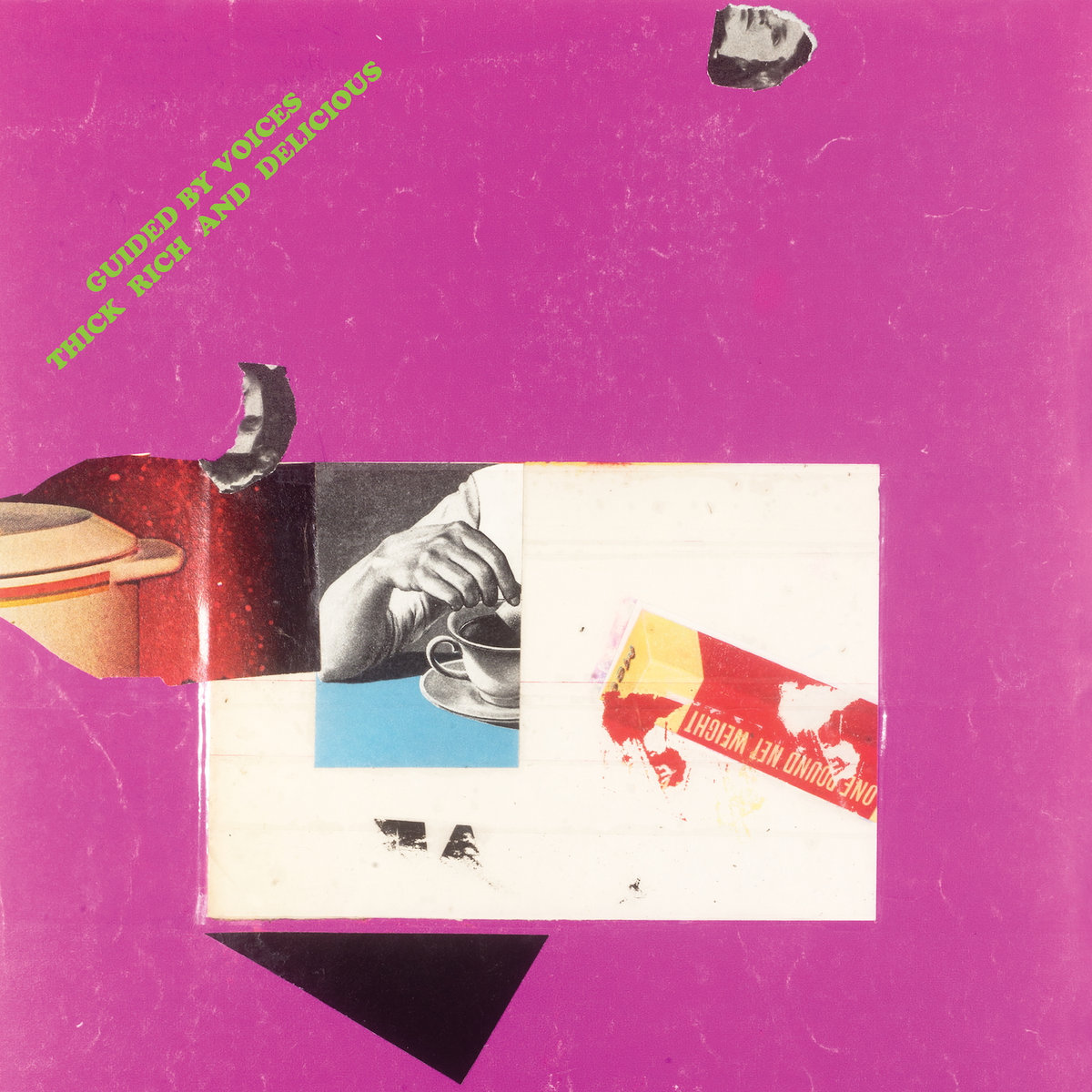
Guided by Voices – Thick Rich & Delicious (GBV Inc)
There has been some talk about Guided by Voices going on indefinite hiatus, but we sure hope not as the current lineup of the band, going 10 years strong, is arguably the best there’s ever been. Likewise the incredible late career hit-streak they’ve been on which includes Thick Rich & Delicious which features 15 Patented Robert Pollard Earworms, loaded with fist-pumping riffs and played with gusto. No doubt Bob will continue to make records in any case, but the world would be a worse place without GBV — but if this were to be their last record, they’d be going out on a high.
—

The Hives – The Hives Forever Forever The Hives (PIAS)
After over a decade in hibernation, The Hives roared back to life in 2023 with The Death of Randy Fitzsimmons. Middle age didn’t slow them down one bit—their high-octane, braggadocious brand of garage rock sounded as fresh as it did when they dropped Veni Vidi Vicious 25 years ago, and their live show was like they never left. Then The Hives did something they’d never done before in their 30-year career: instead of taking a break after the tour, they rode the high straight back into the studio and immediately made another album. You can feel that energy and momentum in The Hives Forever Forever The Hives, the Swedish quintet’s seventh album and, I’m just going to say it, their best yet. No, frontman Howlin’ Pelle Almqvist has not stolen my laptop. This record rips. Some credit surely goes to co-producers Mike D (Beastie Boys) and Pelle Gunnerfeldt (Viagra Boys), as well as input from Josh Homme, but this is clearly the work of a band striking while the iron is hot. They haven’t changed their formula—big riffs, big drums, breakneck tempos, anthemic choruses, and heaps of attitude—but this album feels like the purest distillation of everything The Hives do best. Every song is precision-crafted, stuffed with memorable moments, delivering Maximum Hives Satisfaction.
—

Ivy – Traces of You (Bar None)
The world thought IVY was gone after 2012, and for a time we did too,” says Ivy cofounder Andy Chase, whose last album came out at the dawn of the 2010s. “And after Adam’s death in 2020 it seemed certain.” But after Adam Schlesinger’s passing at the start of the pandemic, Chase and singer Dominique Durand began combing through their archives, revisiting unfinished songs and rediscovering many gems anchored by Adam’s distinctive basslines. With Adam’s family’s blessing, they decided to finish their favorites. In Ivy, Schlesinger’s bass playing always fell somewhere between Serge Gainsbourg-style grooviness and the melodically driven style of New Order or The Cure, and it’s one of the distinguishing elements of Traces of You. That, and the songs themselves—like most everything Ivy have done—are beholden to ‘80s alt-pop acts such as Prefab Sprout, Everything But the Girl, The Style Council, and Orange Juice. They’re as memorable as the best of the band’s catalog. It’s a terrific addition to Ivy’s body of work and a wonderful tribute to Schlesinger.
—
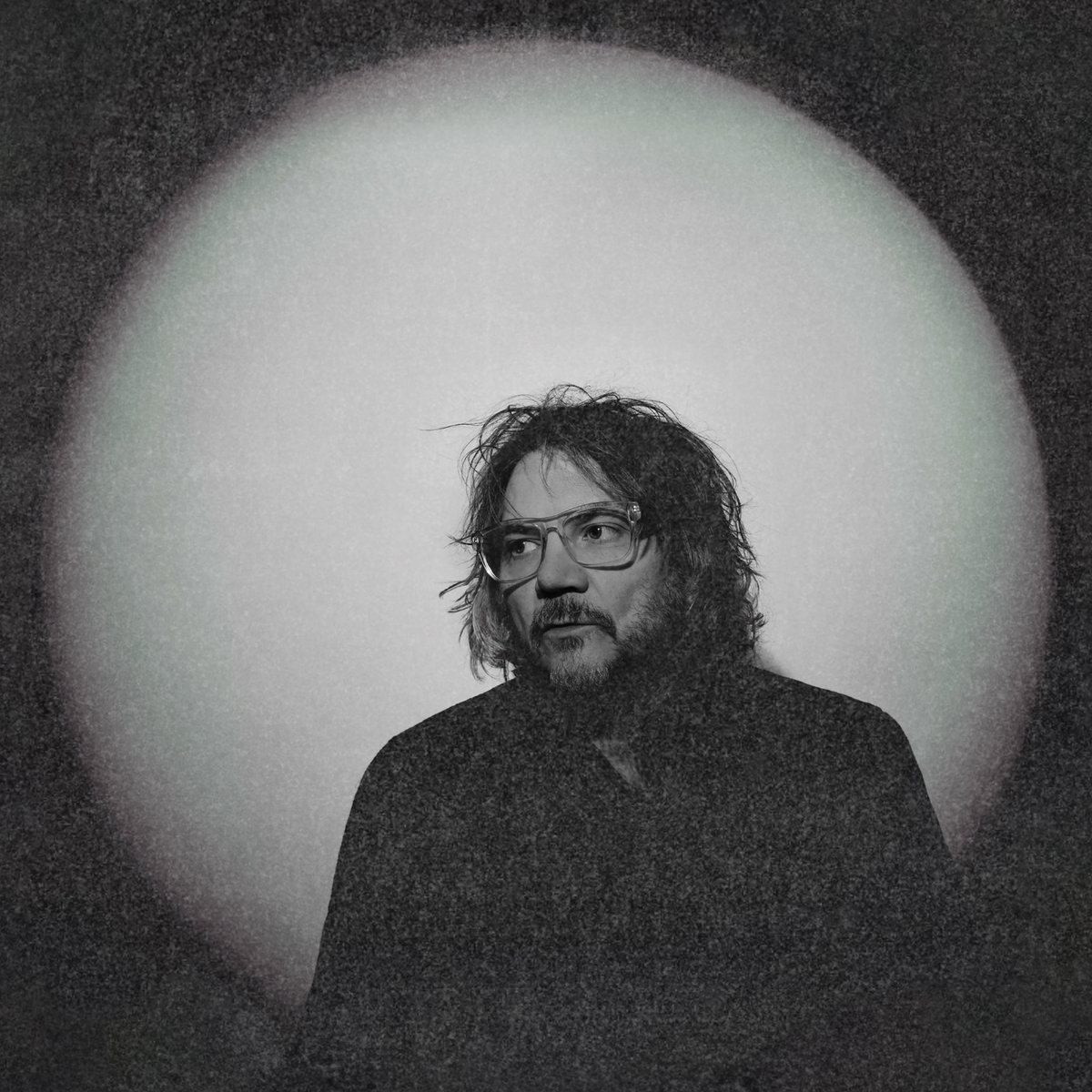
Jeff Tweedy – Twilight Override (dBpm)
As if 2025 wasn’t already a loaded year for country/indie rock crossover, now we get a 30-song triple album from Wilco’s Jeff Tweedy. It’s a lot to take in on one listen, and Jeff himself has acknowleged that. As he wrote in an essay accompanying the album: “To me, any song, no matter the subject matter, can be a point of light and that’s one of the reasons I try and make so many of them. They all have the potential, even the heaviest music on the earth has the potential, to lift someone up.” So even if listening to Twilight Override from start to finish is an undertaking that you just don’t find yourself doing as much as you do with Jeff’s many great albums that require shorter attention spans, maybe the song on this album that lifts you up the most is the one that would’ve gotten cut if he limited this album to the length of a single vinyl LP. Jeff’s been one of the most consistently great songwriters of the past 30 years across indie rock, alternative rock, folk, alt-country, and art rock, and all of that is on display across Twilight Override. It’s easy to take it for granted when an artist is still this prolific after all these years, but it’s better to treasure how much we can still rely on him. As Jeff himself said, “I’ve been doing this for a long time. And I’m not going anywhere. [Andrew Sacher]
—

Jonathan Richman – Only Frozen Sky Anyway (Blue Arrow Records)
Being a Jonathan Richman fan can be tough—at least when it comes to knowing what’s going on currently in JoJo’s world. He’s the kind of guy who misses the “corner store,” so it’s no surprise he has no social media presence or even a website. He only got an official Bandcamp page a couple of years ago and, on the media side, went without a publicist for decades—only recently getting one. You had to work to be a fan. With all that, you may have missed that after nearly 50 years, Richman started working again with Jerry Harrison—an original member of The Modern Lovers who left before their classic debut album was released to join Talking Heads full-time. Harrison produced and played on 2021’s Want to Visit My Inner House?, and he’s back in the same role for Only Frozen Sky Anyway. Harrison hasn’t brought back the influential, VU-inspired sound of The Modern Lovers, nor has he imposed his ’90s overproduction style (Live, Crash Test Dummies) on Jonathan. Instead, he seems to encourage a richer tapestry of sounds. These playful songs—including a loose cover of the Bee Gees’ “Night Fever” with lots of new lyrics—lean toward the tropics, with bongos and flamenco guitar. Speaking of, he delivers a classic here with “O Guitar,” the kind of song only JoJo would write, about the power of music: “O guitar, who tells us how to feel when we ourselves can’t say.” Jonathan may not make it easy to find out what he’s up to—but it’s always worth checking in with him.
—

Luke Haines & Peter Buck – Going Down To The River… To Blow My Mind (Cherry Red)
One of the more unexpected, out-there pairings of this decade—Auteurs/Black Box Recorder founder Luke Haines and R.E.M. guitarist Peter Buck—continues its reign of gleeful terror. Following 2020’s Beat Poetry for Survivalists and 2022’s especially awesome All the Kids Are Super Bummed Out, they’re back with another overflowing blotter of acid-fried fever dreams. Like the first two, Going Down To The River… To Blow My Mind was made with Peter’s Baseball Project bandmates: Scott McCaughey (Minus 5, R.E.M.) on bass and Linda Pitmon (Filthy Friends, Steve Wynn) on drums. Haines has once again populated the record with terrorists, hippie conspiracy theorists, hot artists, nervous breakdowns, burnouts, and all manner of other weirdos. I have no idea what most of these songs are about but, like the work of Alejandro Jodorowsky, Haines’ brand of vivid, twisted phantasmagoria is undeniably compelling. Buck and the rest of the band are clearly having fun trying to match the imagery with wild arrangements, while Haines maintains his uncanny ability to convey both menace and intrigue with a whispery vocal style that could talk you into anything, like agreeing to go with your kidnapper to a second location. “I got nowhere to be but I can be there anytime,” he sings on the album’s title track. “I got a foxhole, I got an asshole, I got a third eye / I got 15 personalities—none of them are mine / Going down to the river—to blow my mind.” Is this a triptych? Hopefully not. Sign me up for a fourth hit—hopefully coming soon.
—

Mekons – Horror (Fire)
Nearly 50 years into their career, the DIY punk greats Mekons are still doing what they do best — skewering the pompous and pios, offering social commentary with wit and an eye on history, and delivering rousing, beers-aloft anthems in the band’s signature globe-trotting style. Horror is Mekons’ 20th studio album and first for Fire Records, and it sounds like a sampler plate of everything they’ve ever done, from dub to country, celtic folk, janglepop, angular postpunk, and everything in between. Themes couldn’t be more 2025, though, as Jon Langford, Sally Timms and the rest of the band take stock of the mess that’s become of the world, placing much blame on British imperialism and touching on everything from the Irish Famine to the climate crisis, warmongering and profiteering. Many of their contemporaries are on their seventh album anniversary tour, but Mekons continue to fight the good fight and sound as alive and sharp as they did on “Never Been in a Riot.” Horror is also one of their best-sounding records, with great performances from the band and singers, but still keeping that three-pints-in wobbliness you want from them. The world may be going to shit, but it’s a better place with the Mekons in it.
—

The Lemonheads – Love Chant (Fire)
Love Chant, the first Lemonheads album of original material in nearly 20 years, isn’t quite a return to Evan Dando’s ’90s peak, but it elicits warm vibes, goodwill, and hope, offering a few great songs with glimpses of peak Dando. That hangdog charm is still there, too, evident on the terrific opening song “58 Second Song,” which is actually 3:23 long — but never mind that — the song’s all about time. Dando’s voice still sounds like a warm smile, even if it’s weathered and dropped an octave or two, and he gets a lot of vocal assistance from Erin Rae, old friend Juliana Hatfield, Alice Caymmi, and bandmates Farley Glavin and John Kent. There are a few other notable contributors on guitar: J Mascis brings his ragged shredding to “Deep End,” former Lemonhead and Blake Baby John Strohm plays on “Togetherness Is All I’m After,” and The Bevis Frond’s Nick Saloman lends his signature style to closing track “Roky.” There’s a hard rock element to a few of these songs, as well as some heavy psych, but the album is most successful when it plays to Dando’s poppy, folkier strengths — like on “Cell Phone Blues,” “Be In,” and “The Key of Victory.” Love Chant is the kind of record where Dando’s pluses shine through the shambles and still keep you hoping the next one will come faster, more focused, and with more of that Dando charm.
—

Miki Berenyi Trio – Tripla (Bella Union)
When Lush broke up in 1996, singer-guitarist Miki Berenyi all but gave up music, finding a second successful career in publishing. But the band’s short-lived 2015-2016 reunion rekindled her musical creative urges and she formed Piroshka with her partner KJ “Moose” McKillop of fellow original era shoegazers Moose and made two very good if underheard albums. So it makes sense that Berenyi refashioned Piroshka with McKillop and bandmate Oliver Cherer as the Miki Berenyi Trio, a name that old fans recognize and a sound that is more in line with her ’90s style. Tripla is her best post-Lush work yet, with Berenyi and Moose bringing the combined power of their guitar haze talents with electronic elements for a familiar but new sonic renovation. Part of its success may be that this time they’re doing it for the fun of it, recording and producing themselves with no music industry expectations. “There is something very ‘grassroots’ about what we’re doing,” Miki says. “There’s no point following the ‘announce the album, then tour, then record the next album’ route – we just want to wring as much enjoyment out of this as we can, and hope that it resonates somewhere!” With danceable grooves and those ethereal layers of cascading guitars, songs like “Kinch,” “Vertigo” and “Big Am I” feel very now and very in fashion.
—

Mogwai – The Bad Fire (Rock Action)
2025 marks Mogwai’s 30th anniversary and at this point you pretty much know what to expect from a new album: sweeping post-rock epics full of spacious layers of guitar, synth, crashing drums and, occasionally, a little singing. It’s a lane they paved and they’ve earned the right to ride it forever as few do it better than them. These Glaswegians do have a few new moves on their 11th album, however. The Bad Fire opens with “God Gets You Back,” which begins with gently arpeggiating keyboard lines — familiar territory — but then they shift gears and turn into melodic territory with harmonies that wouldn’t be out of place on a Ride album. (The song’s lyrics were written by Barry Burns’s seven-year-old daughter, btw.) It soars like Mogwai while occupying a new orbit. The Bad Fire was made with producer John Congleton, who is a perfect match for Mogwai. He also pushed them gently outside their comfort zone, like on “Fanzine Made of Flesh” which is another vocal song, with vocoder and synths that almost give it an ABBA feel, or at least as close as they’ll ever get. The band still has a way with song titles, including “If You Find This World Bad, You Should See Some Of The Others,” “Pale Vegan Hip Pain,” and “18 Volcanoes.” The latter also doubles as a good descriptor of Mogwai’s sound which remains majestic and viscerally satisfying three decades into their career.
—

The Moles – Composition Book (Splendid Research)
While we’re talking about the Robert Pollard Cinematic Universe, here’s a new album from The Moles, the long-running project of Australian singer-songwriter Richard Davies who made an album with Bob under the name Cosmos back in 2009. (You might also know Davies from Cardinal, his chamber pop collaboration with Eric Matthews.) When The Moles were more of a band back in the late-’80s and early ’90s, they were firing on all cylinders (see further down for more on that); as a solo project, though, The Moles and Davies have been more hit and miss. Composition Book, the first Moles album in nine years and first for Pollard’s recently launched Splendid Research label, is the best record he’s made in ages. (Yes it’s also the only record he’s made in ages.) It’s still a bit scattershot, but Davies mostly has his act together here with a few terrific songs (“Since I Don’t Know When,” “Had to Be You,” “Chimes”) and clever mid-fi production (dig the water sprinkler backbeat on “Rattlesnakes, Vampires, Horse Tribes and Rocket Science”) that lie among a few fun but half-baked trad blues/rock workouts. If you need a second opinion, Robert Pollard says, “Richard Davies is one of the last great songwriters on planet Earth. Every song on Composition Book is up there with his finest and so it’s no small feat that after 35 years of making beautiful records, this one is his best.” Who am I to argue with the man who wrote “Game of Pricks”?
—

Mozart Estate – Tower Block in a Jam Jar (Cherry Red)
Lawrence, the man behind Felt, Denim, Go-Kart Mozart, and Mozart Estate, is an indie cult hero whose brilliance and dreams of superstardom have often been overshadowed by his many eccentricities. But the spotlight found him again last year with the release of Street-Level Superstar: A Year With Lawrence, Will Hodgkinson’s hilarious and often heartbreaking biography, which won the Penderyn Music Book Prize. It’s a fantastic read, and Lawrence is such a character that you don’t even need to know his music to enjoy it. For many readers who discovered him through Street-Level Superstar (now out in paperback), interest in his music has never been higher. Some of the Go-Kart Mozart records were made on the cheap and aren’t on streaming, so Lawrence has cherry-picked a dozen songs from his post-Denim catalog and rerecorded them with his current Mozart Estate band. “This is an album for people who have never heard Mozart Estate or Go-Kart Mozart before,” says Lawrence. “It’s for people who picked up the book and got into me that way. If you’re one of those, then this record will knock your socks off!!” I’d argue Tower Block in a Jam Jar is for everybody, though it does serve as a perfect introduction to Lawrence’s singular post-Felt worldview and style, both firmly rooted in the ’70s. It’s a definite sonic upgrade, especially for the ’00s-era material like “Summer is Here,” “City Centre,” and “Glorious Chorus,” which all get budget–hi-fi makeovers with real drums, pedal steel, better synths, and rich harmonies. The results are kitschy, glam, and glowing in saturated technicolor. It’s his best-sounding record since Back in Denim and, even with songs spanning 25 years, it holds together beautifully. It might even knock your socks off.
—

Paul Weller – Find El Dorado (Warner Music)
If a musician’s career goes on long enough, they’re bound to make at least one album of covers. Paul Weller—whose track record has remained remarkably high through The Jam, The Style Council, and a long solo career—made his first covers album in 2004 with Studio 150. Nearly two decades later, he’s back with his second. “These are songs I’ve carried with me for years,” Weller says of his takes on the work of Richie Havens, Bobby Charles, The Flying Burrito Brothers, the Bee Gees, The Kinks, and more. “They’ve taken on new shapes over time. And now felt like the moment to share them.” Find El Dorado is a much more mellow affair than the rambunctious Studio 150, favoring acoustic guitars and gentler tempos—fitting for a set rooted in folk and country. Weller is not one to sleepwalk through an album either, and these renditions are gorgeously arranged, featuring an impressive cast of collaborators, including Robert Plant, Noel Gallagher, Hannah Peel, Declan O’Rourke, Seckou Keita, and rising singer-songwriter Amelia Coburn. He’s never made a record that sounds quite like this before, either, and his still-powerful, soulful, slightly weathered voice sounds fantastic in these settings—especially on Brian Protheroe’s “Pinball” (lightly groovy), the Bee Gees’ pre-disco hit “I Started a Joke” (rendered here as a pure waltz), and Irish folk musician and BBC broadcaster Eamon Friel’s “El Dorado,” which features Gallagher on guitar. He also more than holds his own vocally alongside Robert Plant on “Clive’s Song” by the Incredible String Band’s Clive Palmer. Weller has reinvented himself a handful of times over his nearly 50-year career, and with Find El Dorado, he’s found yet another rewarding new avenue to explore.
—

Pulp – More (Rough Trade)
“I was born to do this / shouting and pointing,” Jarvis Cocker sings on the opening track of Pulp’s first album in 24 years. He’s kept shouting and pointing an art form in his post-Pulp projects, but somehow it all lands harder when he’s back with the band that made him famous. Comeback records carry impossible expectations, and Pulp somehow overdeliver, blending great new songs with a couple of long-unused older ones polished to perfection, plus all the signature moves — sexy whispering, horny lyrics, disco — and a few surprises. (When Jarvis drops a raised-eyebrow “are you sure?” in “Grown Ups,” it’s fan service of the best kind.) A lot has happened since the last Pulp album, including the death of bassist Steve Mackey in 2023, which helped inspire More through Jarvis’ “choose happiness wherever you are” outlook. The album reflects on mortality in Cocker’s singular way, but it’s also full of ease, camaraderie, and fun — qualities largely missing from Pulp records since Different Class. “I am not aging, I am just ripening,” Jarvis sings later, adding, “and life’s too short to drink bad wine.” More has already aged beautifully and deserves to be savored.
—

Robert Forster – Strawberries (Tapete)
Over the course of countless albums over the last 50 years — both with The Go-Betweens and solo — Robert Forster has honed his songwriting with an ear for dialogue and a distinct literary bent. But he’s always done it from the first person. With his ninth solo album, he stopped writing about himself and instead focused on fictional characters. Not that he was treading water before, but letting his imagination run wild seems to have unlocked something new, and you can feel the excitement in these tales of one-night stands, rock stars, and more. Best of all is the playful he-said-she-said title track, a duet with his wife, Karin. Forster is also clearly having a great time musically with his all-Swedish band, led by producer Peter Morén of Peter Bjorn and John. May all artists enjoy such a long and rewarding discography.
—

Saint Etienne – International (Heavenly)
2025 may have been the year of the ’90s comeback — Pulp, Stereolab, who am I forgetting? — but Saint Etienne decided it was time to call it quits. They go out in style. Their final album contains just about everything you could want from a Saint Etienne record, with help from an impressive list of friends: The Chemical Brothers, Orbital, Vince Clarke, Erol Alkan, Confidence Man, Xenomania, Nick Heyward, and more. A crowded guest list can be a red flag, but everyone here understood the assignment. Highlights include the slice-and-diced “Glad,” made with Tom Rowlands and Doves’ Jez Williams; the fizzy Confidence Man collaboration “Brand New Me”; and the dubby techno rush of “Take Me to the Pilot,” produced by Orbital’s Phil Hartnoll. The rest isn’t far behind, bringing Saint Etienne’s suave, sophisticated career to a close on a very high note.
—
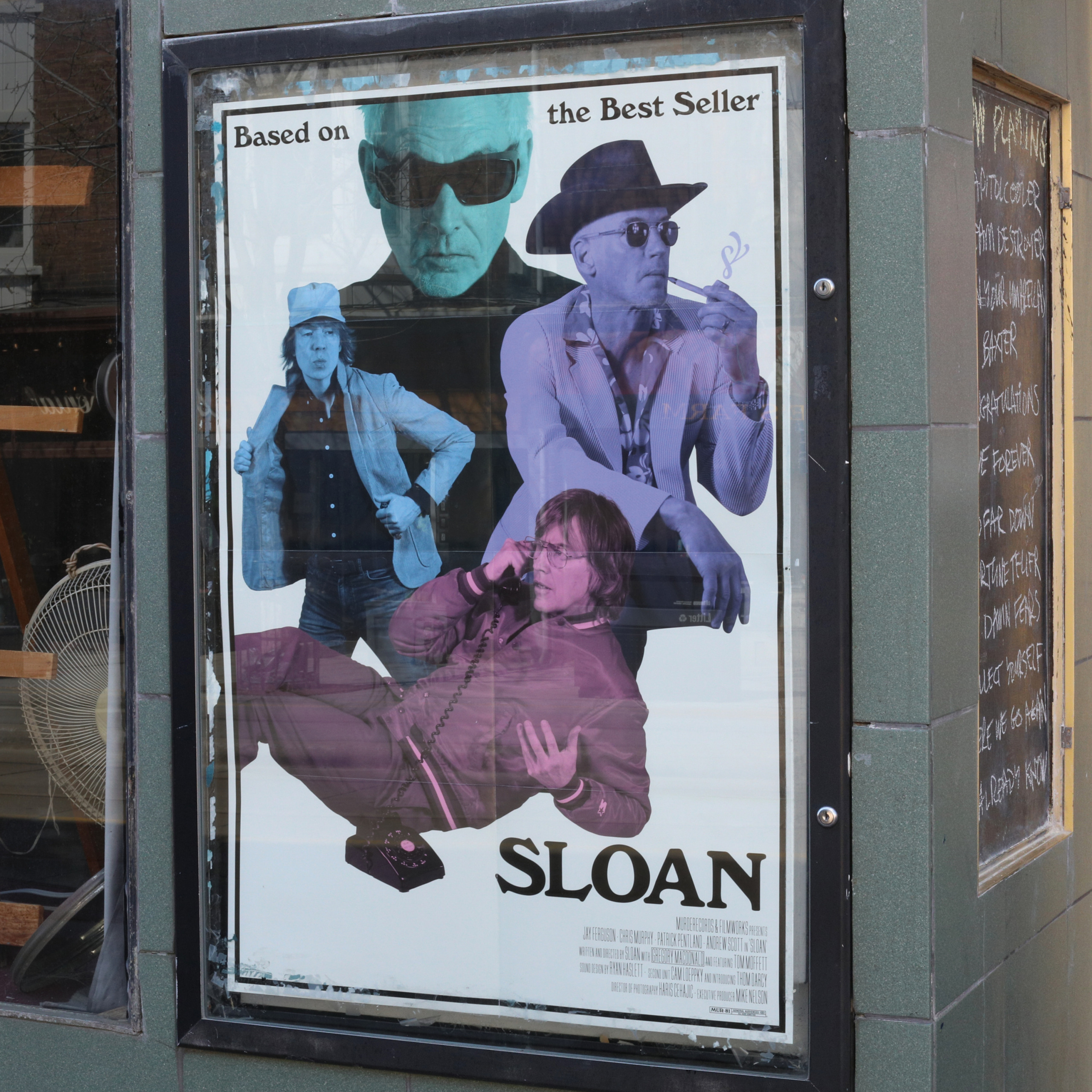
Sloan – Based on the Best Seller (Murderrecords / Yep Roc)
“We’re like city-states that coexist,” is how Chris Murphy described Sloan’s democratic nature on the Revolutions Per Movie podcast, noting that each of the band’s four members writes and sings the songs they bring to an album. “We share space on the albums, but not necessarily in the songs themselves. So Patrick can come in with a song and say, here’s how it goes.” It’s this formula — along with splitting songwriting royalties evenly — that has kept one of Canada’s greatest bands together for over 30 years, still making great music. Based on the Best Seller is Sloan’s 14th album, and at this point fans know what to expect: expertly crafted power-pop steeped in the ‘60s and ‘70s, and each member bringing their own distinct voice. Guitarist Patrick Pentland leans into fist-pumping hard rock riffs; bassist Chris Murphy channels Paul McCartney with witty turns of phrase; guitarist Jay Ferguson adds baroque pop flourishes informed by his encyclopedic record collection; and drummer Andrew Scott remains the wild card, always throwing curveballs. Their individuality is clear, but it’s the way they contribute to each other’s songs — especially those harmonies — that makes it Sloan. Even with their amazing track record, Based on the Best Seller is an especially strong entry. Pentland delivers one of his best songs in ages with “Here We Go Again”; all three of Ferguson’s tracks are terrific (“Capitol Cooler” might be the most Sloan song on the album); and while Scott only contributes two, both “Baxter” and “No Damn Fears” are punchy and full of attitude. Sloan albums are always good bets — but sometimes, like here, they overdeliver.
—

Stereolab – Instant Holograms on Metal Film (Duophonic / Warp)
2025 was a banner year for ’90s-era artists, but even among the comebacks, Stereolab’s return was a surprise. Unlike Pulp, who’d been road-testing new songs in 2024, Stereolab announced in April that their first album in nearly 15 years would arrive in just over a month. The real shock was how good Instant Holograms on Metal Film turned out to be — and how natural it felt. This is the Stereolab you remember: jazzy chords, hypnotic rhythms, xylophones, flutes, brass, interwoven vocals, politicized lyrics paired with “bah dee bah” hooks, and all manner of cool analog synths. Laetitia Sadier says she was more actively involved than ever before, and working with new collaborator Cooper Crain of Bitchin Bajas, the group rediscovered their mojo. This Hologram isn’t an illusion — it’s real, and it’s an unexpected miracle.
—

Suede – Antidepressants (BMG)
“If Autofiction was our punk record,” Suede frontman Brett Anderson posits, “Antidepressants is our post-punk record.” This writer thinks of Autofiction as Suede’s goth album, and Autofiction is even more so. Of course, goth grew out of the original post-punk scene, and the touchstones here are The Cult circa Love, The Chameleons, Bauhaus, Siouxsie, and Faith-era Cure, as opposed to Floodland or Fields of the Nephilim. It’s a natural, nay, perfect extension of Suede’s signature “beautiful trash” glammy sound, and the jagged yet manicured arrangements on their 10th album—they’ve now made as many since reforming as they did the first time around—befit a group whose members are in their 50s and still, y’know, rocking out credibly. Bassist Mat Osman told us there were nearly 50 songs in consideration for this album which they then whittled down to these 11 gems. Without a doubt, Suede’s best album since Coming Up.
—
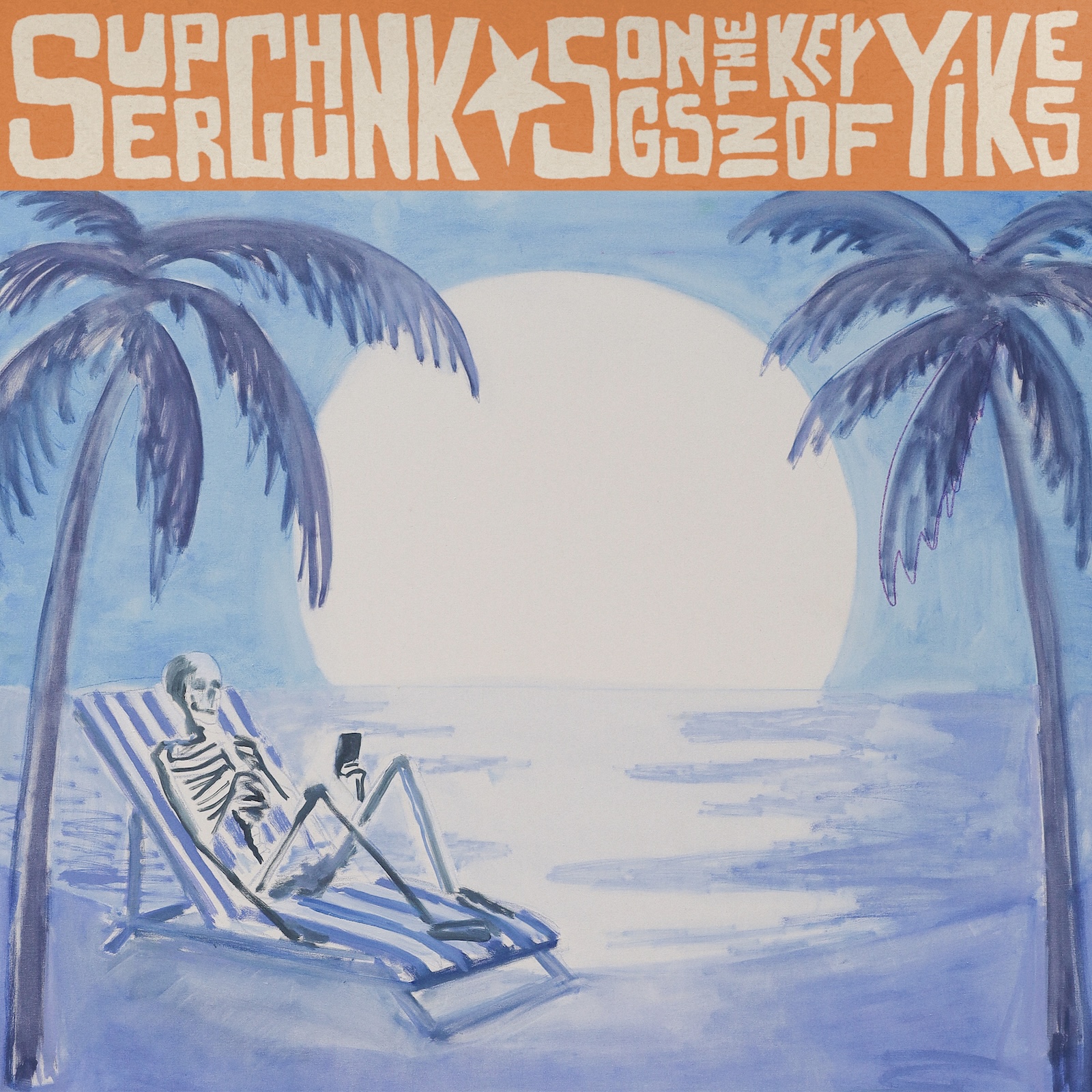
Superchunk – Songs in the Key of Yikes (Merge)
Superchunk’s 13th album is very much a product of our uncertain times. “It’s always been the case that everyone is going through something that you may not be aware of,” says frontman Mac McCaughan of the album’s title and themes. “This is currently more true than ever—but also the case that we are all going through some things together. In the face of that, what good is art and where is happiness found? (Spoiler alert: I don’t know.)” Songs in the Key of Yikes carries the same spirit as 2018’s What a Time to Be Alive, but with even more dread and stress. “It only hurts when I breathe,” Mac sings on “Bruised Lung,” which is about as subtle as this record gets. Elsewhere, we get songs like “No Hope,” “Trying to Care Less,” and “Everybody Dies.” It’s not a time for understatement, but there’s catharsis in these 10 songs, all delivered with Superchunk’s signature anthemic choruses. Singing along to “No hope, no hope, no hope!” feels pretty good when we’re all going through this together.
—

Throwing Muses – Moonlight Concessions (Fire Records)
Kristin Hersh has led Throwing Muses since 1983 when she and stepsister Tanya Donelly formed the band while still in high school. They’ve changed dramatically since then; Donelly left to form Belly after 1991’s The Real Ramona, and with that Hersh reconfigured the band into a more acoustic project while keeping drummer David Narcizo and adding new bassist Bernard Georges. That lineup continues today, and even though their sharp angles have been traded for folkier arrangements, the through-line remains Hersh’s unique off-kilter melodies, and lyrics/vocals which often feel like she’s channeling spirits from the beyond, even when subject matter is very personal. Moonlight Concessions is the 11th Throwing Muses album and Hersh wrote many of the songs in South coastal environments before recording in the band’s home base of Rhode Island. “In New Orleans the stars look greenish-blue, as it’s below sea level and swamp-lit. But on Moonlight Beach, they glow icy white. All these songs were written in these two glowy places, which helped our sonic technique find itself.” That sonic technique includes bluesy progressions and prominent cello by Pete Harvey which, along with Hersh’s unmistakable slightly sinister delivery, gives songs with sunny titles like “Summer of Love” and “South Coast” an eerie nocturnal vibe. Moonlight Concessions is Throwing Muses through and through, beach music but for an eclipse.
—

Tortoise – Touch (International Anthem)
When last we heard from Tortoise, the Chicago instrumental quintet had made the bold move to add vocals — via a few guest singers — to the mix on their 2016 album The Catastrophist. It was not a catastrophe, but it also didn’t quite fit into their extended musical universe. Nine years later, Dan Bitney, John Herndon, Douglas McCombs, John McEntire, and Jeff Parker have gone back to their core with Touch, an album that is, apart from some subtle, nonverbal vocoder on a couple of tracks, the sound of five longtime collaborators blissing out on their instruments. There is another move forward, though. After spending their whole career on Thrill Jockey, the band have switched to another Chicago-based label, forward-thinking jazz imprint International Anthem (already home to multiple Jeff Parker solo releases). But these five remain unaffected by the move, still pulling from their usual sonic palette: krautrock, jazz, prog, soundtrack music, lounge, psychedelia, dub, and heady electronics. For a group who often go full jam live (and occasionally on record), Touch is concise and engaging — at 39 minutes, it’s the shortest album they’ve ever made. The record starts strong with “Vexations,” which transforms from atmospheric, twangy surf rock into percussion-heavy, synth-swarming prog, and is a great example of the alchemy these five musicians can still conjure. There’s also “Oganesson,” jazzy, electronic, and groovy with a distinct filmic vibe — you could almost imagine it soundtracking a ’70s cop show, except it feels entirely modern. They also head into techno territory on “Velka,” drift on a flute-filled breeze on “Works and Days,” and give Air a run for their money on “Promenade à deux.” It all fits together under the Tortoise umbrella. Or is that shell?
—

The Waterboys – The Life and Death of Dennis Hopper (Sun Records)
A concept double album about actor, filmmaker, artist, and counterculture icon Dennis Hopper, where every song adopts a different style — including country, pre-rock pop, doo-wop, ultra-psychedelic rock, cabaret, show tunes, and a few anthems — with help along the way from Bruce Springsteen, Fiona Apple, and Steve Earle. Also: released on legendary label Sun Records! Needless to say, this is not your typical Waterboys album, but it’s brilliant. Bring on the Broadway adaptation!
—
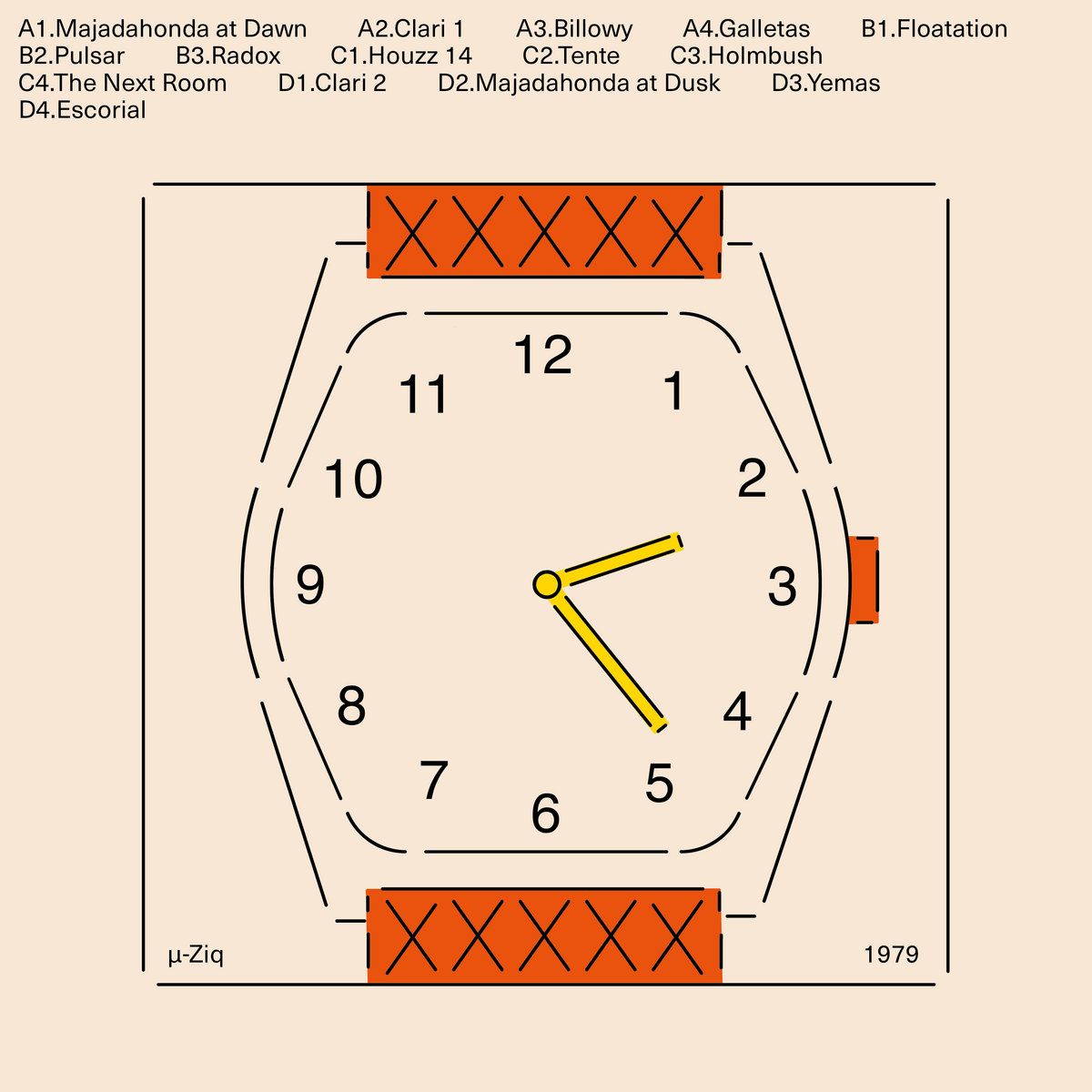
µ-Ziq – 1979 (Ballmat)
Most of the music Mike Paradinas has made over the last 30 years as µ-Ziq — much of it on his own Planet Mu label — has been glitchy, chopped-up IDM in the lineage of Aphex Twin and Squarepusher. But he’s been exploring the project’s softer side lately through releases on the Ballmat label. 1979 serves as a sequel to 2023’s 1977, continuing that sound (and cover art aesthetic) with ethereal pieces built from choral samples, undulating basslines, and spectral synths. This isn’t pure aural wash, though — these tracks are as melodic as they are gentle, with a few diaphanous bangers tossed in to make sure you don’t drift off in the bubble bath. Song titles like “Billowy,” “Pulsar,” and “Floatation” tell you everything you need to know: like Enya, Paradinas invites you to sail away, sail away, sail away.
—
Check out more Best of 2025 coverage here.