
Now Reading: 15 Albums from 2025 by Britpop / Indie legends
-
01
15 Albums from 2025 by Britpop / Indie legends


This year was probably the most Britpop year since 1995 — the banner year that gave us Different Class, A Northern Soul, I Should Coco, (What’s the Story?) Morning Glory, and more. The biggest news were that Oasis were back, and while they were happy just to play the hits on their reunion tour, there were lots of their ’90s contemporaries who made new albums, including Pulp who released their first new record since 2001. In many cases, these bands are operating at their ’90s prime, making music that rivals their best work. Some of them made our Best Albums of 2025 list, and even more made the Indie Basement year-end list.
Here are 15 albums, mostly by artists you could categorize as Britpop but also a few that were in that same UK indie world, just slightly outside that orbit. Check out our list, which is in alphabetical order, below.
Andy Bell (Ride, Oasis) – pinball wanderer (Sonic Cathedral)
Some artists make solo records that are indistinguishable from from the bands they’re in. Then there are musicians like Andy Bell (Ride, Oasis), whose albums under his own name are chances for him to play in other sandboxes. pinball wanderer is Bell’s third solo album (not counting his electronic alter ego GLOK) and is his furthest-reaching record yet and there’s nothing on here that sounds like Ride (or Hurricane #1 or Oasis or Beady Eye). Where to start? How about his cover of The Passions’ 1981 single “I’m in Love With a German Filmstar” which predicted the shoegaze/dreampop scene that would emerge just a few years later. Bell puts his own spin on it and got former One Dove singer Dot Allison to sing on it while Neu!’s Michael Rother adds guitar. Speaking of kruatrock, instrumental “Music Concrete” has Can’s grooves in its DNA, with just a dash of Madchester… which leads to “green apple ufo” that tips more than a Reni-brand bucket hat to The Stone Roses’ shufflebeat classic “Fools Gold.” There’s also “Madder Lake Deep” which Andy accurately describes as a “Cocteau Twins-ish watercolour portrait of a dream,” and the folky groover that is the album’s sunny title track. pinball wanderer plays like a guided tour through Bell’s record collection and if it doesn’t hang together the way 2022’s Flicker did, all of its individual parts are a whole lot of fun.
—
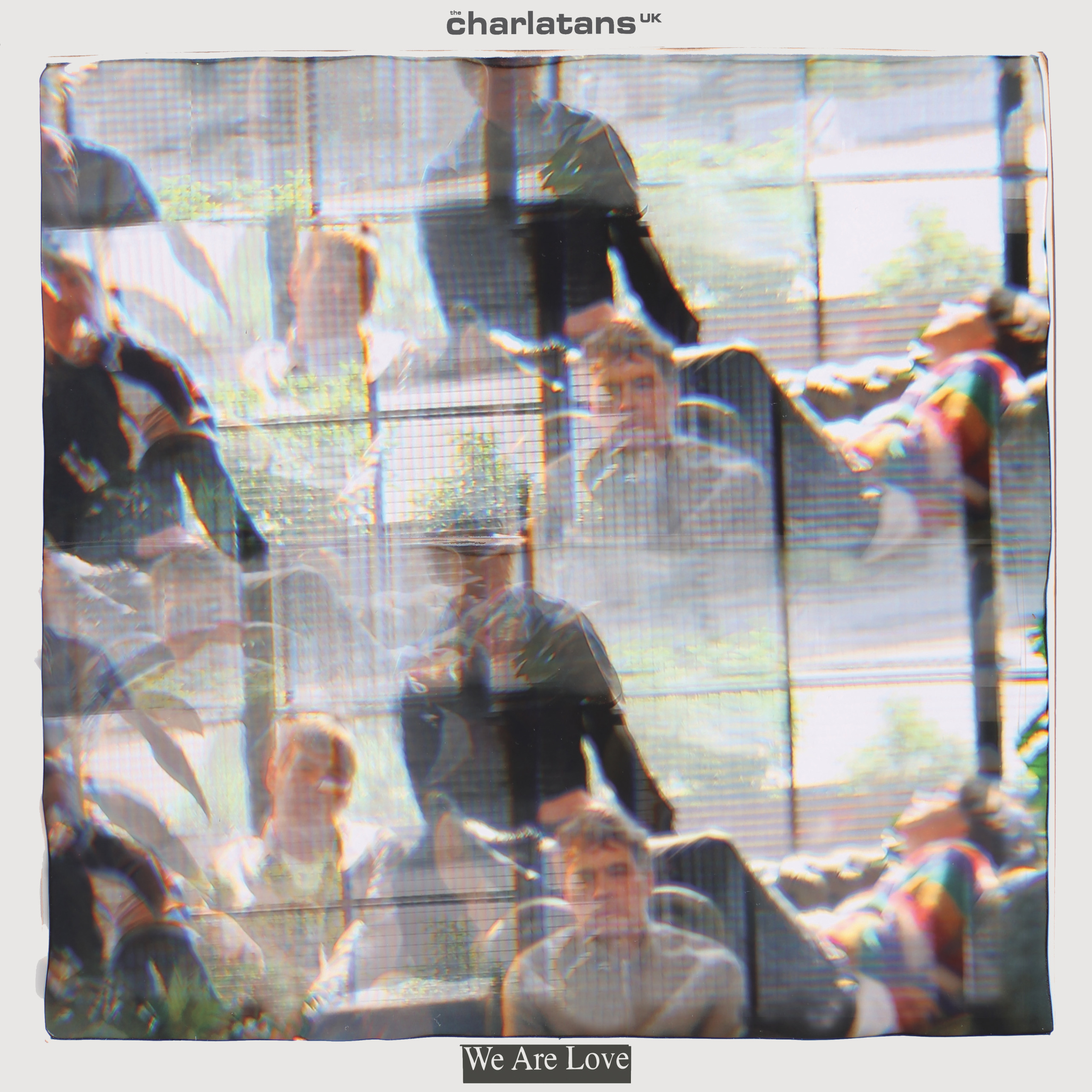
The Charlatans – We Are Love (BMG)
We Are Love finds The Charlatans band returning to Welsh farmhouse studio Rockfield for the first time since Tellin’ Stories (keyboardist Rob Collins died on a road on the studio property during its making), and frontman Tim Burgess says the concept of hauntology crept into the album’s songs, like on opener “Kingdom of Ours,” where he sings, “This world couldn’t hold you / It just reached out and it took you.” They brought in Blood Orange’s Dev Hynes and his collaborator Fred McPherson to produce most of the record, and even for a band that’s morphed countless times, We Are Love is a fresh direction. The title track doesn’t sound like anything they’ve done before — breezy, summery, and tailor-made for Burgess’ reedy, wistful voice. He describes it as “like an open-top car ride in the credits of your favorite movie, driving along the coast to somewhere amazing.” It’s also The Charlatans’ best single in ages. “Out on Our Own” is another surprise, starting in Spacemen 3 territory before transforming into a krautrock jam that rolls on a motorik drum pattern and kaleidoscopic synth riff. There’s no verse-chorus-verse structure, just a hypnotic, cyclical groove that feels both new and unmistakably Charlatans. Other highlights include the wistful travelogue “Glad You Grabbed,” featuring sax from Arthur Russell collaborator Peter Gordon, and the pulsing, melancholic “Appetite.” There are still classic organ-powered Charlatans moments, too: “You Can’t Push the River” and “Deeper and Deeper,” both produced by Stephen Street (The Smiths, Blur). On the latter, Burgess sings, “This climb might defeat me yet / No safety net / It seems to be a long way down.” The Charlatans are survivors because they understand that moving forward is the only way through — and with We Are Love, they continue to do so with style and grace.
—
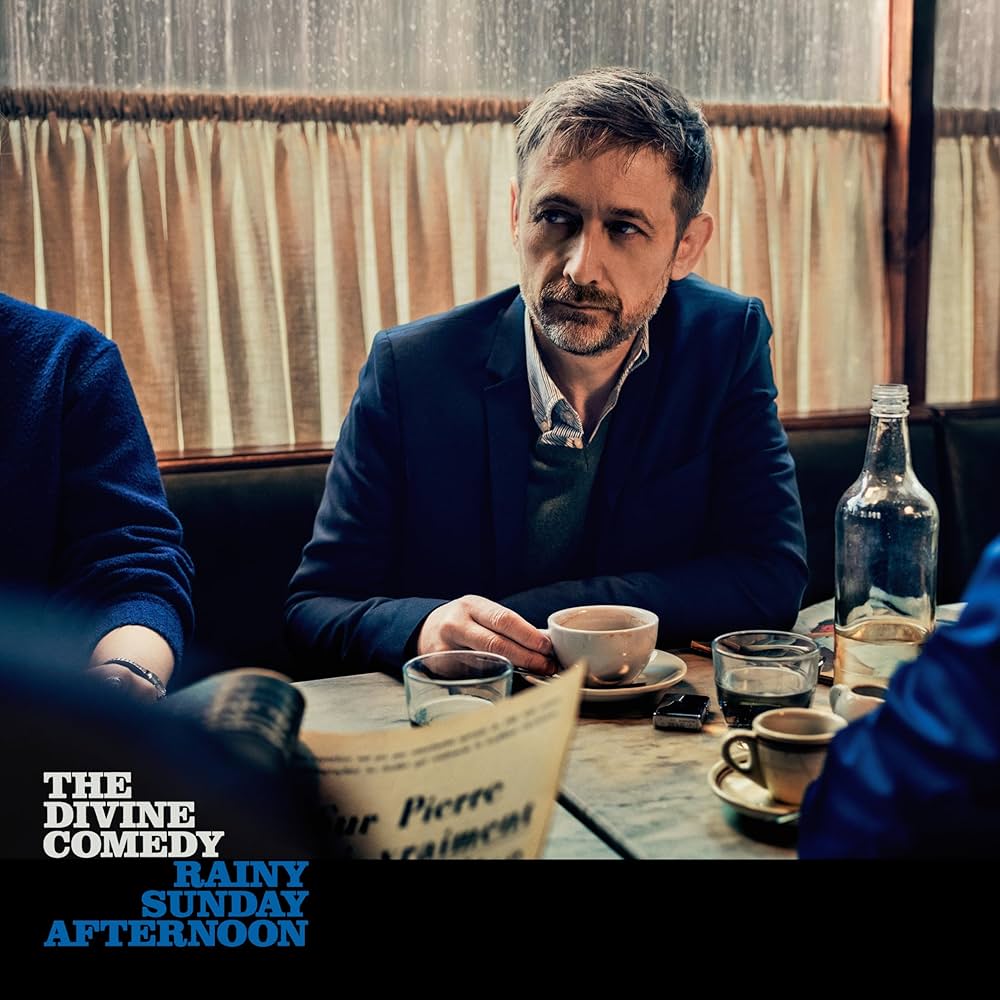
The Divine Comedy – Rainy Sunday Afternoon (Divine Comedy Records)
Neil Hannon has been making erudite baroque pop as The Divine Comedy since the early ’90s, with a sound that falls somewhere between Burt Bacharach and Scott Walker. He’s flirted with mainstream success, though mostly via film and TV: “Songs of Love” from Casanova became the theme to beloved British sitcom Father Ted, and more recently his playful, theatrical side was showcased in the score and songs for hit film Wonka. Those gigs likely allow him the freedom to make an album like Rainy Sunday Afternoon, a lushly orchestrated record made at Abbey Road Studios. This is his darkest album since 1998’s Fin de Siècle; he’s not quite wallowing the way he did then, but melancholy runs through this his 13th Divine Comedy album. Themes of aging and death surface in “The Last Time I Saw the Old Man,” “The Heart is a Lonely Hunter,” and “The Man Who Turned into a Chair,” while “Down the Rabbit Hole” captures the endless spiral of doomscrolling. Hannon’s wit keeps things afloat, though: “Mar a Lago By the Sea” imagines an imprisoned old man wistfully dreaming of his former palatial home (you can probably guess who it’s about). Elsewhere, “All the Pretty Lights” feels tailor-made for your holiday playlist. Rainy Sunday Afternoon also knows its season, arriving at the start of autumn with winter very much on its mind.
—

Doves – Constellations for the Lonely (EMI North)
For a band whose last four albums have all gone Top 5 in the UK, Doves feel underappreciated in 2025. They no doubt remain at the top of their game, still kings of anthemic, widescreen rock that incorporates classic R&B, psych, Britpop, hip hop, trip hop and dance music. Constellations for the Lonely is another stunner, gorgeously produced, and packed with the kind of soaring, string-filled choruses that makes your skin tingle. It’s 10 songs are all highs, each full of magic little moments that layer together to form something even greater. Jimi Goodwin’s world-weary voice is always a pleasure, but Jez Williams lead’s the album’s best song, orchestral masterpiece “Cold Dreamin,” which is somewhere between David Axelrod and Minnie Riperton. Across 25+ years, Doves have yet to disappoint.
—

Edwyn Collins – Nation Shall Speak Unto Nation (AED)
“Hard to let my old self go,” Edwyn Collins sings on “Knowledge,” the opening track on his 10th album, but if you ask me, he did it long ago. Having been battered by the music biz with his band Orange Juice and an unsuccessful early solo career in the ’80s, Collins peppered his ’90s solo albums with bitter sarcasm, cynicism and rapier wit. Even on his 1995 Britpop hit “A Girl Like You,” which is a perfect pop single, he threw in the line “Too many protest singers, not enough protest songs” into the otherwise lusty romantic number. But in the 20 years and five albums since the two major strokes that nearly killed him and left the right half of his body weakened, Collins has favored simple, direct lyrics that reflect hope and his appreciation of life. This all while still delivering the kind of tuneful melodies, jangly guitars, clever production and signature warbly singing style he was known for back when he was the “Sound of Young Scotland.” Nation Shall Speak Unto Nation, his 10th solo album, is a wonderful record, and benefits greatly from friends and ace Pretenders sidemen James Walbourne and Carwyn Ellis, not to mention his son William on bass. Edwyn is mostly in gentle mode here which suits his croon that can still charmingly swoop from falsetto to baritone within a phrase, as he moves between country/folk and his signature brand of wall-of-sound soul. The best song on the album, the sweet “A Little Sign,” falls somewhere in between and makes the most of its two-chord melody with excellent echo-chamber dub production. It’s subtle, it’s subdued, and it all shows that, at 66, he’s still got the touch.
—

Gruff Rhys – Dim Probs (Rock Action)
“I was in a particularly bleak place,” Gruff Rhys says of making his new album Dim Probs. “And it’s reflected on the record, and I don’t know why. Dim Probs is a kind of slang, Wenglish, you know, it’s not Welsh or English. ‘Dim’ means no, and probs is like, so it’s like ‘no probs,’ but obviously there’s plenty of probs to go around.” Dim Probs is Rhys’ ninth solo album — that’s as many as he made with Super Furry Animals — and it’s easily the thematically darkest record he’s ever made. Often an abstract lyricist, this time it’s pretty clear he’s working through what a lot of us are currently feeling. It’s not so much heavy as ominous, surveying the state of things, the worst of times, in a near-constant fog of doom and gloom. Gruff is a pop songwriter at heart, though, and he tempers the noirish mood with Brazilian chords, warm melodies, horns, and his signature harmonies. The push and pull is exemplified on “Taro #1 + #2,” Dim Probs‘ most immediate song, is about “accepting death as the end of the turn.” Meanwhile, old friends Cate Le Bon and H. Hawkline show up to sing backup on two of the album’s friendliest songs—“Pan ddaw’r haul i fore” (“When Sun Comes to the Morning”) and “Chwyn Chwyldroadol!” (“Revolutionary Weed!”)—which open both sides of the record, respectively. The mix of dark and light, plus Gruff’s melodic skills and endless supply of empathy, make Dim Probs a deeply rewarding listen.
—

Luke Haines & Peter Buck – Going Down To The River… To Blow My Mind (Cherry Red)
One of the more unexpected, out-there pairings of this decade—Auteurs/Black Box Recorder founder Luke Haines and R.E.M. guitarist Peter Buck—continues its reign of gleeful terror. Following 2020’s Beat Poetry for Survivalists and 2022’s especially awesome All the Kids Are Super Bummed Out, they’re back with another overflowing blotter of acid-fried fever dreams. Like the first two, Going Down To The River… To Blow My Mind was made with Peter’s Baseball Project bandmates: Scott McCaughey (Minus 5, R.E.M.) on bass and Linda Pitmon (Filthy Friends, Steve Wynn) on drums. Haines has once again populated the record with terrorists, hippie conspiracy theorists, hot artists, nervous breakdowns, burnouts, and all manner of other weirdos. I have no idea what most of these songs are about but, like the work of Alejandro Jodorowsky, Haines’ brand of vivid, twisted phantasmagoria is undeniably compelling. Buck and the rest of the band are clearly having fun trying to match the imagery with wild arrangements, while Haines maintains his uncanny ability to convey both menace and intrigue with a whispery vocal style that could talk you into anything, like agreeing to go with your kidnapper to a second location. “I got nowhere to be but I can be there anytime,” he sings on the album’s title track. “I got a foxhole, I got an asshole, I got a third eye / I got 15 personalities—none of them are mine / Going down to the river—to blow my mind.” Is this a triptych? Hopefully not. Sign me up for a fourth hit—hopefully coming soon.
—

Miki Berenyi Trio – Tripla (Bella Union)
When Lush broke up in 1996, singer-guitarist Miki Berenyi all but gave up music, finding a second successful career in publishing. But the band’s short-lived 2015-2016 reunion rekindled her musical creative urges and she formed Piroshka with her partner KJ “Moose” McKillop of fellow original era shoegazers Moose and made two very good if underheard albums. So it makes sense that Berenyi refashioned Piroshka with McKillop and bandmate Oliver Cherer as the Miki Berenyi Trio, a name that old fans recognize and a sound that is more in line with her ’90s style. Tripla is her best post-Lush work yet, with Berenyi and Moose bringing the combined power of their guitar haze talents with electronic elements for a familiar but new sonic renovation. Part of its success may be that this time they’re doing it for the fun of it, recording and producing themselves with no music industry expectations. “There is something very ‘grassroots’ about what we’re doing,” Miki says. “There’s no point following the ‘announce the album, then tour, then record the next album’ route – we just want to wring as much enjoyment out of this as we can, and hope that it resonates somewhere!” With danceable grooves and those ethereal layers of cascading guitars, songs like “Kinch,” “Vertigo” and “Big Am I” feel very now and very in fashion.
—

Mozart Estate – Tower Block in a Jam Jar (Cherry Red)
Lawrence, the man behind Felt, Denim, Go-Kart Mozart, and Mozart Estate, is an indie cult hero whose brilliance and dreams of superstardom have often been overshadowed by his many eccentricities. But the spotlight found him again last year with the release of Street-Level Superstar: A Year With Lawrence, Will Hodgkinson’s hilarious and often heartbreaking biography, which won the Penderyn Music Book Prize. It’s a fantastic read, and Lawrence is such a character that you don’t even need to know his music to enjoy it. For many readers who discovered him that way (it’s now out in paperback), interest in his music has never been higher. Some of the Go-Kart Mozart records were made on the cheap and aren’t on streaming, so Lawrence has cherry-picked a dozen songs from his post-Denim catalog and rerecorded them with his current Mozart Estate band. “This is an album for people who have never heard Mozart Estate or Go-Kart Mozart before,” says Lawrence. “It’s for people who picked up the book and got into me that way. If you’re one of those, then this record will knock your socks off!!” I’d argue Tower Block in a Jam Jar is for everybody, though it does serve as a perfect introduction to Lawrence’s singular post-Felt worldview and style, both firmly rooted in the ’70s. It’s a definite sonic upgrade, especially for the ’00s-era material like “Summer is Here,” “City Centre,” and “Glorious Chorus,” which all get budget–hi-fi makeovers with real drums, pedal steel, better synths, and rich harmonies. The results are kitschy, glam, and glowing in saturated technicolor. It’s his best-sounding record since Back in Denim and, even with songs spanning 25 years, it holds together beautifully. It might even knock your socks off.
—

Paul Weller – Find El Dorado (Warner Music)
If a musician’s career goes on long enough, they’re bound to make at least one album of covers. Paul Weller—whose track record has remained remarkably high through The Jam, The Style Council, and a long solo career—made his first covers album in 2004 with Studio 150. Nearly two decades later, he’s back with his second. “These are songs I’ve carried with me for years,” Weller says of his takes on the work of Richie Havens, Bobby Charles, The Flying Burrito Brothers, the Bee Gees, The Kinks, and more. “They’ve taken on new shapes over time. And now felt like the moment to share them.” Find El Dorado is a much more mellow affair than the rambunctious Studio 150, favoring acoustic guitars and gentler tempos—fitting for a set rooted in folk and country. Weller is not one to sleepwalk through an album either, and these renditions are gorgeously arranged, featuring an impressive cast of collaborators, including Robert Plant, Noel Gallagher, Hannah Peel, Declan O’Rourke, Seckou Keita, and rising singer-songwriter Amelia Coburn. He’s never made a record that sounds quite like this before, either, and his still-powerful, soulful, slightly weathered voice sounds fantastic in these settings—especially on Brian Protheroe’s “Pinball” (lightly groovy), the Bee Gees’ pre-disco hit “I Started a Joke” (rendered here as a pure waltz), and Irish folk musician and BBC broadcaster Eamon Friel’s “El Dorado,” which features Gallagher on guitar. He also more than holds his own vocally alongside Robert Plant on “Clive’s Song” by the Incredible String Band’s Clive Palmer. Weller has reinvented himself a handful of times over his nearly 50-year career, and with Find El Dorado, he’s found yet another rewarding new avenue to explore.
—

Pulp – More (Rough Trade)
“I was born to do this / shouting and pointing,” Jarvis Cocker sings on the opening track of Pulp’s first album in 24 years. He’s kept shouting and pointing an art form in his post-Pulp projects, but somehow it all lands harder when he’s back with the band that made him famous. Comeback records carry impossible expectations, and Pulp somehow overdeliver, blending great new songs with a couple of long-unused older ones polished to perfection, plus all the signature moves — sexy whispering, horny lyrics, disco — and a few surprises. (When Jarvis drops a raised-eyebrow “are you sure?” in “Grown Ups,” it’s fan service of the best kind.) A lot has happened since the last Pulp album, including the death of bassist Steve Mackey in 2023, which helped inspire More through Jarvis’ “choose happiness wherever you are” outlook. The album reflects on mortality in Cocker’s singular way, but it’s also full of ease, camaraderie, and fun — qualities largely missing from Pulp records since Different Class. “I am not aging, I am just ripening,” Jarvis sings later, adding, “and life’s too short to drink bad wine.” More has already aged beautifully and deserves to be savored.
—
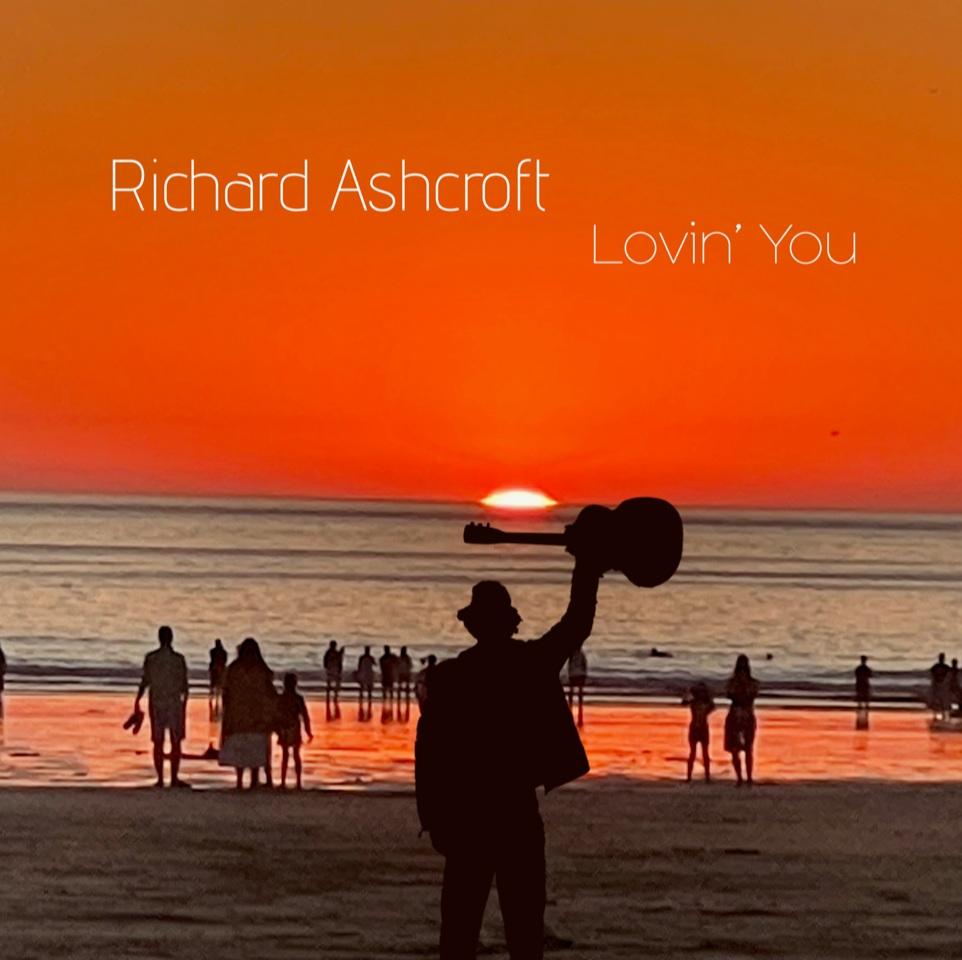
Richard Ashcroft – Loving You (Virgin)
Richard Ashcroft had his most prominent year since The Verve’s “Bittersweet Symphony” stormed the charts in 1997 thanks to Oasis having him open on their UK leg of their reunion tour. He smartly released his first solo album in seven years while doing that, a record that finds him exploring new sonic avenues as well. Lovin’ You. is also notable for being Ashcroft’s first use of sampling since “Bittersweet Symphony” and since he was gotten publishing rights for that song back from Mick Jagger and Keith Richards. “Lover” incorporates Joan Armatrading’s “Love and Affection,” and he pulls a similar trick with Lovin’ You’s title track, which brilliantly folds in Mason Williams’ “Classical Gas” alongside R&B grooves, breakbeats, and soaring strings. Richard Ashcroft plus a string section almost always equals gold. There’s also “I’m a Rebel,” produced by Madonna collaborator Mirwais, with Ashcroft in full falsetto French Touch disco mode. It’s not quite as successful as “Lover” or “Lovin’ You”—you want full-throated Ashcroft belting it out—but it’s still refreshing to hear him trying new things. There are also what you do expect from him: swaying Britpop/country ballads, the best of which are “Oh L’Amour,” which lands on the right side of drippy, and “Fly to the Sun,” which closes the record on an anthemic, melancholy note.
—

Saint Etienne – International (Heavenly)
2025 may have been the year of the ’90s comeback — Pulp, Stereolab, who am I forgetting? — but Saint Etienne decided it was time to call it quits. They go out in style. Their final album contains just about everything you could want from a Saint Etienne record, with help from an impressive list of friends: The Chemical Brothers, Orbital, Vince Clarke, Erol Alkan, Confidence Man, Xenomania, Nick Heyward, and more. A crowded guest list can be a red flag, but everyone here understood the assignment. Highlights include the slice-and-diced “Glad,” made with Tom Rowlands and Doves’ Jez Williams; the fizzy Confidence Man collaboration “Brand New Me”; and the dubby techno rush of “Take Me to the Pilot,” produced by Orbital’s Phil Hartnoll. The rest isn’t far behind, bringing Saint Etienne’s suave, sophisticated career to a close on a very high note.
—

Stereolab – Instant Holograms on Metal Film (Duophonic / Warp)
EDITOR’S NOTE: No, Stereolab are not Britpop but they were London based, at their peak in the ’90s, and Laetitia Sadier did sing on Blur’s “To The End” so I included. Also their new album is fantastic.
2025 was a banner year for ’90s-era artists, but even among the comebacks, Stereolab’s return was a surprise. Unlike Pulp, who’d been road-testing new songs in 2024, Stereolab announced in April that their first album in nearly 15 years would arrive in just over a month. The real shock was how good Instant Holograms on Metal Film turned out to be — and how natural it felt. This is the Stereolab you remember: jazzy chords, hypnotic rhythms, xylophones, flutes, brass, interwoven vocals, politicized lyrics paired with “bah dee bah” hooks, and all manner of cool analog synths. Laetitia Sadier says she was more actively involved than ever before, and working with new collaborator Cooper Crain of Bitchin Bajas, the group rediscovered their mojo. This Hologram isn’t an illusion — it’s real, and it’s an unexpected miracle.
—

Suede – Antidepressants (BMG)
“If Autofiction was our punk record,” Suede frontman Brett Anderson posits, “Antidepressants is our post-punk record.” This writer thinks of Autofiction as Suede’s goth album, and Autofiction is even more so. Of course, goth grew out of the original post-punk scene, and the touchstones here are The Cult circa Love, The Chameleons, Bauhaus, Siouxsie, and Faith-era Cure, as opposed to Floodland or Fields of the Nephilim. It’s a natural, nay, perfect extension of Suede’s signature “beautiful trash” glammy sound, and the jagged yet manicured arrangements on their 10th album—they’ve now made as many since reforming as they did the first time around—befit a group whose members are in their 50s and still, y’know, rocking out credibly. Bassist Mat Osman told us there were nearly 50 songs in consideration for this album which they then whittled down to these 11 gems. Without a doubt, Suede’s best album since Coming Up.
—
Check out more Best of 2025 lists here.