
Now Reading: Indie Basement: Best Reissues, Box Sets & Compilations of 2025
-
01
Indie Basement: Best Reissues, Box Sets & Compilations of 2025


Indie Basement is a weekly column on BrooklynVegan focusing on classic indie and alternative artists, “college rock,” and new and current acts who follow a similar path. There are reviews of new albums, reissues, box sets, books and sometimes movies and television shows. There are also special editions like this one the best reissues, box sets and compilations of 2025.
If there’s one area of the music industry that is doing ok in these wobbly times, it’s the business of reselling fans stuff they already own (maybe a couple times over). Do we need all this repackaging the past? Sometimes, yes. Every year, among the many pointless “deluxe edition” release of new albums and slapped-together reissues and Best Ofs, there is always some gold: much needed vinyl represses, newly unearthed archival material, surveys of obscure but important scenes, and more. 2025 got the first official, artist approved vinyl reissues of one of my favorite albums of all time, a super deluxe edition of an ’80s hit that now feels like a cult classic, a few very cool various artist compilations, live albums, best-ofs, a revelatory collection of Nick Drake demos and alternate takes, the “lost” debut from one of the most enigmatic one-single wonders of the ’80s/’90s, and more.
Most but not all of these picks are on streaming, and any one of them would make a great use for a stocking stuffer gift certificate you may have gotten this holiday season. Head below for my picks for this year’s reissues, box sets, and compilations…
INDIE BASEMENT – BEST REISSUES, BOX SETS & COMPILATIONS OF 2025
Pulp – Different Class (30th Anniversary Edition) (Island/Universal)
Pulp’s 1995 album Different Class is a Britpop classic that catapulted the Sheffield band from indie cult heroes to UK superstars, thanks in large part to the anthemic single “Common People.” And the rest of the record, of course, is just as great, including “Disco 2000,” “Misshapes,” “Something Changed,” and “Sorted for E’s and Wizz.” The album arrived at a time when vinyl was on the decline, and while it received a deluxe 10th anniversary CD edition in 2005, it never got a proper, sanctioned vinyl reissue — until now. Paired with the release of their new album More, it makes 2025 the most exciting year for Pulp fans in a very long time. For this box set edition, Different Class has been remastered from the original master tapes at Abbey Road, overseen by Jarvis Cocker and Pulp guitarist Mark Webber, and pressed across two LPs at 45 RPM for maximum analog fidelity. Jarvis says, “This 45rpm double album version of Different Class will make it sound a whole lot better. Now, 30 years later, we are finally ready for Different Class to be heard in all its glory.”
The vinyl box set also recreates the album’s very cool original “aperture” sleeve, which allowed listeners to change the cover image that features life-size cardboard cutouts of the band placed in real-world environments. It includes a 12″ × 12″ poster of those cutouts, plus a comprehensive 28-page booklet featuring extensive liner notes drawn from new interviews with the band members, previously unseen images from photographers Rankin and Donald Milne (who shot the original release), and material from the band’s own archives. Different Class fills the first two LPs, while the remaining discs capture Pulp’s legendary 1995 Glastonbury Festival performance — stepping in as headliners when The Stone Roses were forced to drop out — a set that helped cement the band’s rapid ascent that year.
—
Frankie Goes to Hollywood – Welcome to the Pleasuredome 40th Anniversary Edition (ZZT)
Liverpool’s Frankie Goes to Hollywood were a genuine sensation in England in the early/mid-’80s. Their debut single, “Relax,” was an epic, unsubtle, one-chord, pro-sex dancefloor anthem and a controversial hit that remains one of the greatest one-song documents of the Big ’80s era. Released in 1983, the song didn’t truly take off until 1984, but went on to sell over two million copies in Britain alone. At one point that year, “Relax” and their second single “Two Tribes” were the #1 and #2 songs in the UK during the same week.
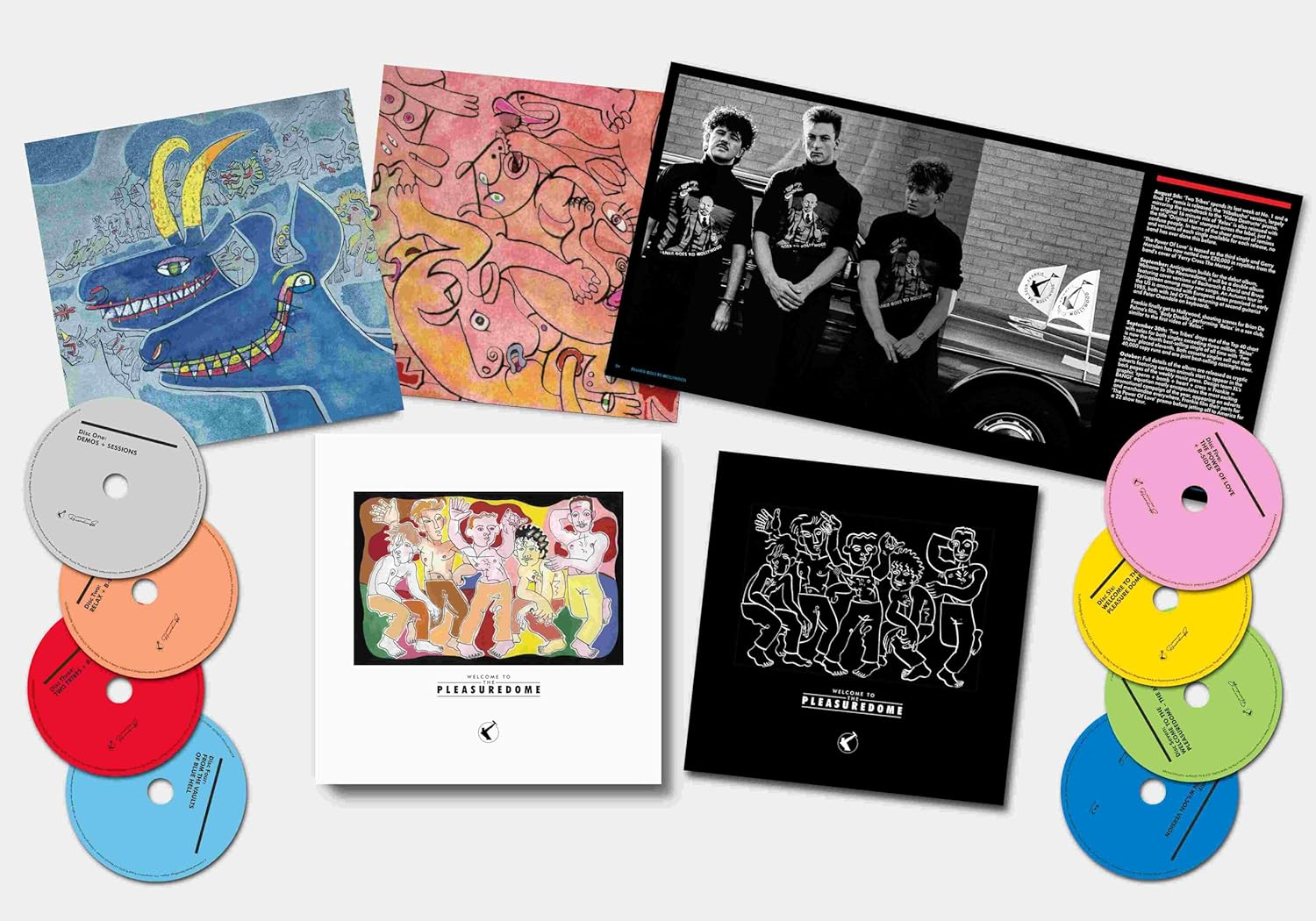
Frankie’s debut album, Welcome to the Pleasuredome, arrived in October 1984 and reportedly cost £1 million to make — and it definitely sounds like it. The first side of the double LP alone justifies the price tag: a continuous 16-minute sonic wonderland, largely taken up by the album’s awesomely bombastic title track, and is one of the greatest-sounding things the ’80s produced. As for the rest of Pleasuredome: side two features “Relax” and “Two Tribes,” smartly linked by a great cover of Edwin Starr’s “War” (featuring spoken word by a Ronald Reagan impersonator) but the second LP finds the band running out of steam (and originals), padded with covers and so-so new tracks — including knowingly sappy ballad “The Power of Love,” which was the album’s other big UK hit.
Diminishing returns or no, that first LP, combined with its incredible, audacious sleeve concept — including a catalog of expensive high-fashion merch, liner notes by Paul Morley, and an X-rated inner gatefold illustration — makes Welcome to the Pleasuredome absolutely essential. The 40th anniversary reissue arrives in a variety of editions, including a Super Deluxe box set featuring all the original 12″ versions of the singles and their many alternate mixes, extended versions, and edits, plus a remastered stereo mix of the album, radio sessions, demos, and more. Most exciting of all are new surround sound and Dolby Atmos mixes by Steven Wilson, which have this writer pricing new receivers and wondering whether an Atmos setup is even possible in a small Brooklyn apartment. There’s also a remastered vinyl edition and a Blu-ray-only release containing all versions of the album, plus Wilson’s brand-new, 30-minute “Supernova” remix of “Pleasuredome”:
—
Various Artists – Telepathic Fish: Trawling The Early 90s Ambient Underground (Fundamental Frequencies)
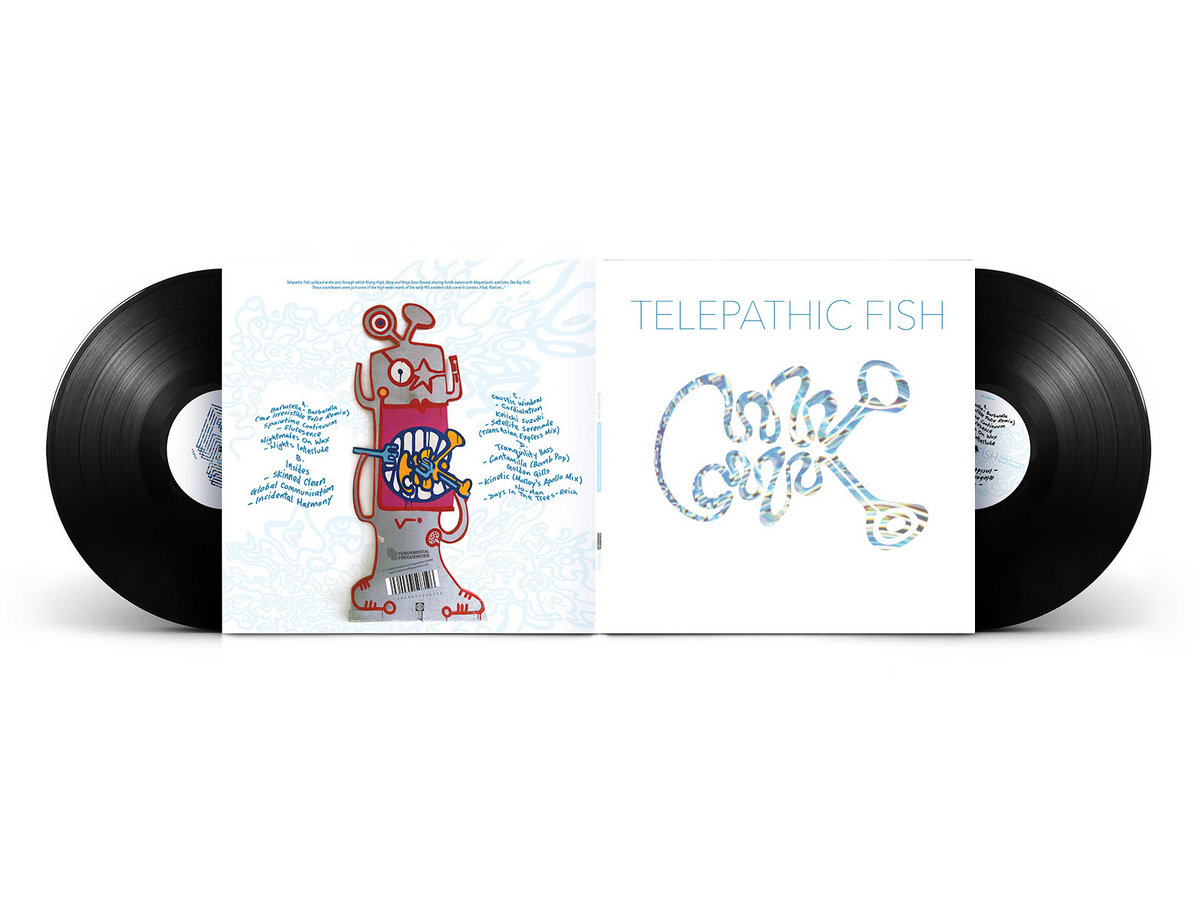
As Portishead’s Geoff Barrow said in our recent interview, ecstasy fundamentally changed British (and European) culture forever in the late ’80s and early ’90s, creating a huge market for thumping techno, house, and other dance music genres. But it also gave rise to chill-out rooms, where partiers could take a break, hydrate, and reflect on their place in the world — spaces that required music that was less thumping but still actively engaging. There were only so many Brian Eno, Harmonia, Steve Reich, and Tangerine Dream records you could play, so contemporary electronic artists like The KLF, The Orb, Nightmares on Wax, and Aphex Twin began making their own. In turn, that music inspired parties dedicated entirely to this sound. In many ways, the entire downtempo movement grew out of this moment.
One such party was Telepathic Fish, held in a South London squat and hosted by Kevin Foakes (DJ Food), Mario Aguero, Chantal Passamonte (Mira Calix), and David Vallade. This compilation documents the music of those nights, with selections drawn from the founders’ personal favorites, including Global Communication, Nightmares on Wax, Tranquillity Bass, Spacetime Continuum, and Aphex Twin’s Caustic Window. More than a moment frozen in amber, these tracks still hold up — even if you’re chilling out in very different ways now.
—
The Durutti Column – The Return of The Durutti Column (London Records)
As The Durutti Column, Vini Reilly was one of the first artists signed to Factory Records and appeared on the label’s inaugural release, a 7″ compilation that also featured Joy Division, Cabaret Voltaire, and John Dowie. He stayed with Factory throughout the ’80s, crafting gorgeous, mostly instrumental music built around his distinctive, finger-picked, spiderweb guitar style. (He also played guitar on Morrissey’s first solo album, Viva Hate.) Released in 1980, The Durutti Column’s debut album is a thing of austere beauty, opening with what is arguably Reilly’s best-known song, “Sketch for Summer,” and continuing to enchant with its forward-thinking use of synthesizers and Martin Hannett’s signature production touch.
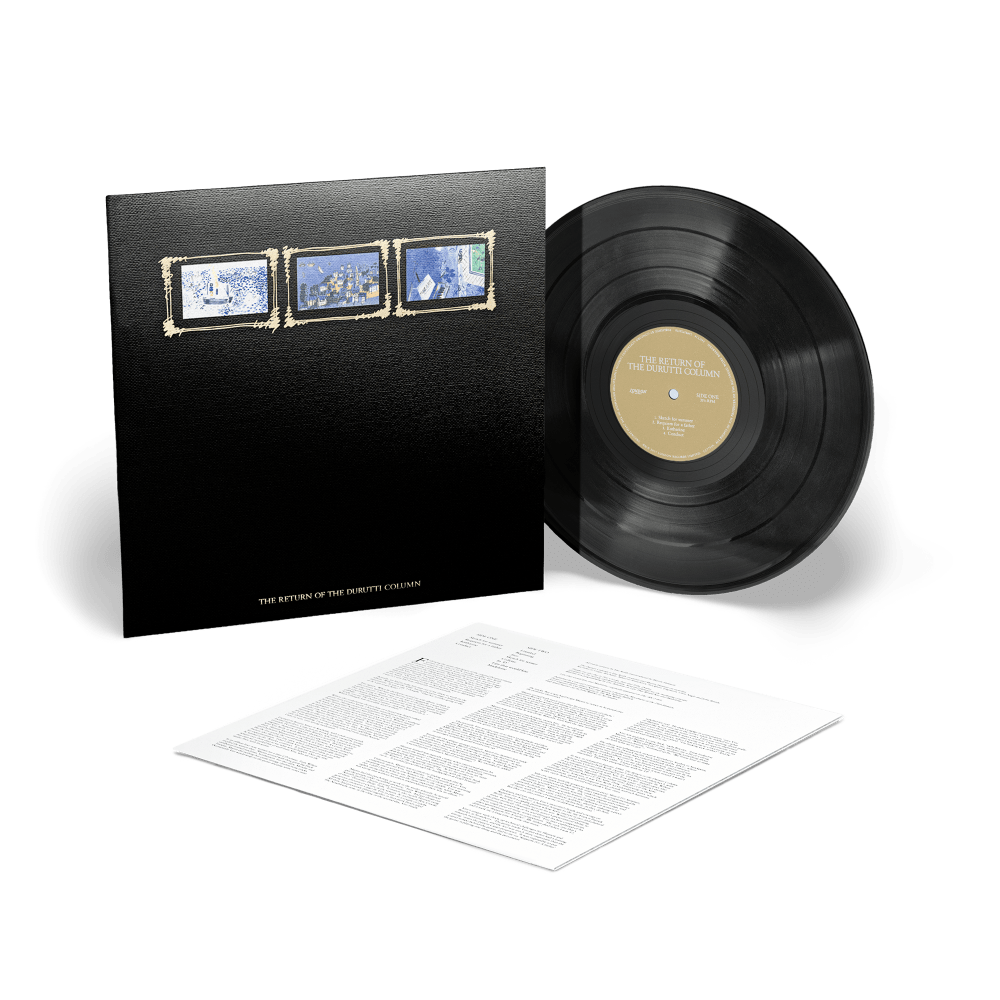
It’s a classic, and this reissue has been newly remastered from the original source tapes for the first time since its initial release, cut at half speed for vinyl, and presented with restored “second edition” artwork, complete with a textured sleeve and liner notes by James Nice. It’s great to have The Return of the Durutti Column back on vinyl and sounding this good, but the CD edition goes even further, adding nearly 30 bonus tracks, including non-LP singles, B-sides, demos, and live recordings, plus a 48-page book featuring essays by Primal Scream’s Bobby Gillespie and MOJO writer Ian Harrison.
—
Various Artists – All The Young Droids: Junkshop Synth Pop 1978-1985 (Night School)
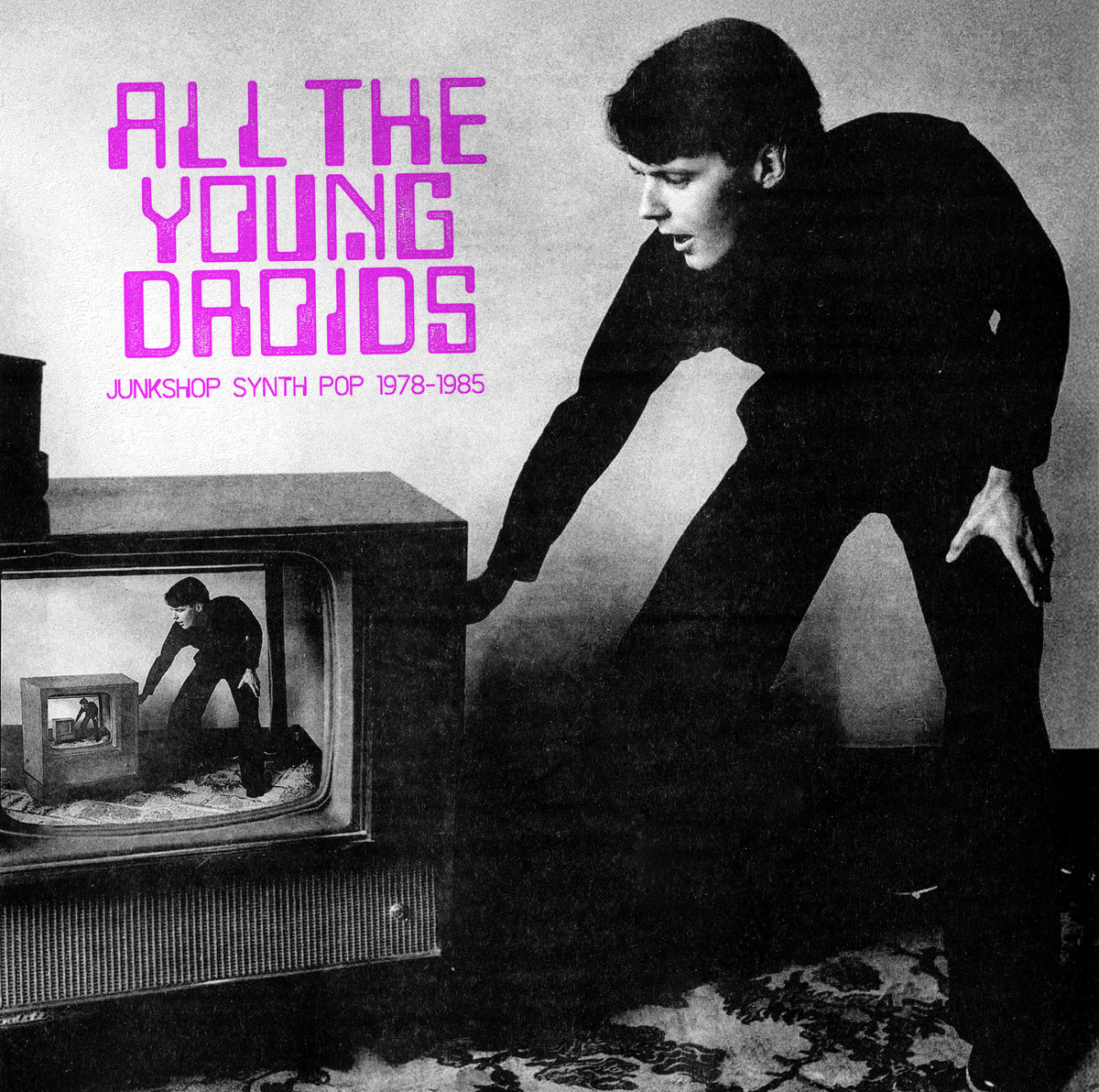
The “junkshop” genre of compilations — which shine a light on obscure acts who may have only made one self-released single before vanishing into the ether — are almost always worth a gander, and 2003’s Velvet Tinmine: 20 Junkshop Glam Ravers, compiled by Saint Etienne’s Bob Stanley and Lush’s Phil King, remains the gold standard. King is also behind All the Young Droids, which digs into “junkshop synth pop” from the genre’s original golden age: 1978–1985, roughly the period between Daniel Miller forming Mute Records to release “Warm Leatherette” and the moment glossy ’80s production took over pop and rock.
Most of the tracks lean toward the darkwave end of the spectrum — sci-fi themes, band names to match — built on very early drum machines that click, pop, and whoosh more than they kick, snare, or tom, with minor-key melodies paired with melodramatic vocals. Some songs sound delightfully naïve, made by musicians still figuring out the gear (often built by hand), while others are surprisingly lush. The best land somewhere in between, like Rich Wilde’s “The Lady Wants to Be Alone,” Disco Volante’s “No Motion,” Peta Lilly’s “I Am a Time Bomb,” and Die Marinas’ “Fred From Jupiter,” which features expertly layered synth work that wrings every ounce of potential from cassette four-track recording.
Beyond discovering all this great music you probably haven’t heard before, the accompanying booklet — packed with rare photos and excellent liner notes — is a treasure trove of information, not to mention incredible fashion and wild hairstyles. It’s a vivid document of an era when the future felt within reach of anyone with a soldering iron and access to a Radio Shack. Let’s hope there’s a Volume 2.
—
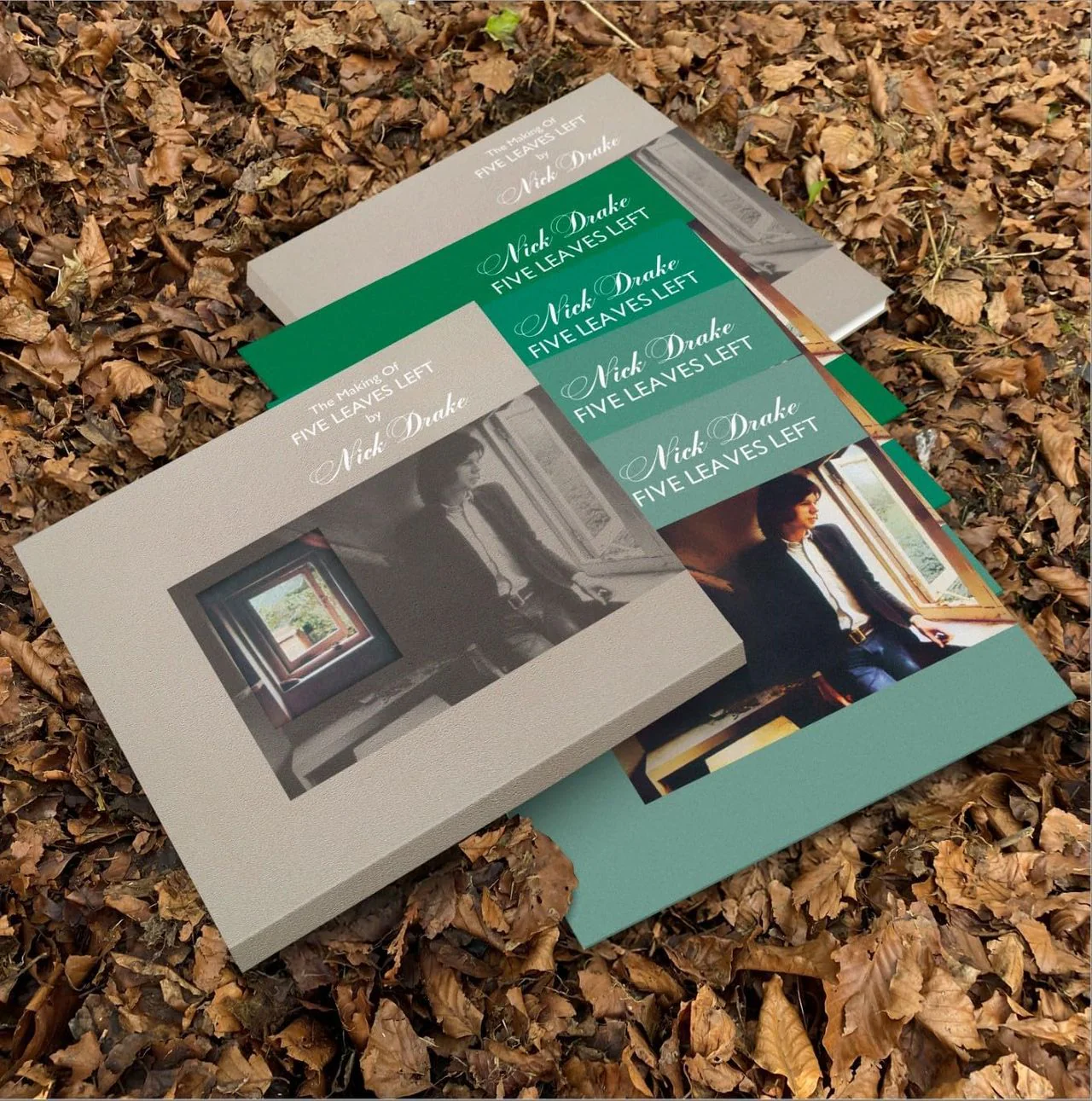
Nick Drake – The Making of Five Leaves Left (Island)
Nick Drake is one of those artists many prefer to keep as an enigma, known largely through images and the music itself. (Drake died in 1974 at age 26, leaving behind just three albums.) His 1969 debut, Five Leaves Left, is a beautiful baroque pop record draped in strings, percussion, pedal steel, Mellotron, and more. But if you’ve ever dreamed of hearing those songs as just Nick and his guitar — or even if you haven’t — this collection of demos is a revelation.
A box set nine years in the making, culled from unlabeled tapes discovered in Universal Music’s archive and assembled despite numerous hurdles, from painstaking restoration to pushback from Drake’s estate, The Making of Five Leaves Left presents 32 unaccompanied demos, studio outtakes, and previously unheard songs that open up a series of fascinating sliding-doors moments. (Also here is the original album.) The most revelatory are the unadorned performances: “Day Is Done” and “Time Has Told Me,” in particular, grow wings with no accompaniment; the solo piano version of “Way to Blue” is quietly devastating; and an early version of “Cello Song,” titled “Strange Face,” is beautiful in its own right. The previously unheard songs — “Mickey’s Tune,” “Blossom,” and “My Love Left With the Rain” — are welcome additions, but it’s the alternate takes that provide the deepest pleasures.
As an added bonus, there’s a surprising amount of studio chatter from Drake left intact, offering an even rarer glimpse into his world and creative process — all while preserving the air of mystery that continues to surround him.
—
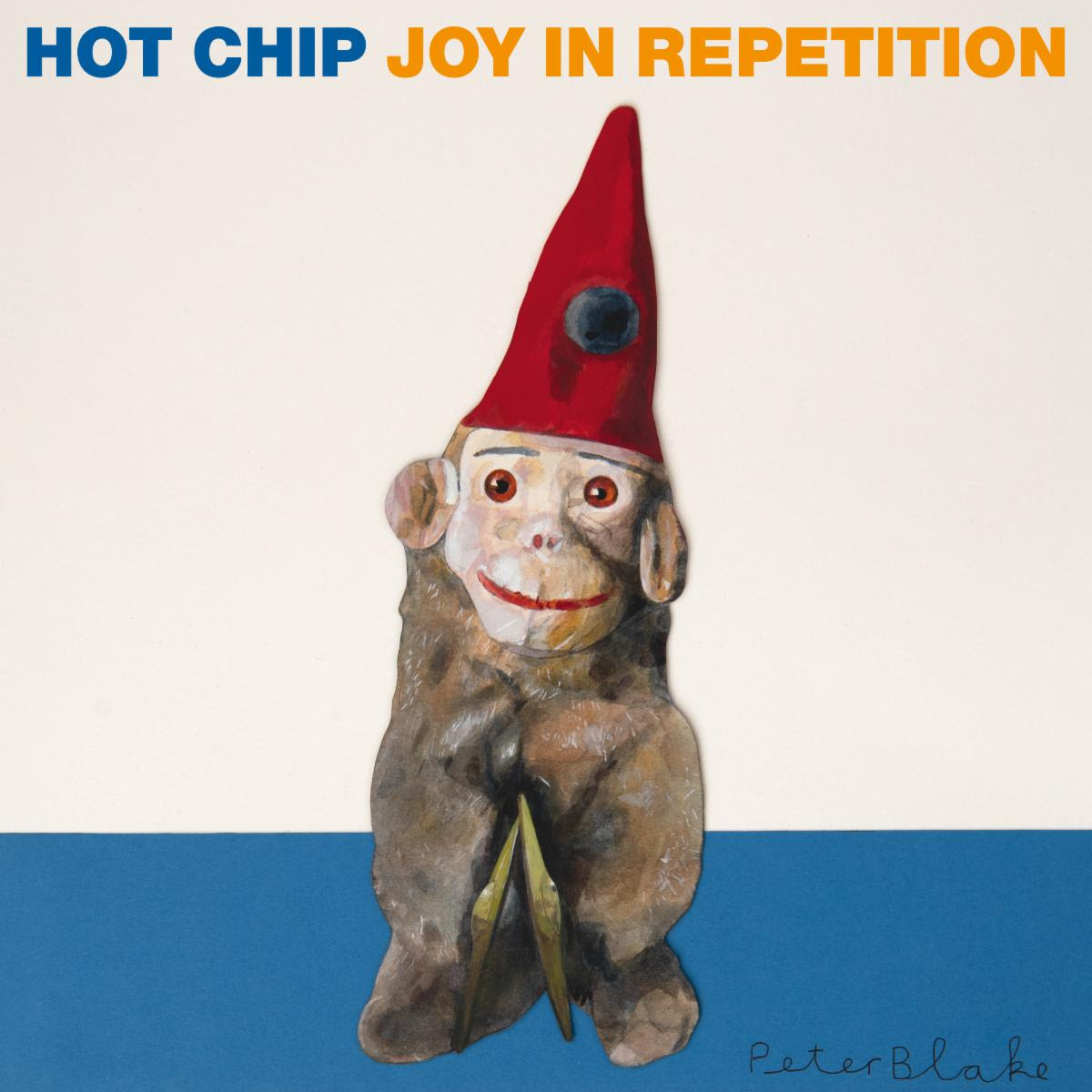
Hot Chip – Joy In Repetition (Domino)
How would Hot Chip define their new compilation, Joy in Repetition? “We continue to be fairly self-deprecating. We haven’t had hits as such, so we wouldn’t want to call it Greatest Hits,” Alexis Taylor told me earlier this year. “It’s just that we don’t have as many hits as some people… or any hits.” I corrected him, noting that “Ready for the Floor” reached #6 in the UK in 2008. “Greatest Hit would be a short compilation,” he replied.
Taylor and Joe Goddard started making music together in college in the late ’90s and formed Hot Chip around 2000, following the release of their debut EP. They soon expanded into a proper band with the addition of Al Doyle, Felix Martin, and Owen Clarke, and over the years have amassed plenty of “hits,” even if most didn’t crack the main Top 40. Those include “Over and Over,” “Boy From School,” “One Life Stand,” “I Feel Better,” “Flutes,” “Need You Now,” and more. All of those tracks — and then some — appear on Joy in Repetition, whose title comes from “Over and Over” (also the name of a Prince song), as does its artwork, featuring a toy monkey clashing miniature cymbals. The sleeve was designed by Sir Peter Blake, best known for creating the cover of The Beatles’ Sgt. Pepper’s Lonely Hearts Club Band.
After more than 20 years together, Hot Chip were due a compilation like this and as they usually do, they went the extra mile to make it special. The requisite new song, “Devotion,” is terrific, and Joy in Repetition holds up surprisingly well as an album in its own right.
Pick up Joy in Repetition on double vinyl in the BV shop.
—

Drop Nineteens – 1991 (Wharf Cat)
Boston shoegaze greats Drop Nineteens formed while in college in 1990, recording demos on an 8-track reel-to-reel set up in their dorm room and sending them out to labels in hopes of getting signed. They landed deals with Caroline in the US and Hut in the UK (both owned by Virgin), and when it came time to record their debut album, they opted to write and record all-new material, leaving those early demos behind. Fast-forward more than 30 years: the band are back together, more popular than ever, having released a great new album and reissued their debut, Delaware, last year — and now they’ve finally returned to those early 8-track recordings.
“We called them demos at the time,” says guitarist Greg Ackell, “but now they’re just unreleased Drop Nineteens songs that never benefited from the fidelity of a recording studio. We remastered them some 33 years later for this release, but they still evoke our infancy as a band.” 1991 isn’t quite a what-could’ve-been, Sliding Doors moment for Drop Nineteens; instead, it plays more like a Polaroid snapshot of a band frozen in time, still deeply immersed in their influences. With its funky beat and waves of glide guitar, “Shannon Waves” owes a lot to My Bloody Valentine’s “Soon,” and the rest of the collection practically invites a round of shoegaze bingo, with squares for Cocteau Twins, Slowdive, Lush, The Field Mice, and even a touch of ’80s goth.
Derivative? Sure. But this was also when shoegaze was brand new and it’s still impressive for a group that had barely been together a year — and were barely old enough to drink — and you can clearly hear what got Drop Nineteens signed in the first place. Their gift for melody and dynamics was already peeking through the murk and reverb on tracks like “Mayfield,” “Another Summer,” and “Song for JJ.” For Drop Nineteens fans, 1991 is essential: a lost album from a time when fandom and bandom were often interchangeable.
—

Q Lazzarus – Goodbye Horses: The Many Lives of Q Lazzarus (Sacred Bones)
Q Lazzarus (real name Diane Luckey) officially released just one single, “Goodbye Horses,” but it’s had an extraordinarily long life — first appearing in Jonathan Demme’s Married to the Mob and later, far more famously, in The Silence of the Lambs. (Even if you don’t know the song by name, you definitely know the scene.) Demme was her most visible champion, and arguably the reason anyone knows her work at all. In the ’80s, Q drove a cab to pay the bills and one day picked up the director as a fare, coincidentally playing her own demo in the car. “Who is that?” he asked. “That’s me.”
Demme went on to use her song “Candle Goes Away” in Something Wild (though it didn’t appear on the soundtrack album) and had her perform a cover of Talking Heads’ “Heaven” in 1993’s Oscar-winning Philadelphia, but by the early ’90s, Q Lazzarus had largely disappeared from public view. Given how little music she released, the pre-internet era, and her intensely private nature, very little was known about her story. That changed significantly this year with Eva Aridjis Fuentes’ documentary Goodbye Horses: The Many Lives of Q Lazzarus, which follows the NYC artist through her near brushes with fame in the late ’80s and early ’90s and her eventual departure from the music industry to drive both cabs and a bus on Staten Island. (Like Demme, Fuentes was also a chance cab fare.) Q granted Fuentes rare access to her life — just a few years before her death in 2022 — as well as to her archives of unreleased recordings. The resulting soundtrack effectively serves as her debut album, arriving more than 30 years after the release of her lone single.
“Goodbye Horses” remains Q Lazzarus’ most transcendent and magical work, but there are plenty of gems here as well, including the studio version of “Heaven,” the buoyant “See Your Eyes,” which recalls Lips Like Sugar-era Echo & the Bunnymen, a post-punk–funk–reggae take on George Gershwin’s “Summertime,” the housey banger “My Mistake,” and a “new wave” version of “Goodbye Horses” that sounds like it could’ve slotted neatly into a John Hughes soundtrack. The double-CD and digital editions add an additional 13 songs, though “The Candle Goes Away” appears only on the CD. While some of the enigma surrounding Q Lazzarus — and perhaps a bit of the magic — inevitably fades, it’s a more than fair trade to finally have these songs, and this film, out in the world. Finally.
Pick up Goodbye Horses on summertime green vinyl in the BV shop.
—
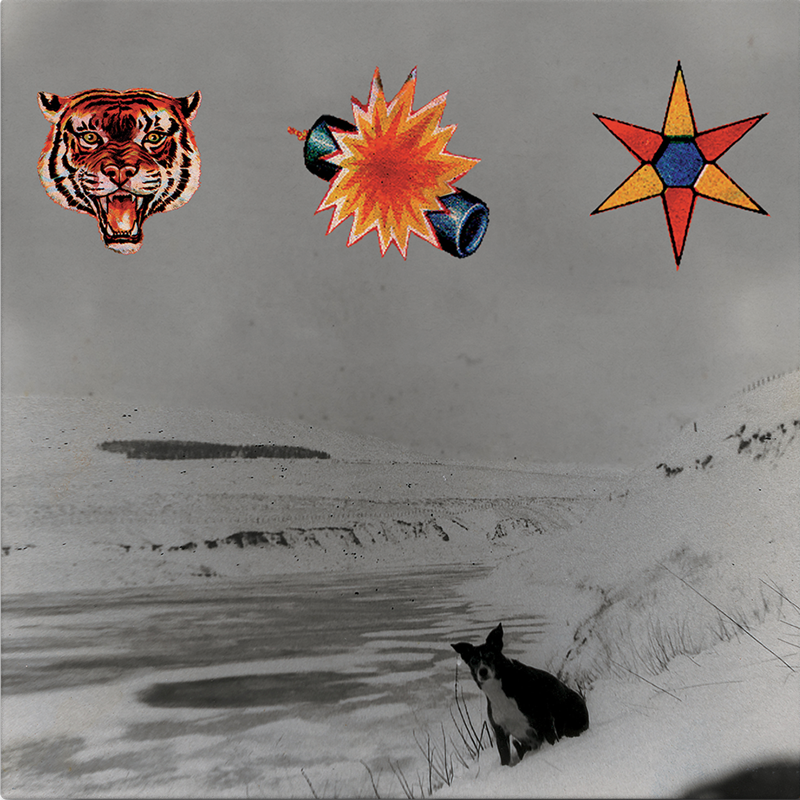
Beta Band – The Three E.P.s (Because Music)
One of the great musical surprises of 2025 was the reunion of Scottish art-pop experimentalists The Beta Band, who toured the UK and US and appear poised to continue into 2026. The tour was billed as a celebration of their 1998 compilation The Three EPs, which was most people’s introduction to the band. It makes perfect sense that the album would be reissued, and it’s just as welcome as the band getting back together.
The Beta Band appealed to much of what was happening in late-’90s indie — new dance culture, and listeners burned out on Britpop but still deeply engaged with UK music — with a sound that was both hippy-ish and indebted to the Madchester scene of a decade earlier, yet somehow felt very now (then). As the title suggests, The Three EPs collects the band’s three UK-only releases up to that point — 1997’s Champion Versions and 1998’s The Patty Patty Sound and Los Amigos del Beta Bandidos. Their style is so uniformly shaggy across the three records that most people simply consider it the band’s debut. (That distinction technically belongs to 1999’s self-titled album, which isn’t especially beloved — particularly by frontman Steve Mason.)
This set contains nearly all of most fans’ favorite Beta Band songs — “Dry the Rain,” “B + A,” “Dog’s Got a Bone,” “The House Song,” “She’s the One,” and “Needles in My Eyes” — and nothing else sounded quite like it at the time and its loose, organic vibe still sounds just as great today.
—
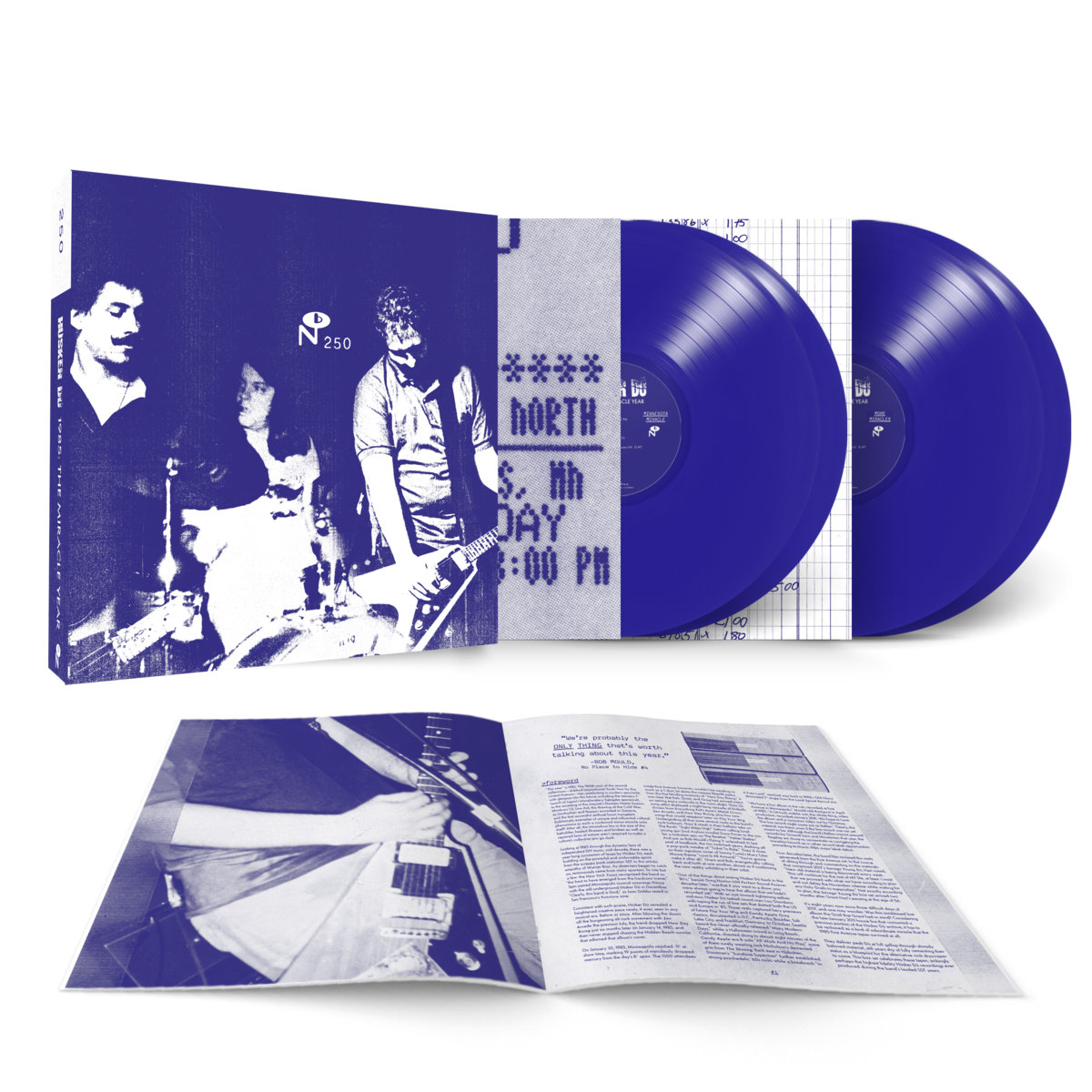
Hüsker Dü – 1985: The Miracle Year (Numero Group)
Back in 2017, reissue-centric label Numero Group released Savage Young Dü, a box set chronicling Hüsker Dü’s early years that featured the entirety of their studio recordings from 1979–1982, plus 47 bonus tracks, including singles, B-sides, demos, alternate takes, live cuts, and more. This year, Numero followed it up with another excellent box set, this one documenting the Minneapolis punk legends at their creative, performative, and prolific peak. 1985: The Miracle Year features their entire January 30, 1985 set at Minneapolis’ First Avenue, plus 20 additional live tracks recorded throughout a year of near-constant life on the road.
Hüsker Dü always seemed to be an album ahead when they played live, and while the First Avenue show took place just two weeks after the release of New Day Rising, the band played five songs from Flip Your Wig, their final album for SST, which wouldn’t arrive until September of that same year. “When I think of that time,” bassist Greg Norton says now, “it was three guys doing what they loved, having fun, and basically showing other people that you can be true to yourself, true to your music, and not have to bow down to fashion or expectations to make something really great.” Compiled from several different shows, this four-LP set is a bit up-and-down fidelity-wise, but what it lacks sonically is more than made up for in sheer performance and energy. In fact, some of these versions sound better than the studio takes, and they really make you wish someone would pony up the dough to remix and remaster the Dü catalog à la The Replacements’ Tim.
—

Gorky’s Zygotic Mynci – Barafundle (Real Gone)
Gorky’s Zygotic Mynci sprung out of the early-’90s Wales scene that also gave us Super Furry Animals and Catatonia, but they didn’t sound like either of those bands, eschewing ’90s alt rock for late ’60s and early-’70s psych, freak folk and prog. After a few weird but well-regarded albums on Welsh label Ankst that were sung entirely in their native tongue, Gorky’s signed to major label Fontana. Barafundle was their first album for the label and while it still had plenty of room for the band’s eccentricities, they turned down the “weird” knob to 6, and sang almost entirely in English for the first time. It’s their best album in a rich discography, orchestrated with violin, oboes, flutes, harmonium, hurdy-gurdy, jaw-harp, and all manner of organs and synthesizers. There’s a bit of a Ren Faire vibe thanks to use of shawm and crumhorn, not to mention song titles like “The Lizard and The Wizard” (13 years before King Gizzard’s existence), but it’s also absolutely gorgeous and consistently surprising. Euros Childs and James Lawrence’s harmonies are wonderful, the melodies memorable, and the performances impressive from singles “Patio Song” and “Diamond Dew” to delightful deep cuts “Starmoonsun,” “Sometimes the Father is the Son,” and “Better Rooms.” This Record Store Day release gave Barafundle its first-ever US vinyl release and it sounds great. The band’s catalog, across a 15-year career, is deep and rewarding and Barafundle is the perfect place to start.
—
Looking for more? Browse the Indie Basement archives.
Check out more of BrooklynVegan’s Best of 2025 coverage.
And check out what’s new in our shop.
The 20 Best Britpop Albums of 1995