

Now Reading: Mari Dunn: Where Discipline, Faith, and Feeling Become Sound.
-
01
Mari Dunn: Where Discipline, Faith, and Feeling Become Sound.


YOUNG N’ LOUD MAGAZINE
Feature Article
A Childhood Shaped by Sound and Silence
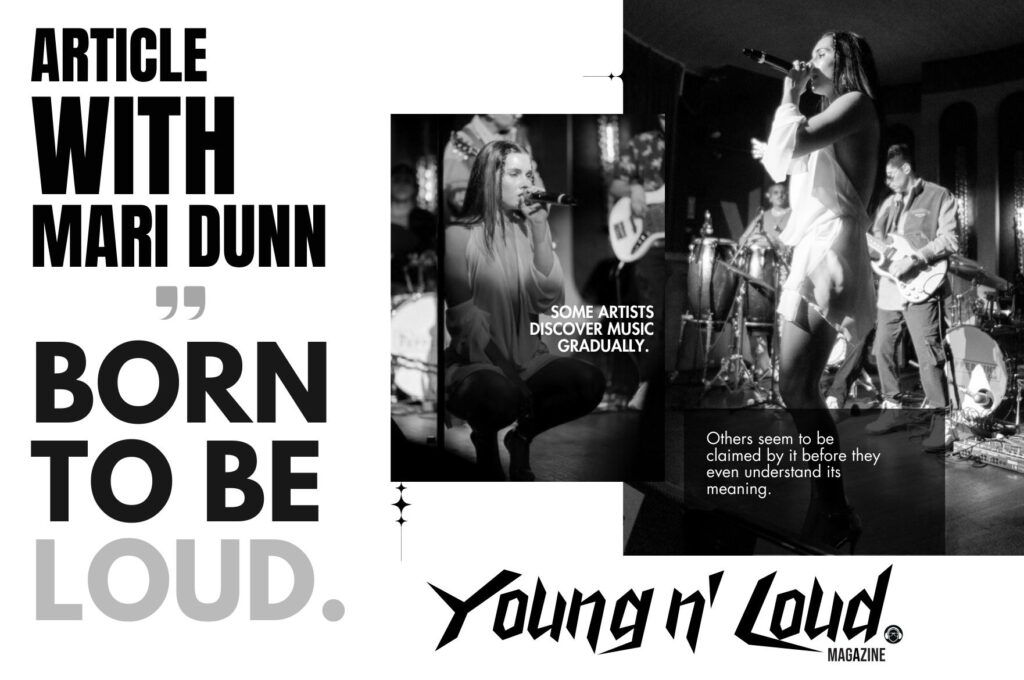
Some artists discover music gradually. Others seem to be claimed by it before they even understand its meaning. For Mari, music arrived early and quietly, at five years old, with a violin resting in her hands. She did not yet have the language to explain what she felt, only the sensation of calm, rhythm, and grounding that music brought into her young life. That early intimacy with sound was not about performance or ambition. It was about feeling safe inside the structure music provided.
By the time she was eight, Mari’s instinct for music had grown strong enough to override fear and permission. She entered a talent show without telling her parents, a small act of rebellion that would later become a defining pattern in her journey. When her parents witnessed not only her talent but the seriousness with which she approached singing, resistance gave way to support. Voice lessons followed, and with them, the slow realization that music was not simply a hobby but a language she was learning fluently.
Her early years were shaped by contrast. Growing up between Los Angeles and Orange County while spending summers immersed in Guatemalan culture and winters in West Virginia created a layered identity long before she understood its impact. These shifts between worlds formed her worldview, teaching her how to exist between cultures rather than choosing one over the other. That duality would later become central to her artistic voice.
Cultural Duality as Creative Foundation
Mari’s upbringing defies the oversimplified idea of Los Angeles as a singular cultural melting pot. While the city offered diversity, her mother made a conscious effort to keep Guatemalan culture at the center of their household. Language, tradition, and expectation were not optional but essential. Discipline was strict, standards were high, and structure was non negotiable. In contrast, her father’s presence offered emotional balance and unwavering belief in her potential. Between those forces, Mari learned both accountability and freedom.
This dual cultural existence shaped not only her identity but her intention as an artist. From an early age, she felt the absence of spaces where bilingual and bicultural identities could coexist without compromise. That absence planted a quiet determination to create music where English and Spanish could live side by side, not as a marketing decision but as a reflection of lived experience. Mari’s work does not attempt to explain her background. It inhabits it fully.
The Moment Everything Clicked
For many artists, there is a singular moment when uncertainty dissolves into clarity. For Mari, that moment came not on a stage, but in front of a microphone. The setting was unremarkable, a producer’s apartment rather than a professional studio, yet the experience was transformative. Hearing her voice through headphones and then through speakers created a recognition deeper than validation. It was belonging.
Academics and athletics had always felt like spaces where she needed to prove her worth. Music was different. In that moment, effort and passion aligned without resistance. The fight she had carried met its purpose. That recognition did not erase struggle, but it gave it meaning. From that point forward, music was no longer something she pursued. It was something she answered.
Naming a World, Not Just an Artist
The name Mari came naturally, a familiar nickname rooted in family and affection, drawn from her full name, Marisa Lucia. Its softness mirrors her reflective nature, while its connection to the word mariposa subtly echoes her tendency to drift between worlds, ideas, and identities.
Mari’s World, however, represents something far more expansive. It is not branding. It is intention. The word world signifies multiplicity. Mari is not solely a musician. She is an athlete shaped by discipline, an entrepreneur learning independence, and a person defined by layered experiences. The project exists as an open space, one that invites listeners into something shared rather than owned. What she is building is not a personal universe but a collective one.
Sound Without Borders
Mari resists genre not out of rebellion but because categorization feels insufficient. Her music begins with emotion rather than structure. Vulnerability, faith, heartbreak, and healing are not themes she selects. They are states she inhabits. Melodies unfold like conversations, sometimes intimate, sometimes charged with intensity, but always honest.
She describes her sound as the voice of the woman she has become through every version of herself. It is diary and prayer, confession and conversation, carried in rhythm rather than explanation. Her goal is not comprehension but connection. In a landscape oversaturated with content, Mari values music that captures something human, something imperfect and felt.

Craft, Instinct, and the Art of Feeling
Mari’s creative process is instinctive yet disciplined. Ideas arrive unpredictably, captured in voice memos and notes before they disappear. Melody often leads, emerging from chord progressions that evoke feeling before words form. Lyrics follow emotion, not the other way around. While poetry occasionally becomes the foundation, it is melody that guides her most reliably toward truth.
Her artistic influences are not confined to music alone. While she appreciates visual art, photography, and painting, sound remains the medium that moves her most deeply. Her vocal tone, marked by an aggressive vibrato and emotional intensity, is not calculated. It is a byproduct of honesty. Simplicity in structure reflects her instinct to follow feeling rather than formula.
The Quiet Moments That Shape an Artist
Defining moments in Mari’s journey are rarely the ones that make headlines. They are the nights spent alone in her parents’ garage teaching herself audio engineering. The early performances outside restaurants for tips. The messages from listeners who felt seen through her songs. The unwavering support from her Guatemalan community online.
Athletics played a crucial role in shaping her resilience. Years of basketball instilled discipline, endurance, and an understanding of grind long before music demanded it. When that chapter ended, the work ethic remained. Music became the new arena, and the same intensity carried her forward. Independence required her to become creator, manager, marketer, and producer simultaneously. Doubt was constant, but consistency proved transformative.
Growth Through Repetition and Presence
Relentless repetition refined both her voice and her vision. Performing multiple times, a week while writing and recording daily forced growth faster than comfort would allow. Somewhere in that cycle, Mari fell in love with the process itself. Creation became devotion rather than obligation.
Live performance remains central to her identity. A show at Navy Pier in Chicago stands out not for its scale, but for its symbolism. Singing by the water to an international audience affirmed that this life was real. Yet it is during Latin songs that she feels most at home. Watching faces light up, families dance, and voices sing back in Spanish connects her directly to purpose.
Brotherhood, Balance, and Collective Energy
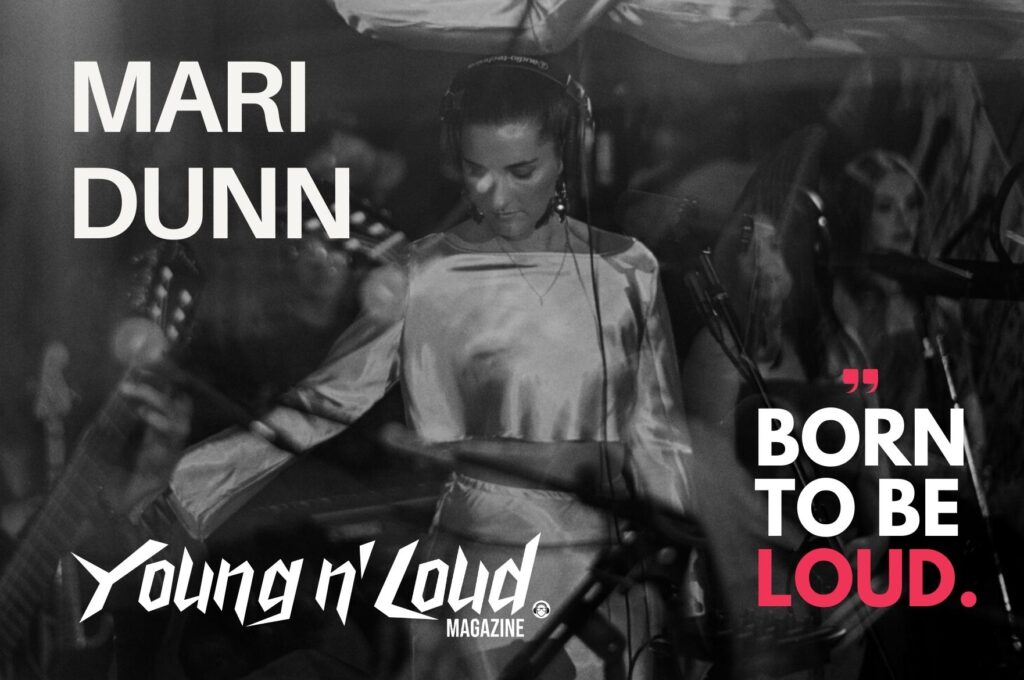
Mari’s World as a band emerged organically rather than strategically. Years of solo performance made collaboration a necessity, not a plan. Guitarist Tony and drummer Sebastian became constants, evolving alongside her through countless gigs. Their chemistry was forged through improvisation, shared risk, and trust built under pressure.
The band operates like a family. Sebastian provides structure. Tony thrives in chaos. Mari balances vision and responsibility, ensuring not only artistic alignment but personal wellbeing. Their shared commitment extends beyond music, rooted in mutual care, cultural pride, and ambition for collective success.
Faith, Identity, and Emotional Legacy
At the core of Mari’s work is a desire for listeners to feel seen. Her music makes space for softness and strength, doubt and belief, cultural complexity and spiritual grounding. Faith is not presented as doctrine but presence, an undercurrent acknowledging that her gifts are received, not self-generated.
Themes of love, longing, identity, and home recur throughout her work. Home exists as place, people, and internal acceptance. Her writing explores the tension between healing and heartbreak, belonging and becoming. While listeners may assume romantic inspiration, much of her work is a dialogue with faith itself.
The Road Ahead
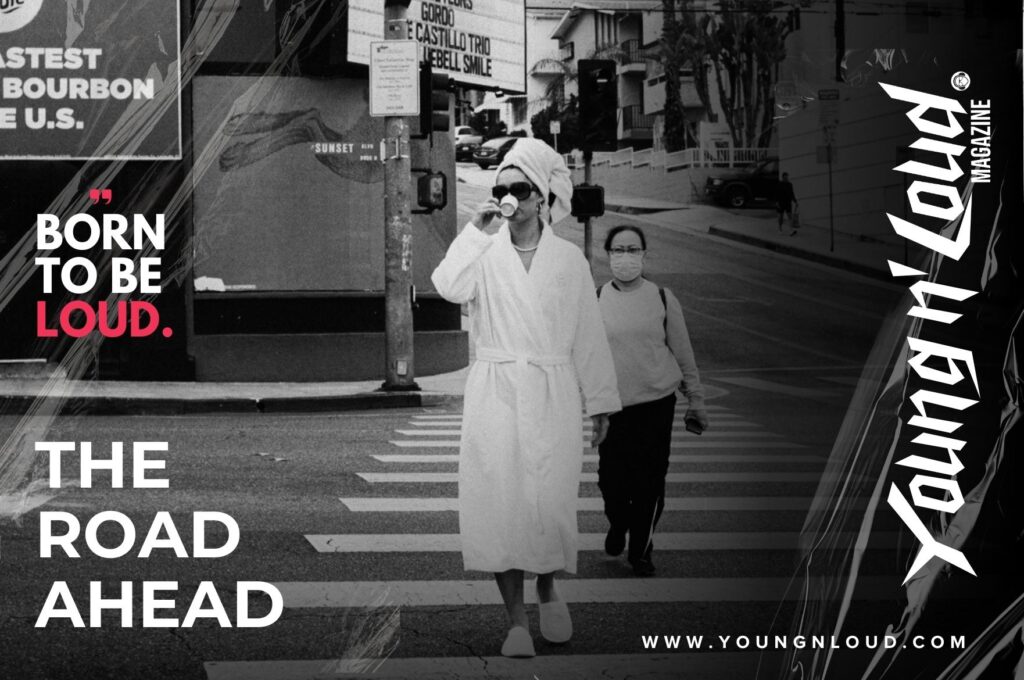
Mari is currently preparing her first full length album, scheduled for release in 2026, preceded by several singles. The project represents the convergence of everything she has lived, learned, and endured. It is not a debut born of novelty, but of readiness.
Her aspirations extend beyond releases. Dream collaborations with Ricardo Arjona and Andrea Bocelli reflect her respect for emotional storytelling and vocal depth. A Central American tour remains a personal goal, rooted in cultural connection rather than expansion.
Staying Young, Staying Loud
Success, for Mari, is not defined by visibility alone. It is measured by integrity, consistency, and impact. What keeps her Young N’ Loud is the refusal to disconnect from feeling, the commitment to discipline without losing softness, and the courage to build a world that invites others in rather than keeping them out.
Mari’s World is not just a project. It is a living space shaped by faith, culture, and honesty. And it is only beginning.
Related Posts


Stay Informed With the Latest & Most Important News
Previous Post
Next Post












Advertisement